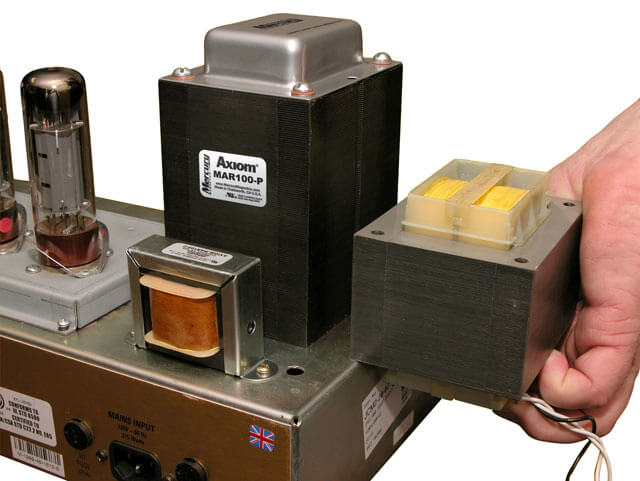
Search Results for: tone clone


Ordered a Black-face Pro Tone Clone Guitar Amp Transformer

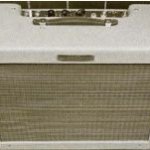
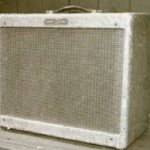
Fender designed and built more than one transitional, non reverb blackface combo amp that would soon acquire reverb and a new name, including relatively small numbers of blackface Princetons, 4×10 Concerts, 1×12 Vibrolux and 1×15 Pros. We acquired a 1×15 blackface Pro, and while it ultimately proved to be an extraordinary exceptional amp, we were also reminded of the potential pitfalls that exist when buying old amps sight-unseen, as well as the potential rewards.

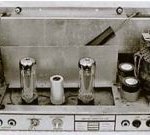
We found the ’64 Pro listed on eBay and bout it from a dealer after requesting a detailed photo of the chassis and circuit. Proudly described as “the best amp in the store, “the rare ’64 blackface Pro is essentially a blackface Vibroverb without the “verb.” Do we have your attention yet? Three caps had been replaced, the original baffleboard had been professionally converted to plywood with the original grill cloth remaining intact, and an on/off pot had been installed for the tremolo intensity control that bypassed the tremolo circuit when rolled to “1” with a click, adding gain that would otherwise be missing in the Vibrato channel. We pulled the JJ power tubes and assorted Russian pre-amp tubes and replaced them with lightly used,“test new” RCAs from our stash, rebiased the amp and fired up the Pro….

Sounded like shit. We had been here before with a dead-mint ’64 Vibroverb bought years ago that had passed through a certain amp guru’s hands in Pflugerville, Texas.How could a vintage Fender sound so bad we wondered? Turned out that the value of the bright cap on the Vibrato channel had been changed on the Vibroverb, rendering a thin, scalding tone that would have given Ed Jahns fits, as it did us. Changing the bright cap back to spec immediately restored the Vibroverb to its rightful pace in history, but the Pro had other problems….

The baffleboard swap and added switch on the tremolo intensity control were clues that someone had also spent time troubleshooting the amp, probably trying to detect the cause of the Pro’s weak output, thin tone and curiously harsh edgy distortion. The amp just didn’t sound right. We pulled the original, reconed Jensen C15N dating to 1964 and subbed in an Eminence Legend, but the Pro still sounded choked-off, linear and wrong, so it was off to Jeff at Bakos Amp works on the Friday afternoon before Memorial Day weekend in a frog-chokin’ Georgia thunderstorm. When the going gets weird, the weird turn pro…..Now, this is the difference between someone who really knows his craft and a hack….Jeff plugged his bench guitar into the Pro, hit a couple of chords, issued a single grunt of displeasure and caustically observed, “Something is definitely fucked up.” With the chassis on the bench, Jeff scowled at the choppy sine wave the amp produced on his scope as he checked voltages with his multimeter. “I think the output transformer is going down slow—it measures 11 volts and it should be reading 16….” He clipped in a substitute OT from a stout old Fisher hi-fi, plugged in and hit a chord… “That’s closer to what it’s supposed to sound lie….” And sure enough, the missing lows and mids were present, the raspy treble tones were subdued, and for the moment, the Pro showed promise. We called Paul at Mercury Magnetics and ordered a black-face Pro Tone Clone replacement trans-former, shut it down and wished each other a good holiday. A week later the Mercury Magnetics replacement output transformer had arrived. Jeff wired it up, and then turned his attention o three silver mica caps that had replaced the original ceramic caps in the phase inverter and tone circuits. Jeff: “Somebody probably read an article about how these would bring the high end up, but I prefer the ceramics—always have. Besides the effect of the voltage from the old output transformer being low, these silver mica caps were contributing to that brittle tone we were hearing. They are the wrong value, and they changed the entire sound of the amp.” Jeff pulled all three silver mica caps and replaced them with the correct ceramic disc caps, and since an on/off switch had already been installed for the tremolo, we mounted the 25K mid range pot in the back panel hole for the extension speaker jack. With the Pro now thoroughly put right and the midrange pot added, Jeff hit a few chords, moved the EQ and volume settings around a bit in both channels, smiled and said, “That sounds really good. Yeah, that’s it.”

Back in our music room, the final step was to re-bias the Proat 34mA with an AmperexGZ34 rectifier and our last pair of vintage RCA black plate 6L6s, which in unused, new old stock condition have soared to $400/pair. The re-labeled Tube NOS Phillips JAN 6L6 WGBs we had tried sounded good—but the smooth warmth, exceptional musicality and deep harmonic content of the RCAs just can’t be beat, and it is a difference you can definitely hear. Smoke ’em if you got ’em….

We lit up the Pro with the ’63Fender Reverb unit and reverently smiled at the jaw-dropping tones pouring from the big Eminence Legend 15. Imagine the sound of a slightly kinder, warmer sounding 40 watt Super Reverb void of the sharp, penetrating treble presence that has sooften left our ears ringing for hours after a tumble with a blackface Super. The sound of the ’64 Pro is all Fender, with solid bass that doesn’t fall apart at high volume as the smaller blackface combos can,sweet, singing treble tones, and now… a mid range control that can gradually push the amp beyond its original, clear and liquid “scooped” mid range voice to an exceptionally thick, “mid-Atlantic” roar that unleashes heavy sustain and rich, musical distortion as only a Fender can. The Pro brilliantly complements every guitar we own, producing the essence of classic Stratocaster, Tele, P90 and humbucker tones with clarity, depth and lush fidelity that literally fills the room. Yes, there are different and equally worthy tones to be had from the British classics,but we have never heard a more beautiful sounding or versatile Fender amp—one that can range from crystalline, blackface clarity to the full burn of an early blonde Fender Bassman at much friendlier volume levels. The Pro can get plenty loud, but it’s a loud that doesn’t kill you in the style of a Showman, Twin or a Super Reverb.

The irony in this unexpected discovery has not escaped us,and perhaps the weight of it is now becoming clear to you, too. This project did not begin well, and we confess to experiencing some remorse when the Pro arrived with a few bad mods, weak and thin from the original output transformer going down, and generally just sounding very wrong. Our dismay was soon displaced by genuine enthusiasm; however, as we were reminded that this is indeed what the quest for tone is all about it. We’ve acquired absolutely bone stock amps in perfect working condition that just couldn’t tote the note, so why should we expect to buy a 44 year old amp that’s been played without it needing a little repair and restoration work? The end entirely justifies the means.

Having finally experienced the Pro’s singular, exceptional sound, we wondered what had caused it to be relegated to such obscurity among all the Fender black face amps. Like the Vibrasonic and Vibroverb, perhaps it was doomed by the presence of the single 15” speaker. Like the Pro, the blackface Vibroverb 1×15 was produced for less than a year, and with the introduction of the 2x12Pro Reverb in 1965, Fender would no longer produce a 1×15 combo until the introduction of the silver face Vibrosonic in 1972. Yet, the earlier 1×16 Pros had been Fender’s flagship amps during much of the tweed era, and in 1960 the 1×15 brown Pro ranked second only to the1x16 Vibrasonic in the Fender catalog. Somewhere along the way, the 1×15 combo had clearly fallen out of favor with Fender, guitarists, or both, and given the short life span of the Vibroverb, even the addition of reverb couldn’t save it.

Twenty years later, Stevie Ray Vaughan elevated the Vibroverb to hall of fame status, otherwise, the 1×15 com-bos seem to have been perceived as “uncool” for anything bug jazz and blues, as if wearing a jacket and tie were required to play them. The Pro is a great blues amp, but it’s also a great rocker, and equally well-suited for jazz, pop and country. With far more clean head room and power than any tweed Pro and much stronger distortion, sustain and dynamic character than a brown Pro, the blackface Pro reflects Fender’s ongoing pursuit of more powerful, cleaner sounding amps, but unlike the black face Bandmaster, Tremolux and Showman, and Pro can really rock the house cranked. We suspect it’s a single 15 and missing ’verb that throws people off today, yet in’64 Pro shares its DNA with the ’64 Bassman and all the highly prized blackface combo amps, including the Deluxe Reverb, Vibrolux Reverb, Super Reverb and the heavily prized and hyped Vibroverb.

The contrast between the Vibroverb’s Holy Grail status versus the lowly blackface Pro simply underscores how easily we can be blown off course by what isn’t hyped on the Internet or in print, and by the powerful logic that suggests if anything 44 years old is truly noteworthy, “we” would already know about it. Well, apparently “they” don’t. But you do. Blackface Pros can be found for $1 500–$2,000,with originality and overall condition driving prices accordingly. Like the Deluxe, we wouldn’t buy one that has had all the blue molded capacitors or Allen-Bradley resistors replaced, but the transformers available today from Mercury will sound every bit as good or better than the originals, and as we have said so many times in the past,the Eminence Legend 15 is spectacular. Add some good,current production or NOS tubes and you will have been delivered to a place well beyond the common man’s limp and shriveled imagination. Now Quest forth….

View PDF Article

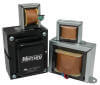
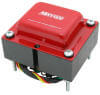
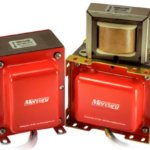
ToneClone® Series Transformers

Let your ears re-discover and re-experience real vintage tone. Imagine having an unlimited budget (and time) to play thousands of amps — including the often spectacular specimens held in private collections all over the world. Then from this exhaustive search you get to pick the one or two that have THE sound.

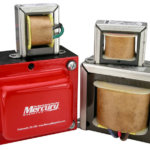
ToneClone transformers are exact genetic duplicates from these sought-after amps. Many came from amps owned by your favorite players. The same amps that were used to record some of the greatest electric guitar songs we’ve known.

That’s why Mercury constantly seeks only the best-of-the-best transformers to add to our catalog. When an exceptional transformer is discovered, it is carefully studied, analyzed and duplicated. Mercury engineers clone every detail and nuance of these best-of-breed transformers — a process we’ve been refining and improving upon for decades.

ToneClone transformers are designed for upgrades, replacements or custom-built tube-based amps. ToneClone transformers come with both our 10-year Workmanship Warranty and Tonal Guarantee.

To find out more, or discuss to the characteristics of the different transformers sets available for your amps, give us a call or email.

ToneClone – Tonelux transformers

It’s no secret to any of us that Fender’s Deluxe Reverb has long been considered the guitar player’s ultimate desert island amp. It’s lightweight, compact, incredibly sturdy and dependable, and it captures the essence of classic ’60s Fender tone. Blackface models built between 1964 and 1967 can cost as much today as a clean vintage Super Reverb, and Silverface Deluxe reverb amps built from 1968 through the mid ’70s remain a bargain, selling for $600-$900. There is very little difference between unmodified amps built during the two eras, except for a couple of caps connecting the output tube grids to ground in the Silverface amps, and a variety of stock speakers, including JensenCTS and Oxford. There is absolutely no reason why a Silverface Deluxe Reverb can’t sound every bit as wonderful as any Blackface amp, and some of the Silverface amps will sound better than some Blackface Deluxe’s you’ll find. Local amp wizard and advisory board member Jeff Bakos has observed that some of the exceptional Deluxe Reverb amps he’s heard (and he’s heard hundreds of Deluxes) seem to have “hotter” power transformers, and the slight inconsistencies in the way some transformers were wound can make a big difference in tone. Earlier today we heard as much in Jeff’s shop in a ’66. Unfortunately, it all comes down to the luck of the draw when finding those special amps. If there is fault to be found with the sound of a Deluxe Reverb (and it really isn’t a fault), it’s the speed at which the amps begin to break up. The clean threshold of the Deluxe is pretty low, and while this characteristic feature is an irresistible attribute to many players, we wondered what could be done to make the Deluxe Reverb even more versatile without losing its unmistakable tone. The modifications we describe here are very simple as modifications go, and all of them are easily reversible. We encourage you to try some and let us know how you like the results.

We started with a beautifully preserved ’68 Deluxe Reverb acquired on eBay for $900.00. The owner had replaced the original particleboard baffle board with pine, recovered it in vintage Blackface-era grill cloth, and installed a repro Blackface plate. We also received the original baffle board covered with the original blue and silver grill cloth, the aluminum trim, and the Silver face plate. We had acquired a replacement output transformer from Mercury Magnetics, and although the original transformer seemed to be working fine, we wanted to see what we might hear by swapping transformers. The Mercury ToneClone series transformers is the result of years of testing in which Mercury blueprinted some of the best sounding output transformers that could be found in vintage amps and painstakingly reproduced them in every detail. At first, the new transformer didn’t sound starkly different from the original – it sounded exactly like the original. But over time, it became increasingly apparent that the amp was behaving with more dynamic response. Notes and chords were imaging differently than before. Individual notes within chords were better defined, the amp responded faster to touch, and harmonics were more pronounced and complex. We’re the first to subscribe to the “don’t fix it if it ain’t broke” school of amp maintenance, but in this instance, the fix was a good one.

One of the easiest things you can do to Deluxe Reverb amps is rebias them for 6L6 power tubes. The outcome is predictable and sublime — more power, more headroom and better lows that won’t fall apart. Call it the “Beano”” treatment for your farting DeluxeJeff Bakos rebiased the amp after we had installed a pair of RCA black plate 6L6s, and we were mighty pleased with the results. You lose some of the compression and darker character of the 6V6 tube when you switch to 6L6s, but there is very little downside to the trade off — just big, bloomy 6L6 tone, and lots of it.

After installing the RCA 6L6s, we opted for an NOS RCA 5751 rather than the 12AX7 in V2, and it really smoothed out the tone to silky perfection. We also experimented with a Chinese 5AR4 rectifier tube, a new Sovtek 5AR4 and a Mullard 5V4. The Mullard pulled the volume back down ever so slightly, but it also seemed to sweeten the tone, rendering a throaty voice that fell nicely in between the “old”” amp with the 6V6s and the “new” one with the 6L6s. Either tube is a good choice — you’ll just have to decide which sound you prefer. Among the 5AR4s, we actually preferred the sound of the Chinese tube over the Sovtek, although the Chinese 5AR4s aren’t quite as robust. Our Deluxe came with an absolutely dreadful (recone?) non-original Fender “blue label” Oxford ceramic magnet speaker that was commonly used in the BassmanTwin and Pro Reverb. We replaced it with n Eminence Legend V12, and this speaker turned out to be a “best buy.” The V12 features a British cone, and the tone is extremely round, well-balanced, and warmer than the Jensen C12N. It’s rated at 80W, and as usual with Eminence products, value and tone are absolutely unmatched for a speaker that sells for under $50.00. Jeff also likes the Legend 125, which is rated at 50W and built with a 1.5 inch voice coil and a slightly lighter magnet. As we observed in Eminence founder Bob Gault’s interview, the low price of an Eminence speaker is no indication of cheap construction or tone. The speakers rock, and they are voiced to appeal to a wide variety of players. We continued experimenting, and our next choice was a new Jensen C12K. We had seen this speaker in Victoria and Fender Twins, and it’s a massive thing. Built in Italy, and rated at 100W with a 2 inch voice coil and 50 oz. magnet. The C12K in a Deluxe with 6L6s yielded huge clean tone from top to bottom, with more high frequency emphasis than the Eminence speakers, and no speaker distortion whatsoever. The Jensen C12K in a Deluxe won’t be everybody’s idea of the perfect match, but it you crave a wide-open, big sound with nothing but clean speaker, the Jensen is a worthy contender at $90 retail. The last speaker we installed was a paper (not hemp) Tone Tubby from A Brown Soun. The paper-cone Tone Tubby is voiced a little brighter than the hemp cones, and we were floored by its rich, smooth character and charm. Jeff described it as being “silky smooth,” and just what he expected, with great lows, stout midrange, and creamy, creamy highs. Now, do you really need a $200 speaker to sound great? Of course not, and the price of a Tone Tubby is not for everyone. But if it’s the speaker for you, you won’t rest until you get one, and nothing we’ve heard can touch it. Enjoy yours, Eric, and enjoy milking some more of the good thang out of your Deluxe, gang. Hey… if not now, when?


The Difference a High Quality Transformer Can Make on Your Tone

In late 2009 I had the opportunity to talk with Sergio Hamernik about the history of the Mercury Magnetics, how he became involved in making transformers for guitar amplifiers, and the difference a high quality transformer can make on your tone.

How did Mercury get its start?

The company’s roots date back to the early ’50s. Mercury was started by an old General Electrics transformer engineer who was working there pre-World War II. He then went on to do a bunch of design work for the war effort. And in the early ’50s, hung a shingle and became self-employed.

The name “Mercury” came out of his passion for Mercury cars, he always drove a Mercury since the late ’40s — he loved those cars — and eventually moved from the East Coast to the West Coast where he found that there was a lot of military and aerospace work. A booming economy in the early ’50s gave him a lot of business.

I met him in the 1970s when I was an engineering student and an audio enthusiast. Back then the electronics world was well into its solid-state “evolution,” and interest in tube gear was quickly disappearing. Not for me, however. I found myself in demand as a guy who knew about those “old things”; not only the math, formulas and specifications but I also had the “ears.” I could fix and keep the old gear running. So, I worked as a hired gun for a bunch of studio heads and pro musicians.

Typically when an amp’s output transformer blew. No one seemed to know any better so it was just swapped by whatever “factory” replacement or an off-the-shelf “equivalent” catalog transformer was handy. The invariable result was that the amp’s characteristic sound was gone. And no matter what resistors, caps or tubes were used, it could not be rescued or returned to its original sound. It was the transformers, it turned out, that were the key. The problem was coming up with a way to remedy the blown transformer replacement or repair that wouldn’t alter its tone.

To further complicate things, most transformer people I dealt with just didn’t want to bother with the music industry. For the most part the established electronics industry considered the needs and opinions of the audio and MI (Music Industry) communities as subjective, run by kooks, and occupied by people who didn’t know what they are doing. Audio and MI had always been considered the illegitimate stepchildren to the rest of the industry.

Out of pure necessity I had to got involved with transformer design and manufacture. As a customer of Mercury, they had built many custom transformers to my specifications — although we had many heated, on-going debates on the subject because the company owner hated audio! He never did understand what made guitar amp transformers tick, or how musicians thought and reacted to them.

That aside, he pestered me for almost a decade to take over the company because he felt I was the only one qualified. Eventually I did, and that was when Mercury got serious about the guitar amp connection. Sometimes you end up becoming an expert at something when no one else wants to do the job.

By the time I took the helm we were developing a really good and workable understanding of the relationship of transformer design to decent tone and how amps should behave. And around 1980 we began the long and arduous task of collecting and cataloging transformer specifications for every vintage amp, from all over the world. The deeper we dug, the more apparent it became that there were all kinds of factors that no one had previously suspected that affected guitar tone. And likewise, no one seemed to be paying attention to such things.

In turn, we invented proprietary technologies to aid this work. Even after three decades, we’re still innovating and discovering new things. From that fundamental research came our now famous ToneClone series, and later the Axiom line, which is probably the most significant advancement in toneful guitar amp transformer designs since the ’50s. Both product lines, we’re proud to say, have distinctly different niches in the annals of guitar amp tone.

We’ve not only cured the old transformer tone issues, but made it possible for musicians to upgrade their existing amps. And we’ve also made it possible for amp builders to reproduce amps of the same or better grade than even the most outstanding vintage amps of the past.

When did you become involved with making transformers for guitar amplifiers?

Back in the ’70s I worked for people on a one-to-one basis, usually under confidential arrangements, with certain rock stars that just didn’t want to be bothered by their names being flaunted around. What they want was their amps running right for recording, projects, touring, etc.

The problem was that when technicians would fix the amps they’d often loose their tone. It turned out that the culprit was the replaced output transformers. A changed output transformer would completely alter the character of the amplifier. So as I was the guy doing most of the work to resolve this issue, this expertise was brought to Mercury where we began a special division to cater to the guitar heroes.

Word got around rather quickly that Mercury was able to repair, rewind, and restore the original transformers and it just grew from there. The whole “Tone Clone” thing came from artists who had these amazing irreplaceable amps, amps that often made recording history. They didn’t want to take these amps on tour. So we came up with the innovative idea of cloning their original transformers that they’d fallen in love with. With the clones we could now easily make, for the first time ever, several identical amps for them. Or they would assign their techs to drop-in the cloned transformers so they would have, for example, six amps that would all sound the same as that first perfect amp.

These artists could now go on tour and not worry about breakdowns or theft, and keep their prized-originals back at home.

I worked with Ken Fisher, the whole Trainwreck thing, and a lot of the early boutique guys — and still do with Alexander Dumble. They preferred to keep things confidential and not let too many people know who their sources were because there were so few transformer designers that catered to the guitar amp market.

There was also a slow-but-steady dumbing-down occurring in audio and all that had been the post World War II momentum. Many of the ex-military components we’d been using were high tolerance parts, with mil-spec formulations of iron and copper and so on, that had been used to win the war effort. During the ’50s and ’60s we enjoyed the benefits of those high quality components at surplus prices. But by the late ’70s, and definitely in the ’80s, steel manufacturers started to change recipes to make the iron and other materials much more affordable.

You can hear the differences between a late ’60s Marshall, a late ’80s Marshall, and a Marshall today. A good listen will really help you to understand what changes took place. Unfortunately they made so many of those changes more out of economic considerations than anything else. The amps were loud but they seemed to be losing sight of the fact that their tone was disappearing — the “recipes” had been changed.

In addition to many other factors, the iron that Mercury uses is custom-formulated specifically for us. We buy enough of it to be able to dictate the exact recipe from the foundries. And all of our iron is literally from American ore processed right here in the USA. 100% American made to the original specs. Are there drawbacks? Well, some of the iron rusts more easily, but that’s actually a good thing because rust is a natural insulator. But the opposite is also true. When you see a modern transformer with a silvery or a shiny core just know that they aren’t worth a damn when it comes to tone.

Can you tell us more about guitar amp transformer history?

Here’s an amusing anecdote that may help explain our case for guitar amp transformers: There’s a great deal of documentation, from back in the mid-’50s, where engineers, and other technical people, were writing really scathing reports on how awful the transformers were in the audio industry. Those darn transformers! When tubes were plugged into them there was a tendency to distort! And they couldn’t have any of that! Likewise with harmonic distortion — especially even-order harmonic distortion.

Many amp builders, techs and players, today, don’t understand that tubes were originally designed to run dead clean, linear, and be efficient voltage amplifiers. That the tone we’ve all come to know and love is caused by the transformers literally “irritating” the tubes into distortion.

Which is, of course, the whole point of what we are looking for in guitar amps. Back in the ’50s, they were fighting to get rid of those nasty distortion tonal characteristics. Now we embrace them. But that was audio – guitar amps were still in they’re infancy and yet to be realized. It took a generation or two of innovative musicians to take those “undesirable” tonal characteristics and create music; to work with distortion and make it into something musical.

Ironically, it was that no-distortion engineering mindset that ushered in solid-state, and why it was so openly embraced in the ’60s. It was solid-state electronics that eliminated the output transformer.

In the late ’60s, Vox went to Thomas Organ to have solid-state amps built. They were very proud of this state-of-the-art amplifier. Curiously, I met a few of the musicians from the late ’60s that were sponsored by, and using, those amps. The tone was so awful and unbearable that they used the enclosures but hid their old tube gear inside! As you may already be aware, the vacuum tube industry is alive and well, and we’re still waiting for the solid-state industry to catch up.

Part of the confusion is that musicians assume it’s the tubes that give them their tone. There’s a lot of synergy going on in an amp, and the tubes certainly contribute, but let me illustrate this another way. Did you know that there is what we call “output transformer-less” amplifiers in the HiFi world?

These amps basically parallel a bunch of power tubes together until they get down to 16, 8, or 4 ohms. There is no output transformer, so you literally connect the speaker directly to the tubes. If you ever get the opportunity to do an audio demo with this style of amp, you will find that while it works, it sounds nearly solid-state. The output transformer is what provokes a tube into giving the characteristics that we find desirable as far as tone. Audio engineers didn’t want the tubes to distort, as tubes are basically nothing more than very clean voltage amplifiers. But when you have a reactive element like a transformer, you irritate the tubes into harmonic distortion.

Therefore, the difference between a good and mediocre transformer is based on how it works and syncs with these tubes to produce the kind of tone or distortion we are looking for. It is not as easy as winding some wire around a steel core, if it was then we would not be having this conversation.

How does a Mercury transformer made today compare to the transformers made in the golden age of amps (the ’50s and early ’60s)?

One of the biggest mistakes existing in today’s amplifier community, especially amongst hobbyists and do-it-yourselfers, is to blindly copy every aspect of a vintage amplifier hoping to get a piece of that golden tone. At best, this method still produces very random results. One of the key reasons for this is the often-overlooked missing transformer formula. A builder will fuss around with the tiniest of other details but completely miss how the transformers fit into the equation. In short, get the transformers right, then the rest is much easier. Here’s another look at theses deceptively simple devices:
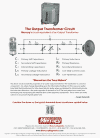
For vintage-style transformers, Mercury starts by duplicating the transformer design, build errors and all. We use the best grade components like they did in the ’50s and ’60s. We wind every layer and every turn as if it were a circuit in itself. In fact, the diagram on the left shows an output transformer circuit equivalent. Most people would think it is an audio circuit. These things are fairly complex, and all the numbers have to be right in order to get the tone we want as musicians.

We really do follow the recipe to a point. Although we don’t repeat any of the mistakes or inconsistencies that were prevalent, but didn’t affect tone. For example, if you were into Fender tweeds or late-’60s Marshalls. To do this we would literally put the word out to rent or borrow dozens of amplifiers to find the one or two that had the sound, and dismiss the rest. There were typically many inconsistencies as well as “happy accidents” in the best-sounding examples we’ve auditioned. A lot of this has to do with the sloppy tolerances of the original transformers.

For our transformers we extract the best parts and virtues of the original best-of-breed transformers and remove all of the obstacles to tone. Perhaps just as important is that we adopted a “cost is no object” approach, making our transformers equal or better than the originals — and then add consistency. We now have this so finely tuned that if you bought a transformer from us five years ago, and then the same one today, it would sound exactly the same. You don’t want good batches and bad batches, which is precisely what made the original production runs vary so much.

Another issue is the so-called controversy between paper tubes and nylon bobbins. In the vintage years they used both. Some people think that somehow, some magical quality comes from using a paper tube winding form over a nylon bobbin. Tonally it made no difference at all. Paper tubes were widely out of tolerance most of the time because of how they were made. They would wind multiple coils on long sticks then use a saw or blade to cut off the various coils. In order for these long tubes or coils to come off of their winding forms they had to be conical. So this invariably meant that the first coil would be larger in diameter and the last coils smaller. As you can see, it’s easy to see why each of these inconsistently-made bobbins had a greater difference than the material they were made from. And there are other issues that occur over time, like paper has a tendency to disintegrate, collect moisture, etc.

When we switched to using nylon bobbins the tolerances were within 3,000’s of an inch of each other, as opposed to the wildly varying amounts found in paper tubes. If you were ever to take apart a really old transformer (pre-’70s) sometimes you’ll find wood wedges that are jammed between the paper tube and the core because that piece of paper was too wide and too sloppy to fit into the core correctly! They would force a wedge in there so the darn things wouldn’t rattle!

Which method, paper or nylon, made for the best tone? It’s the luck of the draw. We’re fortunate in that we have all these stars as clients who have these amazing-sounding amps. They went through the hassle of culling and choosing and picking the special amps that inspired them. The amps they recorded with. When we analyzed their transformers we sometimes found happy accidents or other little anomalies that would set a transformer apart from already sloppy tolerances of the standard production run.

There are little subtleties and changes from one transformer to another that make a heck of a difference tonally. So when you look online at our list of ToneClones, just know that they are from the hand-picked, best-of-the-best amps of their model and era. We continue this “weeding” process every day — and there’s apparently no end in sight. And that’s why, with some amps, we have several versions — each with its own tonal qualities — and others only a single set to choose from.

We use this process to establish new benchmarks. And you never know, tomorrow a new variant may arrive that totally blows away what we already thought was as good as it could ever get.

It is interesting that you take that approach to upgrading — the never-ending search for better-sounding benchmarks.

There is no real money or glamour in what we do, it is really all born of a passion for music. I come from a musical family, my Mom taught me as a little kid that music was a form of “food.” And that hasn’t changed. Everyone who works at Mercury is just in love with playing and listening to music, and we all believe that there is always some room for improvement or a way to raise the bar somehow.

Back in the ’70s and ’80s there wasn’t really a need for a company that designed and sold transformers to the public, so I stayed away from the general public for as long as I could and really only worked with professionals.

But at some point I realized that it was the average player who was getting ripped-off. Things were getting dumbed-down, the tone is slowly and steadily being vacuumed out of the amps. They were becoming duller-sounding, less interesting and more noisy. So, we decided to formally launch this product line so the average guy could have access to our technology. It takes an extreme amount of labor and effort it takes to build them to this standard. You know, even if someone wanted to buy 1000 transformers we would have to no-bid them because we really don’t have any way of doing things quickly.

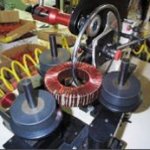
Automation isn’t a practical solution. Everything we do is wound by hand, one at a time; it is the only way it can be done. Say you have 100 turns and 10 layers, well that would mean 10 turns per layer — that is how a machine would think of it. But what if a rock legend’s best transformer was 9 turns on one layer, 11 turns on the next, 7 on the next, 3 after that and so on, but the sum total ended up being 100 turns. Sometimes one layer can have a different winding style than the other; sometimes it is non-symmetrical meaning, if it is a push-pull, that one side of the primary doesn’t have the same turns as the other side. If that was the recipe that created the magic, we’d have to duplicate it. It’s just not practical to build machines to do that, so we end up having to do it by hand. It’s the proud old-school craftsmanship way of doing things. Something I think we could see a lot more these days.

We have a reputation for nailing tone. Our Fender transformers don’t sound like Marshalls, they sound like Fenders — and vice versa. In fact, we’ve become the industry’s new standard. If you were going to design or create a tube-based amp, it’s clear that we’re the folks to talk to.

Can you explain how a Mercury transformer can improve an amplifier’s tone and how they outperform the stock transformers found in most amplifiers?

In designing toneful transformers specifically for guitars (and that’s all we’re talking about here, not necessarily transformers for HiFi or any other purpose), the trick is in the magnetic field and how it behaves. The nature and the speed with which the iron reacts to the changing of an alternating current, in an alternating magnetic field, is what makes tone happen.

If you have “slow” iron, you’ll have a dull, non-sparkly sound with no bell tones — no matter what you do with the amp it will always be kind of noisy and fuzzy.

Where others have tried and failed they’ve blindly followed generic transformer formulas without understanding that guitar amps are different animals. They’ve somehow missed that point despite all the evidence to the contrary. The fact is that transformers for guitar amps do not necessarily follow textbook rules.

Indeed, it should probably be noted that we’ve developed a whole new technology around transformer design specifically, and only for the guitar industry. And that these designs are essentially irrelevant to any other use. But Mercury is also in a highly unusual position. Our decades of transformer “vivisection” have revealed all manner of unconventional tips ‘n tricks to us. And we’re now the keepers of this new, but proprietary, technology.

I seriously doubt that we could have done it without the, let’s call it “archeological benefits,” of our observations. Decades of studying the good, the bad and the ugly of guitar amp transformers have revealed a great deal.

Nothing that I have found in the reissue market, transformer-wise, even resembles anything that was made during the “the golden age of tone.” They are unrelated. The inductance, magnetic fields — all of that is just completely different and far removed from the original designs and recipes. So there is no way that a reissue amp is ever going to sound vintage unless they bother putting in the right ingredients.

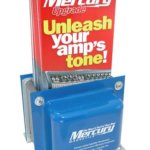
With our Upgrade Kits, for example we’re trying to show people that we can move forward into new sonic territory from where vintage designs and tone left off. And our Axiom series transformers are the definitive showcase for this technology. Their tone is just amazing.

To push the point even further, we don’t include any “voodoo” parts in our Upgrade Kits. With the exception of the transformers, the Kits use only common, everyday, and off-the-shelf components. And most of our Kits also include a Mini-Choke. When the circuitry is correctly designed a Mini-Choke will make a huge improvement in an amp’s tone because, in terms of its power supply, it changes the way the amp works.

A good guitar amp is only as good as its power supply. If you have a dynamic and moving power supply that reacts to the demands of the audio end you’ll get get great note separation and good bass dynamics. You start to hear chimes and other phenomenon, and even the harmonics between the strings like a “5th note.” What the heck is the “5th note”? In barbershop quartets, if they get their harmonies right, they hear the “5th note” which is basically a harmonic of all four singers. We are doing that with our guitars thanks to distorted amplifiers.

Where did the idea for offering an Upgrade Kit for amplifiers like the Champ “600” and Valve Jr. come from and who designed the Upgrade?
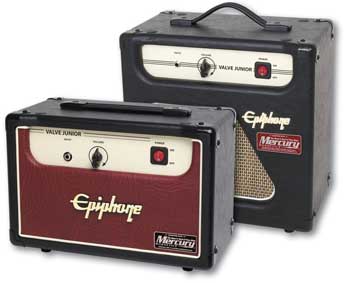
I designed all of the magnetics (the transformers and Mini-Choke) and the general concept behind the Upgrade in league with Allen Cyr from the Amp Exchange. He is one of the most competent, finest amp designers I know of; there are only about five in the world that are true masters of the art — those who really know the math, how to read tone, how to listen to the subtleties of clean and overdriven sounds and tones, design circuits, and understand tube behaviors. As a bonus to those who appreciate this kind of thing, we always try to throw in some interesting tweaks and tricks that are unorthodox.

The idea is to spark some interest and perhaps get more people involved in tube-based amp tone and evolution. We expect some folks to study our Upgrade Kits, learn from what we’ve done, and take off into new territory from there. No one is offended by that.

But our initial concept was to take an inexpensive stock amplifier, one that cost no more than $100 or so, and modify it into a professional- or recording-quality amp for very few bucks. The Valve Jr. was the amp that gave us the inspiration for this project. Epiphone broke the mold with their little Valve Jr. amp. Out of the box it’s a remarkable value. So, although it was a bit of a challenge I thought it was interesting because we were not stepping on anyone’s toes — we were just taking something that already existed and designing an Upgrade Kit around it. A simple proof of concept that made the case of transformers and guitar tone. It just seemed like a cool thing to do. The project was validated when pro players began demo’ing our prototype amps — they couldn’t believe how amazingly great such a tiny amp could sound, it freaked them out, and they all wanted one of their own!

Our intention was to give the kid who was practicing guitar in his bedroom, whose parents are on a limited budget, REAL guitar tone. In a typical scenario, the parents buy a cheap little amp and guitar combo because they want to see if their kid will stick with it. But the kid doesn’t understand that the sound of the amp is fatiguing. He doesn’t understand why the amp doesn’t sound good. And he doesn’t realize that the amp is fighting him, tiring him out. I know that happened to me and so many of my friends when we were kids. Struggling with hard-to-play guitars and poor-sounding amps is probably the single-most reason so many budding young (and old) guitarists give up the pursuit of their dream. But some are rescued. One day they visit a guy, or hear someone play, who has the amp with the tone and with just the sweep a few chords they experience the “My gawd!!! I want to sound like this!” phenomenon.

That is what we’re trying to offer with these Upgrade Kits — where the tone is accessible to just about anyone. So they could have an amp that wasn’t dull or desensitized. An amp that allows them to make that real connection to the tone. Tone is not just about noise and volume, it is rather complex, and undeniably emotional.
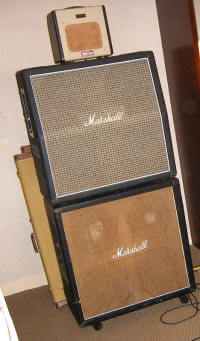
At the LA Amp Show we had our Upgraded Fender Champion “600” running into a full Marshall stack. Here we had this little amp powering eight 12″ speakers and it sounded great. People kept asking to see the back of the amp thinking that we had somehow rigged up something, but it was just the little Champ “600” with our Upgrade Kit.

When you have a nice open tone it is not about counting watts because the window is so big and wide and the soundstage is so deep that it gives you the impression of more power. We are not putting out more power with the Upgraded “600” — but it sure sounds like it! It’s about opening up that tone window and giving you more.

It’s kind of like taking a radio whose volume is set to half way and having it placed about 20 feet away from you then bring it right next to your ear — the volume has not changed but you hear a lot more of its content.

One of the things we do when modifying a circuit is to lower the noise floor, which a lot of people overlook. Many amps, like the Valve Jr., have a nasty hum in standby. We had one that would just start to howl if you left it alone for a while! So whatever high noise floor it had would eventually feedback on itself and cause that noise.

Our focus is on inspiring people. We are trying to show people that they really can get great tone today, that there is no age that has come and gone. There is still a lot of fun things left to do with your amplifier when you are on the search for great tone.

Hearing how much these Kits improve upon the tone of the amplifiers, and how well thought-out they are, will a Mercury amplifier that is designed and built by you ever make an appearance?

No. We are a supplier of key components to the boutique industry and to several of the large amplifier companies, and that is a comfortable spot to be in.

There is no shortage of amplifier companies out there and it really is a conflict of interest if we were to start selling amps and transformers. I would rather stay out of it.

The whole point of the Upgrade Kits was an area where I didn’t see any conflict with the people who were in the amplifier business. In the end the Kits really represent a transformer demonstration. If you were to just show someone a picture of a transformer or even had one in your hand and tried to explain how much better their tone would be, no one would care — it’s a yawner. But when you build one of these inexpensive Upgrade Kits and you actually hear the difference that the transformers make, it really drives home our point that transformers are important, that they are the building blocks of guitar amp tone.

And in the end we do this because we love it, we really love what we do. We get to create all of these products that help people find their tone, and who wouldn’t what to do that?

Transformers and Tone

Talking Amps with Sergio Hamernik

Why does it hurt when I play my guitar amp? Recent statistics have confirmed a steady decline in the annual sales of electric guitars since 2005 and it is no surprise guitar amplifiers have also suffered a similar fate. What is the root cause of this negative trend and can it be fixed? The demand is certainly still there as evidenced by the increasing prices for vintage gear and the growth of live music with often sold-out venues and tours. There is also a steady demand for recorded music and a concerted effort to improve the listening experience of consumers. Yet, the market for entry level guitars and amps remains uninspired. Potential customers are bored to the point of disinterest, feeling disconnected from the rich history of amplified guitar tone. Out-sourcing and off-shoring of operations has also taken a toll on the boutique guitar amplifier market with quality taking a back seat. If you take a look behind any of these imported guitar amplifiers, you’ll find disposal instructions validating the future of their purchase as inevitable E- Waste. How is that for a vote of confidence?

It is not a coincidence that this industry began its nosedive when this country’s preoccupation with cheap and dirty imported products took off full speed with the mega music store mentality trending to reduce musical instruments to a commodity driven by the lowest bidder. Has craft become an unnecessary expense? These statistics reveal that the average consumer is not happy going down that road.

It seems that not enough people understand the cosmic importance of transformers when it comes to delivering amplified guitar tone because all too often transformers in amplifiers are relegated to the typical bean-counter’s chopping block. Music and how it sounds to us is very much like food, the ingredients and how they are prepared really matter. The recipe for great sounding tone hasn’t been lost, just abandoned by short-sighted, penny-pinching profiteering. Perhaps the current bankruptcy hearings and bailout talks of larger corporations are a good indicator of things to come. This could usher in a revival of mom and pop music stores re-opening and hopefully working symbiotically with internet-based businesses. We need a new working environment to encourage and inspire the next generation of musicians with better sounding equipment. Choosing better transformers is a good start and will open the door to better tone since it has become obvious that ignoring this rule only leads to poor audio performance. Give the people what they want, and they will pay a little extra to get it without compromise. Not all food has to be cheap and fast, a discerning palate for tone goes a long way to maintain the dignity and essence of music.

Having amassed the largest data base of vintage audio replacement transformers, which even the average bedroom player can have equal access to, the history of Mercury Magnetics dates back to the early 1950s as being a resource for professional musicians, guitar amplifier collectors and as an OEM for some of the finest amplifiers being built today. Stay tuned for follow up articles detailing products and services available to any player needing more information about our various transformer brands, such as ToneClones, Amp-Savers and custom applications. Our efforts are primarily to dispel myths and junk science to help players and listeners get a clear understanding of what it takes to improve their experience.

Scorpion Amp Tone

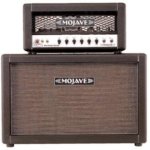
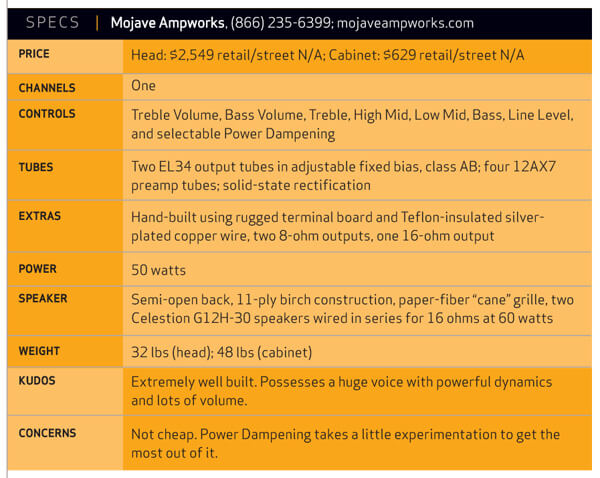
Anyone familiar with Mojave Ampworks founder Victor Mason’s other venture — a California dealership of vintage British amplifiers known as the Plexi Palace — will be aware of this amp maker’s fanaticism for classic Marshall-style tones. The Scorpion outwardly appears to take a serious stab at satiating that craving in a modern package, but don’t be too quick to label this 50-watter as simply a Marshall plexi update. While the Scorpion certainly aims squarely at the big Brit-rock tones of the late 1960s and early ’70s, it’s nowhere near to being a clone, and the design has enough clever twists to make it an entirely original creation. Although nominally a 50-watter, the Scorpion aims to provide big-box 100-watt sound and feel in a small package.

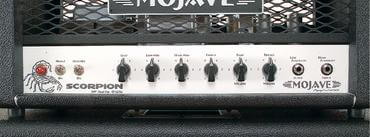
The core of the Scorpion’s sonic DNA revolves around that big, crunchy, dynamic EL34 sound with the characteristically thumping lows and singing highs. But this model redraws the roadmap that takes you there, and adds plenty of new ingredients in the name of versatility. Mojave keeps the adjustable fixed-bias output stage with a dash of negative feedback, cathode-follower tone stack, and solid-state rectification that partly define the post-1967 Marshall 50-watters, but re-labels the tone stack as Bass, Low Mid, High Mid, and Treble, with High Mid taking the job of a Presence control. It also employs a nifty trick in the preamp stage that has become something of a Mojave standard: internally ganging together two different first gain stages comprised of an independent, parallel-wired twin-triode 12AX7 for each—one voiced to emphasize bass, the other to emphasize treble—and providing a Volume control for each so you can blend them together. This is not a master volume amp, but it carries a Power Dampening control on the back panel that governs a unique proprietary circuit that reins in volume levels at the output stage, allowing you to take the Scorpion from 50 watts down to 3 watts, and anywhere in between. Other features include High and Low Sensitivity inputs, and a back panel 1/4″ Line Out jack with a Level control and ground lift alongside dual 8- and single 16-ž outputs.

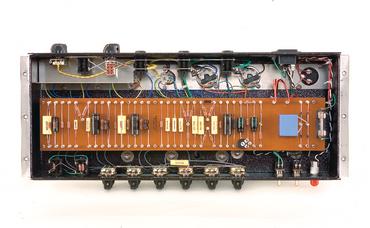
As alluring as it might be from the outside, much of the Scorpion’s appeal reveals itself when you pull the chassis from the cab. This amp is hand built to some of the most exacting standards found in the market today.

Powder-coated black metal grilles protect components front and back, and the brand is boldly represented by an acid-etched aluminum nameplate. The rugged turret board follows a linear layout from input to output stage, and the flying-lead connections to transformers, potentiometers, switches, and tube sockets (all chassis mounted) are made with Teflon-insulated, silver-plated copper wire. While many amp makers swear by old-style carbon comp resistors for “warmth” and “vintage authenticity,” Mojave uses high-grade metal film resistors because they can be obtained in more precise values, and generally result in a lower noise floor. These share the board with Sprague filter capacitors and custom-made, one-percent tolerance film and foil polypropylene signal capacitors. Transformers are all custom made for Mojave by the highly regarded Mercury Magnetics company, and the whole shebang is bolted together in a reinforced aluminum chassis. Finally, the output transformer presents a novel twist on the classic 50-watter formula, as Mojave has spec’d it for “triple-capacity,” which can handle as much as three times the Scorpion’s 50-watt output. This approach can achieve the response of a 100-watt stack in a smaller amp, resulting in firmer lows and remarkable headroom.

Our review sample came with the 2×12 semi-open-back cab loaded with Celestion G12H-30s, but a closed-back 4×12 is also available for $985 retail. The cabinet is a robust, yet portable unit with a single, recessed handle positioned top center.

I tested the Scorpion with a range of guitars, including a Fender Stratocaster and a Telecaster, a Gibson SG Special, and a PRS Singlecut Trem. The overriding impression this amp left with me was one of power, body, and massive volume — even with single-coil pickups. This is one massive sounding amplifier, and Mojave has certainly achieved the goal of attaining 100-watt-style performance in a 50-watt package. It delivers a wide, blooming soundstage with tight, but not overly booming lows, a thumping midrange, and glittery, yet nicely recessed highs. In short, you get broad, punchy, in-your-face dynamics across a frequency spectrum that’s very flattering to rock guitar.

With the Strat and Tele, the Scorpion exhibited stunning clarity and superior headroom up to about a ten o’clock position of the Volume controls, at which point it was already too loud for home studios, basement rehearsals, and many club gigs. Humbuckers and P90s brought out the raunch a little sooner. Roll it up from there, and you segue through toothsome crunch to absolutely screaming lead tones — both of which are easily cleaned up at the guitar’s Volume control. This is the fat, tactile, airy, classic sound that arena-rock dreams are made of, and when you get the volume up anywhere from one to five o’clock, it’s a rare and spine-chilling experience to just stand in front of this rig and wail. Tweak the EQ to taste, put a booster or distortion pedal in front of it as desired (all of which this amp handles very well), and there’s very little in the broad fields of rock, blues-rock and metal that it can’t do.

That said, the trend these days is toward downsizing, and plenty of players are looking for amps that sound like cranked 50-watters in 15-watt packages, not 50-watters that sound like a 100-watters. The Scorpion’s Power Dampening control is a cool feature that brings levels down as much as you’d like, but it does color the tone a little bit, and you also need to dial down the Volume controls to retain similar headroom at lower volumes. In short, this powerful monster is most cut out for serious rockers who expect to put in most of their playing hours on large stages.

The Scorpion also sounded fantastic through the 2×12 cabinet, which seemed to take everything I could throw at it without breaking a sweat. But if you plan to play this amp toward max in big venues, you might consider pairing it with Mojave’s 4×12 cab. I ran the Scorpion through a custom 4×12 with G12H-30s in my rehearsal space, and it proved an equally thrilling endeavor, with that huge kick in the gut that lets you know you’re pushing a lot of air. However, it wasn’t demonstrably louder than Mojave‘s very efficient, compact open-back 2×12, so the choice is yours. But whatever you blast it through, this is an extremely accomplished-sounding, as well as a stunning piece of craftsmanship.

Source: https://mercurymagnetics.com/pages/news/GuitarPlayer/GPAug07.htm

Transformer Iron Makes a Big Difference on an Amp’s Overall Tone

Because there are so many kits and builders in today’s DIY and boutique amp market, you no longer needed to be a super shredder or fretboard wizard to have a “signature” amp. Nope. Today, the only thing between you and the amp of your dreams is a little bit of cash.

For roughly the price of a boutique amp, you can build and customize your own rig – Tolex, grill colors and materials, cabinet plastics and wood types, tube combinations, speaker pairing and sizes, power output – virtually any idea you can think up, and chances are someone can make it a reality. I recently build a 2×12″ 18-watter to my own specifications. Here’s how I did it.

I hemmed and hawed between something more modern-looking and a traditional Tolex-covered cabinet. There are great cab builders who use all kinds of wood. Some variations of the classic tone woods (pine and Baltic birch) are wonderful – walnut, wedge, maple, mahogany, basswood all produce different qualities, and craftsmen are using combinations of them to produce interesting tones. But because I was making my own version of a classic, I decided to go with a traditional cabinet.

The one custom mod I asked Peter to include was to build the cabinet of pine; I’ve always loved the resonance and timbre of pine cabs, and it’s a bit lighter than the birch used in Marshall cabs.

Peter convinced me that while pine would work, I should stay with a birch baffle to retain some of the characteristic bite conveyed by the wood used to build the amp we’re copying.

To further the customization, and give the amp a touch of fun, I decided on white Tolex. Per my request, Peter aged the cab to give it a broken-in appearance.

While I wanted this amp to sound like a Marshall 18-watt, I also wanted more control over its tone. I wasn’t interested in tremolo or reverb as much as saturated overdrive and the ability to obtain overdrive at less than ear-bleed levels. I opted for a Ceriatone DIY kit, which they assembled for a small fee. And since I already had a drawer full of old mustard caps and NOS resistors, I figured I could upgrade some components down the road, if necessary.

Ceriatone had a two-channel Treble/Middle/Bass (T.M.B.) circuit with a Master Volume on the second channel that fit the specifics I was after. I was happy with the quality of workmanship – it had solid solder joints, all around.

I firmly believe transformer iron makes a big difference on an amp’s overall tone and character.

For an 18-watt amp based on a Marshall, you have a power transformer and an output transformer. In the 1940s and ’50s, some power transformers could handle up to eight times the output of an amp! The more muscle, the better the tone.

While an adequate power transformer insures an amp will run at optimum output and efficiency, the output transformer is what really counts when it comes to delivering tight lows and harmonics, and musical sound quality at different volumes.

There are companies making custom transformers and reissuing certain classics, and they all have distinct sounds and characteristics; some are brighter, some more harmonic, some offer crisper note separation, etc. Choosing one is, of course, a matter of taste. Since I was going for that classic dark vintage Marshall sound, I went with Mercury Magnetics, which offers a few choices when it comes to Marshall-style 18-watt output transformers, all based on classic Radiospares transformers from the ’60s and ’70s (which is what Marshall used in the 18-watters). I opted for the handwired ToneClone.

I played with various speakers – Jensen, Celestion Alnicos, old CTS speakers from a Hammond organ, and a few more mismatched combinations. But the thing that really worked was a pair of mid-’60s 20-watt Celestion greenbacks. To my ears, there’s something about an aged magnet in a speaker that makes it less harsh. The 20-watters captured that sweet spot. They’re articulate, punchy, and I really like that they don’t have the boomy low-end of their 25- and 30-watt counterparts. Aside from that, I had an old set that were signed by Alexander Dumble! Not that it makes a difference, tonally, but it’s cool!

Now, some guys wouldn’t pay that much mind to grillecloth, beyond its color. But there are dozens of variations out there… but none of them capture the look – and more importantly, the “feel” – of the vintage “Bluesbreaker” amps.

In the ’60s, Marshall used a rubbery grillecloth material that has never been accurately reproduced. It muffles and colors the amp’s sound in a way that’s unmistakable to old Marshall amps. While I wasn’t opposed to using some funky grillecloth, I really wanted to capture that classic sound. Luckily, I stumbled upon E.C. Collins, who hand-makes a near-duplicate cloth.

While there are plenty of manufacturers making quality tubes these days, I had all the vintage tubes I needed lying around from old projects. The only one I had to source was the rectifier tube, an NOS Mullard EZ81. I had two Valvo EL84s, which I used for the power tubes, and a vintage Mullard, and two vintage Amperex Bugle Boys, which I used for the three ECC83 preamp tubes.

There’s no reason to sacrifice quality to hit a price point. Sure, you might have saved a few bucks if you buy a mass-produced amp, but if you’re after tone and personality, with a little bit of time and planning, you can build the amp of your dreams.

My amp turned out better than I could’ve hoped, and since every component was sourced to my own specs, it truly speaks to me! VG


View PDF Article


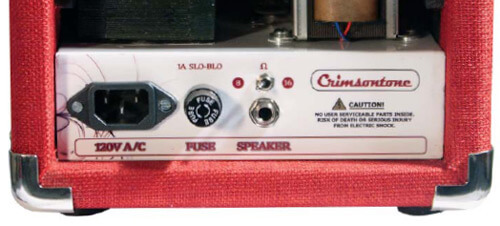
Crimsontone SE Mini Amp Review

Decades ago, practice amps were effectively no-frills versions of their bigger brothers. Even so, those little amps of yesteryear became something magical in the studio. From Jimmy Page and his Supro to Joe Walsh and his Fender Champ, getting big sounds from little amps became the stuff of legend and a go-to approach for recording. Crimsontone Amplifiers embraces this philosophy in a big way—only two of the seven amps the company offers are 20 watts or more. Their newest amp—the 4-watt SE Mini—is a testament to the power of small and a cool nod to the role of low-wattage amps in the history of rock ’n’ roll.

In the Court of the Crimson
At just 7.5 pounds, the SE Mini certainly lives up to its name. The cabinet is covered in a tough red tweed fabric, and it features a sporty aluminum handle for easy transporting to the studio—or a gig in the park for that matter. Crimsontone didn’t design the SE Mini with gimmicks in mind either, which is evident in the simple feature set. It has just four controls—Gain, Tone, and Master knobs, along with a tiny Gain Boost switch.

The single-ended, all-tube head is powered by a Sovtek EL84 coupled to a JJ ECC803 preamp tube and a Mercury Magnetics GA5-P power transformer for a maximum of four watts. The GA5-P is part of Mercury Magnetics’ fantastic Toneclone Plus line, which is stocked with the company’s replicas of famous power transformers from the past. In this case, it’s a faithful reproduction of the transformer in Gibson’s 1950s Les Paul Jr. combos. I was pleased to see that the output transformer was also a Mercury Magnetics model, an FTCO-M that replicates the units in Fender’s Tweed Champ amplifiers of yore.

The SE Mini doesn’t rely on modern circuit design, but instead forgoes current technologies for a traditional, handwired, point-to-point circuit. Upon pulling out the adorably small chassis, I was treated to the sight of tidy wiring held together with clean solder joints and tight mounting. And the Components—F&T filter caps, Alpha pots, Orange Drop capacitors, carbon-comp resistors, two Xicon power resistors, and a Cliff input jack—are all top-of-the-line.

Good Things … Small Packages
Crimsontone touts the SE Mini as a practice amplifier, but it excels at hitting tones in the ’60s classic-rock vein. With a Fender 60th Anniversary Telecaster and a feed to the two 12″ speakers in a Fender Twin Reverb reissue, the Crimsontone’s clean mode belted out seriously raw, garage-rhythm jangle with a dash of classic Neil Young sting thrown in. The highs are crisp and brash, with tight lows and a gritty midrange. With a Gibson Les Paul Studio, the amp accentuated the midrange and softened highs, but the amp still retained its bold essence, staying tight in the low end and having a nice, even sag. It’s not a sound for everybody, but it speaks in the raw, unadulterated tones of no-holds-barred slingers of the first classic heavy rock era.

It’s worth noting that, while the SE Mini kicks with James Gang-worthy tones, I did have to really work with my picking hand to squeeze any real dynamics out of it. That said, that’s not uncommon with most small-wattage amps, and it certainly doesn’t mean that the amp isn’t touch sensitive. But if you’re used to using a big Marshall to get your ’70s tones, the SE Mini will feel like an entirely different animal. The amp doesn’t have excessive gain or saturation to hide behind, so it assures that you hear every single mistake. The sweet sounds that come as a trade-off are well worth it, though.

This Dog Bites
Getting the most meat and bite out of the SE Mini requires careful adjustment of the Gain and Master knobs. With the Gain Boost switch off, not much grit is available from the Gain control. Rather, it acted more like a voicing control, altering the feeling and response of the tone. Most master-volume tube amps have a gain structure that changes from tighter and crisper to warmer and spongier as you increase the Gain. Without the boost on, the Gain control on the SE Mini reacts the same way, but without adding huge amounts of saturation. Kicking in the Gain Boost adds a dose of rage to the tone, and I thoroughly enjoyed playing quick double-stops and soaring country bends with the SE Mini’s overdrive-infused, high-midrange snap.

Predictably, the boost kicks up the volume a few decibels, too. And I discovered by lowering my guitar’s Volume knob just how well the amp cleans up at even the dirtiest settings. The Gain Boost adds noticeable touch sensitivity, too. I got one of my favorite tones by dropping the Telecaster’s Volume down a quarter of the way and letting my picking-hand attack determine the amount of overdrive.

If you’re looking for more aggressive tones, it also pays to keep the Master at or near its highest levels. At practice-amp volume levels, the Telecaster sounded a little thin, and understandably so—I wasn’t pushing the single EL84 enough until I moved the Master to 3 o’clock, where there was a considerable volume jump. The sweet spot on the SE Mini’s Master is just a little higher, where it retains just the right amount of definition, while maintaining ample punch. Set the Master there and use the Gain control to set the flavor of the attack, and you’ll find a load of tone variation at your fingertips. Working within this range helped me keep the Tele’s bite under control and let the raw nature of the amp’s voicing shine through.

The Verdict
Four watts may not be the right recipe for tearing the paint off walls, but the SE Mini uses a well-designed circuit and quality components to sound much bigger than it looks— especially with a few 12″ speakers at the receiving end of its signal. Crimsontone’s SE Mini is a great choice for lovers of dirty, jangly rock guitar tones. But, like tube practice amps of yesteryear that needed to be driven and played hard to achieve their fullest tonal potential, it can require a more dynamic and forceful touch to tap into its inherent dynamics. Still, there’s nothing quite like a healthy, low-watt tube amp cranked to high heaven for creating sweet, raw, rowdy sounds. In that musical category, the SE Mini is a hit.

Buy if…
you’re a fan of dirty, to-the-point guitar tones at reasonable volumes.
Skip if…
you need to be heard over a drummer or can’t abide bone-simple feature sets.
Rating…

Street $799 – Crimsontone Amplifiers – crimsontone.com

Source: https://www.premierguitar.com/articles/Crimsontone_SE_Mini_Amp_Review

Next-Generation Trannys: Vintage tone — but more, more… MORE!

Did you know that Mercury™ has been developing and perfecting THE next-generation of guitar amp magnetics? When it comes to guitar tone our Axiom® series may be one of the most significant advancements since the mid-1960s.

Here’s why. We now have the “rear-view-mirror” benefit of knowing what made certain amps sound good… and just as important — what didn’t. Mercury was the first, and still is the only company, to capture and retain the sound of the most desirable old school amps with our ToneClone® series trannys. But, along the way, we discovered that we could now do things the old school guys never dreamed of. The Axiom® series was born!

Our Axiom® series answers many of the “what if” questions that has plagued both players and amp designers for decades. For example: What if you could mix the characteristics of one amp’s outstanding magnetics with another — say, get both Fender– and Marshall-tones from the same amp without the lifelessness of digital emulation? Or, what if there was no quality limits imposed on how transformers were made (you wouldn’t believe how dumbed-down most transformers are!)?

The Axiom® series isn’t only the result of engineering expertise. We received profound contributions from many of the finest players who ever recorded—musicians who generously gave their insight and direction to this on-going project. Axiom® “high def” transformers take your tone, clean or distorted, to the next level. Axiom-ized amps give you more vivid harmonic overtones, added sparkle, more dynamic headroom, and much better note separation. Even if you’re into weapons of mass distortion, Axiom® transformers deliver a far wider spectrum of tonal variations and possibilities than any previous design.

So, whether you’re upgrading an existing amp, or working on a new design, give our Axiom® line a test drive—you won’t be disappointed.

Source: https://mercurymagnetics.com/pages/_misc/FAQ.htm#Next-Generation%20Trannys

Give Me Your Dirty Tone

the way your nasty little amp makes you play…

So where does great tone come from if nearly everybody is using the same parts from a small circle of high production manufacturers? What gave vintage amps their great tone and why do some amps sound better than others? How come so many new amps don’t have that inspiring tone anymore? And where do babies come from?

The answer to (most of) these questions, and the absolutely mission of Mercury, is in the TRANSFORMERS. We’re not kidding when we call them the “heart and soul of your amp.” Transformers establish the character and behavior of your amp’s ability to generate tone, from clean, to dirty harmonic distortion. That’s why Mercury goes through the trouble and expense to build and tune transformers the hard way: by hand, one-at-a-time, with old-world craftsmanship and the most tonally effective materials money can buy. The end result is all the guitar tone you want without a speck of cereal.

But what does the future hold for the electric guitar player and vacuum tube guitar amp owner? Is there truly something out there beyond the limits of vintage tone that isn’t going to be solid-state? Yes, we think so. With just the right combination of know-how and passion, Mercury is now helping amp builders re-think guitar tone by re-inventing it. We call these new tone-generating machines Axioms. The Axiom line showcases new advancements in magnetics through transformer design. Designs that give amp builders better tools to work with and tone that we feel will better connect you to your guitar. All without following conventional vintage designs or recipes.

One fine example of Axiom-based advanced transformer technology is Mercury’s Epiphone Valve Jr. Kit*. What started out as a simple demonstration of Axiom transformers gave a $100 economy tube amp $1,000+ worth of tonal performance! It’s hard to believe there isn’t a vintage bone in their windings! We’re not surprised that this best-selling kit is fast becoming the first choice of pro players and recording studios alike.

Imagine an affordable entry into the world of boutique amps that delivers top-shelf vintage American clean tones all the way to the overdriven distortion of the old British amps. Also imagine an amp that totally responds to every tone knob and pickup adjustment setting on your guitar. It’s fun stuff!

Our little upgrade kit is a showcase of what the future has in store for harmonically-rich tone. We invite you to check out our Epiphone Valve Jr. Kit and hear for yourself just what everybody’s talking about. Or ask your amp tech about other Axiom upgrades for your amps. Remember, in addition to our already amazing-soundingToneClone and Radiospares lines we make Axioms for most popular amps.

Source: https://mercurymagnetics.com/pages/_misc/FAQ.htm#Give_me_your_dirty_tone

Building the Perfect Plexi with Peter Stroud, Don (Tone Man) Butler and Mercury Magnetics

Seen the price of a vintage Marshall Plexi lately? Your three grand won’t guarantee a virgin circuit or great tone, but if real Plexi tone is what you’re all about, you can get there for a lot less, guaranteed. When TQR Advisory board member and Sheryl Crow guitarist Peter Stroud decided to make a Plexi from his late ’70s fawn 100W head, we enlisted the capable assistance of our main toneman Don Butler and the team at Mercury Magnetics, home of
the ToneClone line of authentic vintage-style replacement transformers. Mercury has blueprinted and reproduced nearly every vintage transformer made for guitar amplifiers, and they can rewind any blown transformer to exact, original specs and sound. So settle back and enjoy the following discussion and review of Peter Stroud’s successful conversion of a common (they built 1,000s) Marshall 100W into a stellar 100W Plexi.

TQR: What is the origin and general history of this Marshall amp?

Peter: I bought this amp about 10 years ago with the matching straight-front 4×12, 100 watt cab from a dealer down in Texas. It’s a ’77 Super Lead 100 watt 4-input. I was big into collecting the f awn-colored Marshalls at the time – a poor man’s custom color. Around the same time, I had learned how to work on my own amps from the standpoint of preventive maintenance and tone tweaking, so I converted the amp over to a cascade-style master volume circuit like a late ’70s head or JCM800. Eventually, I missed having the 4-input sound and put it back to its original wiring.

Don: This amp was a standard 100 watt, non-master Marshall from the late ’70s. Some mods had been done and then undone. A few coupling caps had been changed as well as a few resistors

Strengths: Semi-loud. Typical PCB Marshall from this era. Better quality glass board than what’s used now.

Shortcomings: Ceramic caps. This amp was voiced for brighter sound, less bottom, and quicker distortion onset that original ’60s versions didn’t employ. It still had a couple of the original filter cans. The amp sounded exactly the same no matter what guitar was plugged up to it – no tonal distinction between any instrument at all! Very over-emphasized, weird G string odd harmonics (most likely old filter cap related). I have to add from a personal note that this was the worst sounding Marshall I’d ever heard or played! In a word – no tone!

TQR: Describe the specific improvements that you wanted to make to the amp, both from a technical perspective, and sound-wise. What components were changed and why?

Peter: I don’t know why – from my monkeying around with it perhaps (laughs), but this Marshall just sounded like crap. Every time I plugged in I would end up turning it off – totally uninspiring. I replaced tubes and a cap here and there but resigned to the notion that it might be the transformers. I had replaced all of the power supply caps, but not the 50/50mf in the preamp circuit. It could have been that – who knows? But in any case, I would have thrown it on eBay had it not been for the color. Instead, I decided to make it a guinea pig. I’ve been messing around inside my amps again recently and have had a real desire for that 100 watt Plexi sound and the cleaner, fuller tone they deliver. This head was far from it! Having read the ToneQuest interview with Sergio about Mercury Magneticstransformers and poking around their website, I figured the fawn 100 watt would be the perfect amp for a conversion – change out the transformers for high voltage models reminiscent of the Plexis and wire it up exactly like a ’67. I was determined to demystify the whole Plexi thing once and for all for my own comfort. After seeing how Mercury Magnetics had “cloned” the power and output trannies of an old Plexi, I felt the missing link had now appeared. Then you stepped in and it mushroomed into a topic for ToneQuest, and a very deserved one indeed. Nothing better than to see if any Marshall can become a Plexi, especially since the latest prices on eBay for Plexis are more than I care to spend. I need amps that are bulletproof and easy to replace. I spoke with Sergioand Paul at Mercury and they eventually hooked me up with Don Butler. I was thrilled to have Don take over the job knowing his ear for tone and knowledge of Plexis. There were three CD’s I used as a tone reference: bootlegs of Cream in ’67 and Jeff Beck in ’68, and the Hendrix at Monterey Pop Festival album.

Don: Peter wanted the amp to sound like a mid-to-late ’60s Plexi 100 watter. More specifically – a ’67. I replaced all the little green (or were they grey?) ceramic caps with polyester tubular caps and replaced any resistors that needed to be changed with carbon comp types. Polyester caps were used in the ’60s in all Marshalls for the main tone and coupling caps. I know for the higher value caps in the pico farad range, Marshall generally used the ones from Lemco or RS that were a flat mica-looking cap covered in a baked on ceramic or wax dipped coating. I used silver micas for those in Peter’s amp. I like the smoothness and more transparent quality of silver mica. The original polyester coupling and tone caps that Marshall used in the ’60s were from a company in the Czech Republic called Iskra. I believe Phillips imported those to the U.K. Those are the ones everyone refers to as the mustard caps. I used Mercury’s Plexi 100 output tranny, 10H choke and 100W Plexi power tranny that provides the B+ with around 525V DC after rectification. In my humble opinion, Mercury makes the best sounding, most accurate and most reliable clone transformers on the planet.

I also used the FRED rectifiers in place of the little cheap-o IN4007 diodes for the rectifier. I like the way they smooth out the harshness of the treble frequencies and take out that mid range bump that’s common with a solid state rectifier in amps. They also seem to add more note clarity, harmonics, and detail to the sound and tone of an amp. I replaced the components, transformers and the remaining filter cans. I then converted the circuit to what was used in 1967 in terms of how it was wired and component values.

Really, it’s not much. On the first valve/tube you remove the wire coming from pin #8 and shorten it and solder it to pin #3. The cathodes on that tube were shared and went to an 820 W resistor with a 250mf @ 25v cap paralleled with it to earth/ground. The second valve/tube did not have a cathode bypass cap in those days – only the resistor. There was a .68 cap I removed from that spot. I also removed the .004 cap from the volume pot on channel #1. That cap makes the amp distort quicker, and usually at just “2” on the volume pot you’re out of clean headroom and well into distortion land. That’s not what Peter wanted or what the old amps were like. I also used two 0.1/ 600V caps coming out of the phase inverter vs. the .022/600V caps that Marshall started using in around ’69 to brighten up their amps.

On the later Plexis you will find a 500rf and 33K slope resistor on Lead models and a 250rf & 56K slope resistor on Bass & PA models. Most, if not all of the schematics I’ve seen for early 100 watt Plexis used the 250pf & 56K in the tone stack. Peter’s amp had the 500rf and 33K. I replaced the 33K with the 56K for more bottom and hit a mid point between the 500rf & 250rf and used a 390rf cap for the treble control. Not too bright and not dark. With Some Lead amps, you have to turn the treble off and even then it can still be too much. I’ve found that by using a 390rf you get a happy medium point where the treble pot is still useable. All I did was put the amp into what Marshall’s circuit was in 1967 and used the same values and type of components they used, with a few improvements like the FRED rectifiers.

TQR:What type and brand of tubes were selected and why?

Don: I used the Svetlana EL-34s, as I’ve found them to sound extremely close to what the old Mullard xf3s offered in tone, as well as reliability. I’ve compared them side by side in my old 50-watter and in my ’64 VoxAC-50 and it’s really close. Preamp tubes – I used the new Ei Elite gold pin 12AX7s. To me they sound very nice and close to old Brimars and Mullards. Don’t forget that the Phillips Electronics Corp. once owned Mullard and Ei among many other subsidiaries. Ei seems to have made an excellent attempt at creating a good sounding, reliable 12AX7 that they pre-test before sending out. My favorite 12AX7-type of valve/tube for Marshall’s are the Brimars, as they offer a bit of that aggressive old tone that Marshall’s are famous for.


View PDF Article

Mercury Magnetics Trannies and Choke

Many of you are already familiar with our resident amp tech, studio owner/engineer and advisory board member Jeff Bakos. In his spare time, Jeff occasionally builds amps for clients on request, and lately he’s been asked to build… you guessed it – small little biters. Since his personal GA-5 has been featured so often on various recording projects, Jeff toyed with the idea of recreating the Gibson GA-5 Skylark for a minute, but given the fact that vintage GA-5s remain fairly plentiful, he ultimately decided to design his own simple take on a smallish amp – the 8 Ball. Housed in a Mojo Champ cabinet, the 8 Ball is built with one of our favorite tens, the Eminence Legend Alnico 1058 (that’s a hint), Mercury Magnetics trannies and choke, and premium components, including Sozo coupling caps. With the bigger Mercury Princeton transformer set, the single 6V6 / 12AX7 / 5Y3 design is capable of producing 10 watts of power. Features include dual inputs, volume and tone controls, a front panel line out jack, and a “vintage” / ”modern” toggle switch also conveniently mounted on the front panel.

The “vintage” setting produces pristine Fendery clean tones up to 12 o’clock on the volume control, gradually followed by a progressively thicker growl with intense distortion and sustain. In this setting, the 8 Ball surpasses all the other small amps we’ve reviewed in terms of practical versatility with stronger, louder clean tones and a more gradual It’s back! We are now resuming limited production of our meticulous recreation of the original 1959 DeArmond R15 1×12 amp. You may recall that we initially produced a limited number of TQ Clarksdale amps in 2006, before our supplier for the original chassis informed us that small runs would no longer be possible. We’ve found a new supplier, and the TQ Clarksdale “DeArmonds” will be built again by Jeff Bakos with our original specs – pin cabinet construction and design identical to the original, original Mercury Magnetics Tone Clone transformer set cloned from our original ’59 DeArmond, hand-wired chassis, premium components including Sozo caps, Celestion G12H 70th Anniversary speaker, premium JJ and Tung-Sol tubes, Evidence Audio speaker cable, custom gold grill cloth and blonde Tolex covering. This 22 watt design represents one of the rarest and most toneful combos ever built. The original 1959 DeArmond 1x12s were built for just one year in Toledo, OH, and a clean example recently sold on eBay for $7000. In 2006 Jeff Bakos meticulously blue-printed our original DeArmond, Mojo created CAD drawings from the original cabinet design, and we sent the transformers to Mercury Magnetics to be cloned. The result is a phenomenal 1×12 that will generally kick any tweed Deluxe straight to the curb with a bigger, bolder voice and lush, musical distortion cranked. The 4-input, cathode-biased Clarksdale can be operated with dual 6V6s and 5Y3 rectifier for optimum burn, or a pair of 6L6s and 5AR4 for slightly more power and clean headroom. Blonde Tolex only, simply because it’s the coolest color…

View PDF Article

Amp Transformers, Output Transformers & Chokes

An Interview with Sergio Hamernik of Mercury Magnetics

In late 2009 I had the opportunity to talk with Sergio Hamernik about the history of the Mercury Magnetics, how he became involved in making transformers for guitar amplifiers, and the difference a high quality transformer can make on your tone.

How did Mercury get its start?

The company’s roots date back to the early ’50s. Mercury was started by an old General Electrics transformer engineer who was working there pre-World War II. He then went on to do a bunch of design work for the war effort. And in the early ’50s, hung a shingle and became self-employed.

The name “Mercury” came out of his passion for Mercury cars, he always drove a Mercury since the late ’40s — he loved those cars — and eventually moved from the East Coast to the West Coast where he found that there was a lot of military and aerospace work. A booming economy in the early ’50s gave him a lot of business.

I met him in the 1970s when I was an engineering student and an audio enthusiast. Back then the electronics world was well into its solid-state “evolution,” and interest in tube gear was quickly disappearing. Not for me, however. I found myself in demand as a guy who knew about those “old things”; not only the math, formulas and specifications but I also had the “ears.” I could fix and keep the old gear running. So, I worked as a hired gun for a bunch of studio heads and pro musicians.

Typically when an amp’s output transformer blew. No one seemed to know any better so it was just swapped by whatever “factory” replacement or an off-the-shelf “equivalent” catalog transformer was handy. The invariable result was that the amp’s characteristic sound was gone. And no matter what resistors, caps or tubes were used, it could not be rescued or returned to its original sound. It was the transformers, it turned out, that were the key. The problem was coming up with a way to remedy the blown transformer replacement or repair that wouldn’t alter its tone.

To further complicate things, most transformer people I dealt with just didn’t want to bother with the music industry. For the most part the established electronics industry considered the needs and opinions of the audio and MI (Music Industry) communities as subjective, run by kooks, and occupied by people who didn’t know what they are doing. Audio and MI had always been considered the illegitimate stepchildren to the rest of the industry.

Out of pure necessity I had to got involved with transformer design and manufacture. As a customer of Mercury, they had built many custom transformers to my specifications — although we had many heated, on-going debates on the subject because the company owner hated audio! He never did understand what made guitar amp transformers tick, or how musicians thought and reacted to them.

That aside, he pestered me for almost a decade to take over the company because he felt I was the only one qualified. Eventually I did, and that was when Mercury got serious about the guitar amp connection. Sometimes you end up becoming an expert at something when no one else wants to do the job.

By the time I took the helm we were developing a really good and workable understanding of the relationship of transformer design to decent tone and how amps should behave. And around 1980 we began the long and arduous task of collecting and cataloging transformer specifications for every vintage amp, from all over the world. The deeper we dug, the more apparent it became that there were all kinds of factors that no one had previously suspected that affected guitar tone. And likewise, no one seemed to be paying attention to such things.

In turn, we invented proprietary technologies to aid this work. Even after three decades, we’re still innovating and discovering new things. From that fundamental research came our now famous ToneClone series, and later the Axiom line, which is probably the most significant advancement in toneful guitar amptransformer designs since the ’50s. Both product lines, we’re proud to say, have distinctly different niches in the annals of guitar amp tone.

We’ve not only cured the old transformer tone issues, but made it possible for musicians to upgrade their existing amps. And we’ve also made it possible for amp builders to reproduce amps of the same or better grade than even the most outstanding vintage amps of the past.

When did you become involved with making transformers for guitar amplifiers?

Back in the ’70s I worked for people on a one-to-one basis, usually under confidential arrangements, with certain rock stars that just didn’t want to be bothered by their names being flaunted around. What they want was their amps running right for recording, projects, touring, etc.

The problem was that when technicians would fix the amps they’d often loose their tone. It turned out that the culprit was the replaced output transformers. A changed output transformer would completely alter the character of the amplifier. So as I was the guy doing most of the work to resolve this issue, this expertise was brought to Mercury where we began a special division to cater to the guitar heroes.

Word got around rather quickly that Mercury was able to repair, rewind, and restore the original transformers and it just grew from there. The whole “Tone Clone” thing came from artists who had these amazing irreplaceable amps, amps that often made recording history. They didn’t want to take these amps on tour. So we came up with the innovative idea of cloning their original transformers that they’d fallen in love with. With the clones we could now easily make, for the first time ever, several identical amps for them. Or they would assign their techs to drop-in the cloned transformers so they would have, for example, six amps that would all sound the same as that first perfect amp.

These artists could now go on tour and not worry about breakdowns or theft, and keep their prized-originals back at home.

I worked with Ken Fisher, the whole Trainwreck thing, and a lot of the early boutique guys — and still do with Alexander Dumble. They preferred to keep things confidential and not let too many people know who their sources were because there were so few transformer designers that catered to the guitar amp market.

There was also a slow-but-steady dumbing-down occurring in audio and all that had been the post World War II momentum. Many of the ex-military components we’d been using were high tolerance parts, with mil-spec formulations of iron and copper and so on, that had been used to win the war effort. During the ’50s and ’60s we enjoyed the benefits of those high quality components at surplus prices. But by the late ’70s, and definitely in the ’80s, steel manufacturers started to change recipes to make the iron and other materials much more affordable.

You can hear the differences between a late ’60s Marshall, a late ’80s Marshall, and a Marshall today. A good listen will really help you to understand what changes took place. Unfortunately they made so many of those changes more out of economic considerations than anything else. The amps were loud but they seemed to be losing sight of the fact that their tone was disappearing — the “recipes” had been changed.

In addition to many other factors, the iron that Mercury uses is custom-formulated specifically for us. We buy enough of it to be able to dictate the exact recipe from the foundries. And all of our iron is literally from American ore processed right here in the USA. 100% American madeto the original specs. Are there drawbacks? Well, some of the iron rusts more easily, but that’s actually a good thing because rust is a natural insulator. But the opposite is also true. When you see a modern transformer with a silvery or a shiny core just know that they aren’t worth a damn when it comes to tone.

Can you tell us more about guitar amp transformer history?

Here’s an amusing anecdote that may help explain our case for guitar amp transformers: There’s a great deal of documentation, from back in the mid-’50s, where engineers, and other technical people, were writing really scathing reports on how awful the transformers were in the audio industry. Those darn transformers! When tubes were plugged into them there was a tendency to distort! And they couldn’t have any of that! Likewise with harmonic distortion — especially even-order harmonic distortion.

Many amp builders, techs and players, today, don’t understand that tubes were originally designed to run dead clean, linear, and be efficient voltage amplifiers. That the tone we’ve all come to know and love is caused by the transformers literally “irritating” the tubes into distortion.

Which is, of course, the whole point of what we are looking for in guitar amps. Back in the ’50s, they were fighting to get rid of those nasty distortion tonal characteristics. Now we embrace them. But that was audio – guitar amps were still in they’re infancy and yet to be realized. It took a generation or two of innovative musicians to take those “undesirable” tonal characteristics and create music; to work with distortion and make it into something musical.

Ironically, it was that no-distortion engineering mindset that ushered in solid-state, and why it was so openly embraced in the ’60s. It was solid-state electronics that eliminated the output transformer.

In the late ’60s, Vox went to Thomas Organ to have solid-state amps built. They were very proud of this state-of-the-art amplifier. Curiously, I met a few of the musicians from the late ’60s that were sponsored by, and using, those amps. The tone was so awful and unbearable that they used the enclosures but hid their old tube gear inside! As you may already be aware, the vacuum tube industry is alive and well, and we’re still waiting for the solid-state industry to catch up.

Part of the confusion is that musicians assume it’s the tubes that give them their tone. There’s a lot of synergy going on in an amp, and the tubes certainly contribute, but let me illustrate this another way. Did you know that there is what we call “output transformer-less” amplifiers in the HiFi world?

These amps basically parallel a bunch of power tubes together until they get down to 16, 8, or 4 ohms. There is no output transformer, so you literally connect the speaker directly to the tubes. If you ever get the opportunity to do an audio demo with this style of amp, you will find that while it works, it sounds nearly solid-state. The output transformer is what provokes a tube into giving the characteristics that we find desirable as far as tone. Audio engineers didn’t want the tubes to distort, as tubes are basically nothing more than very clean voltage amplifiers. But when you have a reactive element like a transformer, you irritate the tubes into harmonic distortion.

Therefore, the difference between a good and mediocre transformer is based on how it works and syncs with these tubes to produce the kind of tone or distortion we are looking for. It is not as easy as winding some wire around a steel core, if it was then we would not be having this conversation.

How does a Mercurytransformer made today compare to the transformers made in the golden age of amps (the ’50s and early ’60s)?

One of the biggest mistakes existing in today’s amplifier community, especially amongst hobbyists and do-it-yourselfers, is to blindly copy every aspect of a vintage amplifier hoping to get a piece of that golden tone. At best, this method still produces very random results. One of the key reasons for this is the often-overlooked missing transformer formula. A builder will fuss around with the tiniest of other details but completely miss how the transformers fit into the equation. In short, get the transformers right, then the rest is much easier. Here’s another look at theses deceptively simple devices:

For vintage-style transformers, Mercury starts by duplicating the transformer design, build errors and all. We use the best grade components like they did in the ’50s and ’60s. We wind every layer and every turn as if it were a circuit in itself. In fact, the diagram on the left shows an output transformer circuit equivalent. Most people would think it is an audio circuit. These things are fairly complex, and all the numbers have to be right in order to get the tone we want as musicians.

We really do follow the recipe to a point. Although we don’t repeat any of the mistakes or inconsistencies that were prevalent, but didn’t affect tone. For example, if you were into Fender tweeds or late-’60s Marshalls. To do this we would literally put the word out to rent or borrow dozens of amplifiers to find the one or two that had thesound, and dismiss the rest. There were typically many inconsistencies as well as “happy accidents” in the best-sounding examples we’ve auditioned. A lot of this has to do with the sloppy tolerances of the original transformers.

For our transformers we extract the best parts and virtues of the original best-of-breed transformers and remove all of the obstacles to tone. Perhaps just as important is that we adopted a “cost is no object” approach, making our transformers equal or better than the originals — and then add consistency. We now have this so finely tuned that if you bought a transformer from us five years ago, and then the same one today, it would sound exactly the same. You don’t want good batches and bad batches, which is precisely what made the original production runs vary so much.

Another issue is the so-called controversy between paper tubes and nylon bobbins. In the vintage years they used both. Some people think that somehow, some magical quality comes from using a paper tube winding form over a nylon bobbin. Tonally it made no difference at all. Paper tubes were widely out of tolerance most of the time because of how they were made. They would wind multiple coils on long sticks then use a saw or blade to cut off the various coils. In order for these long tubes or coils to come off of their winding forms they had to be conical. So this invariably meant that the first coil would be larger in diameter and the last coils smaller. As you can see, it’s easy to see why each of these inconsistently-made bobbins had a greater difference than the material they were made from. And there are other issues that occur over time, like paper has a tendency to disintegrate, collect moisture, etc.

When we switched to using nylon bobbins the tolerances were within 3,000’s of an inch of each other, as opposed to the wildly varying amounts found in paper tubes. If you were ever to take apart a really old transformer (pre-’70s) sometimes you’ll find wood wedges that are jammed between the paper tube and the core because that piece of paper was too wide and too sloppy to fit into the core correctly! They would force a wedge in there so the darn things wouldn’t rattle!

Which method, paper or nylon, made for the best tone? It’s the luck of the draw. We’re fortunate in that we have all these stars as clients who have these amazing-sounding amps. They went through the hassle of culling and choosing and picking the special amps that inspired them. The amps they recorded with. When we analyzed their transformers we sometimes found happy accidents or other little anomalies that would set a transformer apart from already sloppy tolerances of the standard production run.

There are little subtleties and changes from one transformer to another that make a heck of a difference tonally. So when you look online at our list of ToneClones, just know that they are from the hand-picked, best-of-the-best amps of their model and era. We continue this “weeding” process every day — and there’s apparently no end in sight. And that’s why, with some amps, we have several versions — each with its own tonal qualities — and others only a single set to choose from.

We use this process to establish new benchmarks. And you never know, tomorrow a new variant may arrive that totally blows away what we already thought was as good as it could ever get.

It is interesting that you take that approach to upgrading — the never-ending search for better-sounding benchmarks.

There is no real money or glamour in what we do, it is really all born of a passion for music. I come from a musical family, my Mom taught me as a little kid that music was a form of “food.” And that hasn’t changed. Everyone who works at Mercury is just in love with playing and listening to music, and we all believe that there is always some room for improvement or a way to raise the bar somehow.

Back in the ’70s and ’80s there wasn’t really a need for a company that designed and sold transformers to the public, so I stayed away from the general public for as long as I could and really only worked with professionals.

But at some point I realized that it was the average player who was getting ripped-off. Things were getting dumbed-down, the tone is slowly and steadily being vacuumed out of the amps. They were becoming duller-sounding, less interesting and more noisy. So, we decided to formally launch this product line so the average guy could have access to our technology. It takes an extreme amount of labor and effort it takes to build them to this standard. You know, even if someone wanted to buy 1000 transformers we would have to no-bid them because we really don’t have any way of doing things quickly.

Automation isn’t a practical solution. Everything we do is wound by hand, one at a time; it is the only way it can be done. Say you have 100 turns and 10 layers, well that would mean 10 turns per layer — that is how a machine would think of it. But what if a rock legend’s best transformer was 9 turns on one layer, 11 turns on the next, 7 on the next, 3 after that and so on, but the sum total ended up being 100 turns. Sometimes one layer can have a different winding style than the other; sometimes it is non-symmetrical meaning, if it is a push-pull, that one side of the primary doesn’t have the same turns as the other side. If that was the recipe that created the magic, we’d have to duplicate it. It’s just not practical to build machines to do that, so we end up having to do it by hand. It’s the proud old-school craftsmanship way of doing things. Something I think we could see a lot more these days.

We have a reputation for nailing tone. Our Fender transformers don’t sound like Marshalls, they sound like Fenders — and vice versa. In fact, we’ve become the industry’s new standard. If you were going to design or create a tube-based amp, it’s clear that we’re the folks to talk to.

Can you explain how a Mercurytransformer can improve an amplifier’s tone and how they outperform the stock transformers found in most amplifiers?

In designing toneful transformers specifically for guitars (and that’s all we’re talking about here, not necessarily transformers for HiFi or any other purpose), the trick is in the magnetic field and how it behaves. The nature and the speed with which the iron reacts to the changing of an alternating current, in an alternating magnetic field, is what makes tone happen.

If you have “slow” iron, you’ll have a dull, non-sparkly sound with no bell tones — no matter what you do with the amp it will always be kind of noisy and fuzzy.

Where others have tried and failed they’ve blindly followed generic transformer formulas without understanding that guitar amps are different animals. They’ve somehow missed that point despite all the evidence to the contrary. The fact is that transformers for guitar amps do not necessarily follow textbook rules.

Indeed, it should probably be noted that we’ve developed a whole new technology around transformer design specifically, and only for the guitar industry. And that these designs are essentially irrelevant to any other use. But Mercury is also in a highly unusual position. Our decades of transformer “vivisection” have revealed all manner of unconventional tips ‘n tricks to us. And we’re now the keepers of this new, but proprietary, technology.

I seriously doubt that we could have done it without the, let’s call it “archeological benefits,” of our observations. Decades of studying the good, the bad and the ugly of guitar amp transformers have revealed a great deal.

Nothing that I have found in the reissue market, transformer-wise, even resembles anything that was made during the “the golden age of tone.” They are unrelated. The inductance, magnetic fields — all of that is just completely different and far removed from the original designs and recipes. So there is no way that a reissue amp is ever going to sound vintage unless they bother putting in the right ingredients.

With our Upgrade Kits, for example we’re trying to show people that we can move forward into new sonic territory from where vintage designs and tone left off. And our Axiom series transformers are the definitive showcase for this technology. Their tone is just amazing.

To push the point even further, we don’t include any “voodoo” parts in our Upgrade Kits. With the exception of the transformers, the Kits use only common, everyday, and off-the-shelf components. And most of our Kits also include a Mini-Choke. When the circuitry is correctly designed a Mini-Choke will make a huge improvement in an amp’s tone because, in terms of its power supply, it changes the way the amp works.

A good guitar amp is only as good as its power supply. If you have a dynamic and moving power supply that reacts to the demands of the audio end you’ll get get great note separation and good bass dynamics. You start to hear chimes and other phenomenon, and even the harmonics between the strings like a “5th note.” What the heck is the “5th note”? In barbershop quartets, if they get their harmonies right, they hear the “5th note” which is basically a harmonic of all four singers. We are doing that with our guitars thanks to distorted amplifiers.

Where did the idea for offering an Upgrade Kit for amplifiers like the Champ “600” and Valve Jr. come from and who designed the Upgrade?

I designed all of the magnetics (the transformersandMini-Choke) and the general concept behind the Upgrade in league with Allen Cyr from the Amp Exchange. He is one of the most competent, finest amp designers I know of; there are only about five in the world that are true masters of the art — those who really know the math, how to read tone, how to listen to the subtleties of clean and overdriven sounds and tones, design circuits, and understand tube behaviors. As a bonus to those who appreciate this kind of thing, we always try to throw in some interesting tweaks and tricks that are unorthodox.

The idea is to spark some interest and perhaps get more people involved in tube-based amp tone and evolution. We expect some folks to study our Upgrade Kits, learn from what we’ve done, and take off into new territory from there. No one is offended by that.

But our initial concept was to take an inexpensive stock amplifier, one that cost no more than $100 or so, and modify it into a professional- or recording-quality amp for very few bucks. The Valve Jr. was the amp that gave us the inspiration for this project. Epiphone broke the mold with their little Valve Jr. amp. Out of the box it’s a remarkable value. So, although it was a bit of a challenge I thought it was interesting because we were not stepping on anyone’s toes — we were just taking something that already existed and designing an Upgrade Kit around it. A simple proof of concept that made the case of transformers and guitar tone. It just seemed like a cool thing to do. The project was validated when pro players began demo’ing our prototype amps — they couldn’t believe how amazingly great such a tiny amp could sound, it freaked them out, and they all wanted one of their own!

Our intention was to give the kid who was practicing guitar in his bedroom, whose parents are on a limited budget, REAL guitar tone. In a typical scenario, the parents buy a cheap little amp and guitar combo because they want to see if their kid will stick with it. But the kid doesn’t understand that the sound of the amp is fatiguing. He doesn’t understand why the amp doesn’t sound good. And he doesn’t realize that the amp is fighting him, tiring him out. I know that happened to me and so many of my friends when we were kids. Struggling with hard-to-play guitars and poor-sounding amps is probably the single-most reason so many budding young (and old) guitarists give up the pursuit of their dream. But some are rescued. One day they visit a guy, or hear someone play, who has the amp with the tone and with just the sweep a few chords they experience the “My gawd!!! I want to sound like this!” phenomenon.

That is what we’re trying to offer with these Upgrade Kits — where thetone is accessible to just about anyone. So they could have an amp that wasn’t dull or desensitized. An amp that allows them to make that real connection to the tone. Tone is not just about noise and volume, it is rather complex, and undeniably emotional.

At the LA Amp Show we had our Upgraded Fender Champion “600” running into a full Marshall stack. Here we had this little amp powering eight 12″ speakers and it sounded great. People kept asking to see the back of the amp thinking that we had somehow rigged up something, but it was just the little Champ “600” with our Upgrade Kit.

When you have a nice open tone it is not about counting watts because the window is so big and wide and the soundstage is so deep that it gives you the impression of more power. We are not putting out more power with the Upgraded “600” — but it sure sounds like it! It’s about opening up that tone window and giving you more.

It’s kind of like taking a radio whose volume is set to half way and having it placed about 20 feet away from you then bring it right next to your ear — the volume has not changed but you hear a lot more of its content.

One of the things we do when modifying a circuit is to lower the noise floor, which a lot of people overlook. Many amps, like the Valve Jr., have a nasty hum in standby. We had one that would just start to howl if you left it alone for a while! So whatever high noise floor it had would eventually feedback on itself and cause that noise.

Our focus is on inspiring people. We are trying to show people that they really can get great tone today, that there is no age that has come and gone. There is still a lot of fun things left to do with your amplifier when you are on the search for great tone.

Hearing how much these Kits improve upon the tone of the amplifiers, and how well thought-out they are, will a Mercury amplifier that is designed and built by you ever make an appearance?

No. We are a supplier of key components to the boutique industry and to several of the large amplifier companies, and that is a comfortable spot to be in.

There is no shortage of amplifier companies out there and it really is a conflict of interest if we were to start selling amps and transformers. I would rather stay out of it.

The whole point of the Upgrade Kits was an area where I didn’t see any conflict with the people who were in the amplifier business. In the end the Kits really represent a transformer demonstration. If you were to just show someone a picture of a transformer or even had one in your hand and tried to explain how much better their tone would be, no one would care — it’s a yawner. But when you build one of these inexpensive Upgrade Kits and you actually hear the difference that the transformers make, it really drives home our point that transformers are important, that they are the building blocks of guitar amp tone.

And in the end we do this because we love it, we really love what we do. We get to create all of these products that help people find their tone, and who wouldn’t what to do that?

Source: https://mercurymagnetics.com/pages/news/GuitarFixation/SHinterview/index.htm


Terms of Service – Old

All Mercury Magnetics® products are 100% handmade in California, USA.

Copyright © 1954-2018 by Mercury Magnetics. All Rights Reserved. Mercury Magnetics, Mercury Vintage, Partridge, FatStack, SuperStack, NewVolt, Mini-Choke, Multi-Choke, Mercury Custom Shop, Mercury Boutique, “The Heart & Soul of Your Amp,” “Holy Terror,” “Bad Guitar Tone — Whatever Its Evil Mission It Must Be Stopped!”, “Champ 600 Upgrade,” “XLG Upgrade Kit,” “Mean 13” and “The original British amp tone — shaken, but not stirred,” “Our Transformers are Stacked,” “The Essential Building Blocks of Your Tone,” “Mercury Studio-Pro Upgrade Kit for the VOX AC4tv,” UTM (Universal Transformer Mount), Amp-Saver and Copper-Tone are trademarks licensed to Mercury Magnetics. Axiom, ToneClone, Radiospares, VoodooScrew, Multiple Arrayed Geometric Inductive Coupling (M.A.G.I.C.), and APS (American Pro Series) are registered trademarks licensed to Mercury Magnetics. All other companies, products and trademarks mentioned on this website are trademarks of their respective owners. Unless otherwise noted Mercury Magnetics is not affiliated with any of these companies.

Mercury Mod and Upgrade projects and their documentation are the result of technical investigations made by the engineering staff of Mercury Magnetics. The disclosure of the information herein may pertain to proprietary rights, and the furnishing of these documents does not constitute an expressed or implied license to use such materials.

Mercury Magnetics® transformers and other products are in compliance with the European Union RoHS Directive 2020/95/EC with respect to the following substances: lead (Pb), mercury (Hg), cadmium (Cd), hexavalent chromium (CR (VI)), polybrominated biphenyls (PBB), and polybrominated diphenyl ethers (PBDE).

Mercury Magnetics® founded in Southern California in 1954 and incorporated in 1968.


CAUTION!

The voltages in your amplifier can be dangerous. Transformers and chokes are not user serviceable parts. Installation of these components should always be performed by an experienced technician.

The simple ability to use a soldering iron is not enough to qualify a “do it yourself person.” Those who are inexperienced in working with electronic circuits should never attempt to service their amplifier. Household line currents can be deadly!! Transformers, chokes and large filter capacitors can store a dangerous charge for several days or more after the amplifier has been unplugged. Never touch the terminals of such devices without being certain of their charge status. Risk of shock and damage to equipment may result from mishandling and/or improper use of these components. Please use common sense and always think safety first. After all, tone is most enjoyed when you are alive to hear it.

Warranty – Old

Mercury’s Exclusive Tonal Satisfaction Guarantee:

Your complete tonal satisfaction is our only goal. All Mercury Magnetics® APS®, Axiom®, ToneClone®, and Radiospares® products come with a Tonal Satisfaction Guarantee. If you are not satisfied with any Mercury Magnetics® transformer or choke, for any reason, you may return it within 30 days for an exchange or refund (minus all freight). See “Exchange or Refund Policies” below for addendums.

Mercury’s Limited Workmanship Warranty Policy:

Mercury Magnetics® warrants its non-OEM transformers to be free from defects in material and workmanship, if properly installed, under normal use for a period of TEN (10) YEARS from the date of purchase, and by the original owner. Note: this warranty does not cover damage caused by external sources or user error. Defective transformers will be replaced or repaired at our discretion. To the extent permitted by law, the foregoing is exclusive and in lieu of all other warranties or representations whether expressed or implied, including any implied warranty of merchantability or fitness. In no event shall Mercury Magnetics® be liable for special or consequential damages. All warranty returns are examined by our engineering staff to determine the exact cause of failure. This warranty is void if your transformer has been tampered with. See “Exchange or Refund Policies” below for addendums.

Shipping Info:

  • All shipments are F.O.B. Chatsworth, CA

Exchange and Refund Policies:

  • For warranty inquiries on Mercury-made OEM transformers, please contact the manufacturer.
  • Please contact Mercury Magnetics® to discuss making an exchange or to obtain a refund within the thirty (30) day guarantee.
  • Insure your shipment for the invoice amount.
  • Include the original or a copy of the invoice.
  • All transformers must have their identity stickers intact.
  • CODs will not be accepted. Ship prepaid. If the product is found to be defective or in the case of a shipping error, we will issue you a refund for shipping costs.
  • Keep a record of your shipment until you receive your credit or replacement.
  • Returns or exchanges are accepted within a 30 day grace period.
  • Custom Shop orders or Mercury Vintage (restorations and/or rewinds) are covered by the Workmanship Warranty but not our Tonal Guarantee.
  • Wrong parts sent to you due to errors on our part will be replaced or credited at your option. Return freight for that product will also be credited.
  • Do not cut the lead wires until you have tested and listened to the installation. Before cutting the leads, solder and bolt the transformers in, and try them out. When you are satisfied, cut the leads and complete the installation. Cut leads to the transformer will incur a 20% restocking fee. For a refund the product must be returned in salable condition without damage or cut lead wires.
  • Transformers that have been tampered with, modified, or with unauthorized attempted repairs will be rejected. Please package all product carefully.
  • No credit will be issued for less than $5.00US.
  • The use of any type of attenuation device on any Mercury Magnetics transformer will void the 10-Year Warranty. Using “dummy load” or “power attenuators” damages transformers. These type of products wear out power tubes at an accelerated rate, and in some cases may cause RF to be generated in the output, which may destroy the output transformer.
  • Discontinued, obsolete or closeout sale items will not be accepted for return unless they qualify under our warranty.
  • The Mercury Tonal Satisfaction Guarantee and 10-Year Warranty is only extended to transformers and chokes of our upgrade kits. Mercury assumes no responsibility or liability for the amp or the work done to the amplifier.

The “Overlooked Upgrade”: Guitar Amplifier Output Transformers

One of the common questions we receive here is, “How can I get my (fill in the blank with your favorite brand name) reissue amplifier to sound like the original?” Often times the question will contain additional information of what had been done already. “I’ve replaced the preamp and power tubes and gotten it biased, but it still sounds cold and brittle….”

My usual answer involves examining the guitarist’s rig by taking a “system” approach when looking for a particular tone. Often too much weight (i.e. blame!) is put on the amplifier, perhaps because it is the most electronically complex item in a typical signal chain. Countless times I’ve personally played with changes to an amplifier, whether modifying it, changing the tubes, etc. and still had poor results in overall tone! Now if you’ve got the wrong pickup or speakers for your needs, then obviously no change to an amp is going to help all that much….

But presuming all other areas of your guitar rig/system are covered, then let’s go back to the amp itself and talk about a particular upgrade that hasn’t gotten the attention it has deserved: the output transformer. In fact, dare I say that in many cases — for example a reissue amplifier — a change to a higher-quality output transformer will have a greater impact on improving the overall tone than playing with different brands of tubes. Essentially, if you’ve got the best tubes, or the worst tubes, but if your output transformer is a low-grade model, your tone will suffer no matter what you do.

“What the heck is the output transformer?,” you may ask. Well in layman’s terms, it’s the final connection in your tube amplifier that takes the signal from the tubes and transforms them into impedances and power suitable for your speakers. In further layman’s terms, it’s one of the big “metal blocks” that is attached to a typical tube amplifier’s chassis and is the connection link between your tubes and speakers. Most commonly, there are two large transformers in an amp — The other besides the output transformer is called the power transformer — that is the one that is responsible for taking the wall current and transforming it into the DC power used by your amplifier. While the power transformer is directly responsible for areas like supplying exactly how much voltage goes to your tubes and therefore can affect the response or “feel” of the amplifier, it is the output transformer that can dramatically affect the tone of your amplifier since audio signal is actually passing through it.

Like tubes, transformers can distort and color the sound, but in part because they are wired to an amplifier rather than just being “plug-in” devices, I feel they receive very little of the attention as to how much they can affect the tone. In fact, output transformers used to be thought of as simply items to be replaced when they failed. However, I can attest personally that in many instances a change in the output transformer to a quality unit as an upgrade can make a huge difference in tone — especially with those popular reissue Fender, Marshall, and Vox amps currently being made.

I recently was fortunate enough to try some units out made by Mercury Magnetics (www.MercuryMagnetics.com) with the idea being to install and listen to the various tones of some of their models of output transformers. The test-dummy amp used in the first case was a stock 1974 Marshall JMP 50 watt model 1987 Lead model — it had recently blown its output transformer after a tube had shorted a connection between two pins of the tube socket so it was the perfect candidate. The stock transformer still actually “worked” somewhat – but the power output was very low, probably about 1/5 of what the amp should have been producing.

Mercury Magnetics offers three choices for replacement 50 watt output transformers and I had the opportunity to try two of them. The units are part of the Axiom® or ToneClone™ series which are hand-built replicas of the original transformers used in the Marshalls of various eras. In addition to the Marshall replacement transformers, Mercury Magnetics also makes various other Axiom® models for classic Vox and Fender amplifiers in addition to other toneful amps such as Ampeg, Gibson, Hiwatt, and many others.
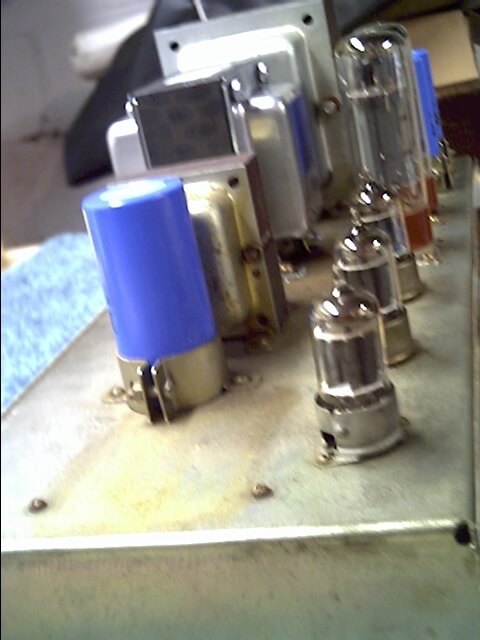
The models I tested were the Axiom® 050JM, a 50 watt output transformer model based on the earliest “plexi” Marshalls, and the Axiom® 050JM-SL, a similar model with the “Self-Leads” option. Both are priced at $150. The SL model differs from the standard 050JM in that it is made just like the earliest original plexi transformers were, where the solid copper core wire that is wrapped around inside the transformer continues outside of the transformer and is also the same wire used to connect to the tubes and impedance plug, etc. The solid-core copper SL wires outside of the transformer are covered by glass-cloth fabric material, just like that used on the original ‘60s models. Conventional transformers (including the non-SL version 050JM) use a different type of wire, often Teflon, that is spliced at the end of the solid-core wire that is then wrapped around the transformer inside. So what’s the big deal about the wire type? Oddly enough, it seems to really affect the tone of the output transformer — more on this in a moment.

Mercury Magnetics makes another model as well, the 050JM-M ($175), that is designed to be used in conjunction with modified Marshalls that require a beefier output transformer to better match up to the higher B+ plate voltages and other modifications or changes that run the amps harder. Since the ’74 JMP Marshall guinea pig was a stock model, I focused on the two plexi model variations, the 050JM and 050JM-SL.

The 050JM-SL was installed first. Since Marshalls sound best when run hard into power tube distortion, that’s exactly the listening environment I used. The head was run through a ’71 basketweave Marshall cabinet with G12M-25 greenbacks. The guitar was my trusty Les Paul Classic with a custom-specified Seymour Duncan Seth Lover PAF-type pickup. The tone of the amplifier with the 050JM-SL installed was brighter in the upper mids as well as the highs. The gain was a bit lower than with the stock Marshall’s output transformer (when it was properly functioning), but the clarity of notes and chords was definitely improved. The 050JM-SL is a good fit for players that like classic-rock and blues tones and perhaps need a bit more high-end cut through the mix. Usually additional highs are the last things that are needed with Marshalls, especially the amps and cabs made from about the mid ‘70s onwards. However, if you play through an earlier model Marshall loaded into a basketweave cab with G12-25s, “over brightness” really is not an issue and the O50JM-SL is the right match for this earliest type plexi tone. If you’re running a later checkerboard cab and a ‘70s JMP Marshall like our test model, the O50JM-SL may prove to have a bit more top end than what you’d want.

Moving over to the O50JM, I was amazed at how different this transformer sounded, even though other than the lead wires that exited the transformer, it has the same specifications and parts as used in the O50JM-SL! After installing it, I knew that the O50JM was the choice for the hard-rockers, whether using a plexi or metal panel-front Marshall. The O50JM had more distortion dirt and grind in the tone. Both transformers contributed to a very smooth response from the Marshall, but the O50JM traded off the upper frequency and some of the clarity content found in the SL model for what sonically resulted to its increased distortion and compression.

I also had the opportunity to hear the difference in a 100 watt reissue Marshall SLP after a Mercury Magnetics O100JM ($250: their 100 watt “plexi” output model) was installed and the results were even more staggering than the difference between the stock and upgraded 1974 Marshall 50 watts. I attributed this directly to the obviously low-grade output transformer used in the reissue Marshall. Crank up a stock Marshall SLP reissue and the transformer really does mask the tone — bright, grainy and cold are the words that come to mind as well as a pure lack of fidelity. The O100JM brought back the low-end warmth, made the top end smooth and the famous Marshall midrange crunch was back in the equation just like the original models. This is tone, pure and simple — and the reissue SLP held its own against my original ’68 100 watt Plexi Marshall.

One area worth mentioning is that Mercury Magnetics can also rewind original vintage transformers if you don’t want to replace your burnt out original vintage transformer. Mercury Magnetics replaces the internal windings and necessary parts but uses the original core and covers and then puts the transformer back to original specifications. This is ideal for the person who is looking to maintain their amp in a form that is as original as possible. This service is more costly than simply replacing the output transformer outright, but it will also help maintain an amp’s value so it makes a viable choice.

When looking into swapping out an output transformer, while it’s not extremely complex to do, it’s best to have a qualified professional technician do the job as tube amps contain lethal voltages that are stored inside the amp even when it is not plugged in. It can be a bit of a time-consuming job as you have to get underneath the amplifier’s layout/circuit board so the average charge by a technician to remove and replace the old transformer with a new one will typically run about $100 or so.


Shop for Guitar Amp Transformers

P.O.P. Counter Display

Requests for educational consumer handouts about Mercury have been pouring in. So, we’ve designed this simple P.O.P. (point-of-purchase) display to make information on Mercury’s quality transformers available. The brochure discusses transformer upgrades and restorations, as well as our ToneClone, Axiom and Radiospares lines of vintage and next-generation products. A must-read for any guitar player!

Help your customers to learn more about the sonic-qualities of great transformer designs. Our eye-catching display is designed to hold 40 Mercury Magnetics “Unleash Your Amp’s Tone!” brochures.


Fender Amplifiers

Founded in the mid-1940s in Fullerton, California by Leo Fender, the legendary amps produced by this company have been heard on countless recordings and are influential on countless other amp makers. In the beginning Fender paired small combo amps with lap steels and electric guitars aimed at student players, but word of the superior tone and build quality quickly spread among professional musicians. In over seventy years of existence, Fender has consistently evolved and innovated its sound from the Tweed era through the Brown and Blackface eras and beyond.

Mercury Magnetics has built a massive collection of ToneClone® Transformers and Chokes for Fender Amps available from all eras of production. Answering the needs of players and amp-builders alike, our extensive catalog of audio transformers is the ultimate resource whether you’re looking to replace a worn-out transformer in a vintage Fender amp or looking to nail a vintage tone in a new amp or amp build. The engineers at Mercury have painstakingly documented every detail and nuance of the best-of-breed vintage transformers and can faithfully produce perfect clones using the same materials and methods used on the originals.

The ToneClone+ Series from Mercury Magnetics adds more utility and options without altering the original tone. Love your amp but want to change your speaker configuration? Mercury’s ToneClone+ Output Transformers give players more impedance options like alternate and multi-tapped secondaries. Power Transformers can benefit from the “Plus” treatment as well with alternate primary voltage, Higher or Lower B+ Voltages, added current capability, and more.

Fender Woodie Amp Transformers: The earliest production amps to come out of Fullerton, Fender ‘Woodie’ amps can be identified by their hardwood cabinets and fixed handles. We are proud to offer ToneClone® transformers from this short-lived and rare Woodie era including the Woodie Deluxe (aka Model 26) and Woodie Pro.

Fender Tweed Amp Transformers: The Fender Tweed era lasted from the late forties to early sixties and a vast amount of artists from all generations have crafted their distinct tone using these amps through all genres. Notable artists include: Scotty Moore (Elvis Presley), Neil Young, Larry Carlton, Eric Clapton and Keith Richards. Mercury Magnetics has the largest catalog of vintage-correct Fender ToneClone® replacements transformers for the following models: Tweed Bandmaster, Tweed Bassman, Tweed Champ, Tweed Harvard, Tweed Princeton, Tweed Pro/Dual Professional, Tweed Super, Tweed Tremolux, Tweed Deluxe, Tweed Twin, and Tweed Vibrolux.

Fender Blonde and Brown (Brownface) Amp Transformers: Sitting on the timeline between the Tweed and Blackface Fender amps, the Blonde/Brown amps of the early sixties were most noticeably embraced by surf groups like the Beach Boys and Dick Dale. Our catalog of ToneClone® amp transformers for this era includes Brown/Blonde Bandmaster, Blonde Bassman, Blonde Showman, Blonde Tremolux, Blonde Twin, Brown Concert, Brown Deluxe, Brown Princeton, Brown Pro, Brown Super, Brown Vibrasonic, Brown Vibrolux, and Brown Vibroverb. Also see our transformers and choke for the 6G15 Reverb Unit.

Fender Blackface Amp Transformers: Easily distinguishable by their black control plates and white lettering, Fender Blackface amps began showing up on stages and recordings in the early-mid 1960s. Extremely popular among musicians then, the impressive build quality and versatile tones have kept these classic amps popular even 50 years later. Mercury Magnetics has hundreds of ToneClone® and ToneClone+ transformers and chokes for Fender Blackface Amps including: Blackface Bandmaster/Bandmaster Reverb, Blackface Bassman, Blackface Champ, Blackface Concert, Blackface Deluxe/Deluxe Reverb, Blackface Princeton/Princeton Reverb, Blackface Pro/Pro Reverb, Blackface Showman, Blackface Tremolux, Blackface Twin Reverb, Blackface Vibrochamp, Blackface Vibrolux, and Blackface Vibroverb. Also see our transformers and choke for the 6G15 Reverb Unit.
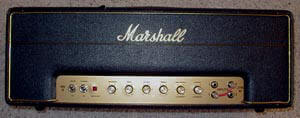
 

Plus+ Transformers

Mercury brands marked with Plus+™ logo are cloned transformers with minor additions. You’ll only see the Plus+ logo on our ToneClone, Partridge and Radiospares catalog listings. They’re modified, without tampering with the original tone, to match today’s power company voltages and employ better noise immunity.

Variations include: added input power taps, added secondary taps, and other minor enhances to the originals. More good news — all Plus+ transformers come with both our 10-year Workmanship Warranty and Tonal Guarantee.

To find out more, or discuss to the characteristics of the different transformers sets available for your amps, give us a call or email.

M.A.G.I.C.™ Higher-Fidelity Audio Transformers

As you would expect, Mercury also produces high-end transformers for hi-fi. Whether you are building, restoring or repairing you’ll want to talk to us about obtaining the best possible sound-quality and performance from your system. In addition to ToneClone and Axiom brand variations, Mercury’s M.A.G.I.C. series represent the epitome of transformer technology for hi-fi amps. For the consummate audiophile M.A.G.I.C. are the ultimate in high fidelity transformer designs. Mercury also OEMs transformers for many of the most award-winning hi-fi amps available.

APS® (American Pro Series) Transformers

The newest family of transformer designs from Mercury. APS transformers are built and specifically optimized for today’s amps and today’s tubes. Due to power, modern tube production, design and chassis “real estate” limitations, not all modern amps can be modified or upgraded to handle the full-on affects of our Axiom, ToneClone, Radiospares or Partridge transformers. APS transformers correct many of the design limitations of the stock transformers to give you the most your amp can offer. APS transformers make your amp more reliable and better sounding. If you depend on your modern amps for a living, then you need the peace of mind APS transformers will give you. Transformers made to take the punishment of being on the road and keeping your amp running.

All APS transformers come with our Automatic Thermal Resettable Fuses. Ask your Mercury Sales Rep about this important new feature! All APS transformers come with both our 10-year Workmanship Warranty. APS transformers may be used for upgrades or replacements for modern tube-based guitar amp applications.

To find out more, or discuss to the characteristics of the different transformers sets available for your amps, give us a call or email.

Premium Guitar Amplifier Output Transformers

Truly inspirational and superior tone has led you to the final link in the chain – Mercury Magnetics. Premium guitar amplifier power transformers, output transformers and chokes.

100% American made — no hidden imports — we really do make ’em from scratch, right here in California!

100% handmade and hand-tuned using only hand-wound components. We never compromise or play bean-counter games by short-cutting, attrition or using cheaper materials. Each and every transformer is consistent. If you ever need to replace one of our transformers, your amp won’t lose its tone — your replacement will sound exactly the same as the original.

American-made steel — we’re the only transformer manufacturer who custom orders, from an American steel mill, the unique alloys used in our transformers. These alloys are not only made here in the USA to military specifications, they are not available anywhere else in the world. They’re the same alloys used in the all-time best-sounding transformers during the “sweet spot” era (pre-1965) of guitar amplification history.

Things are never stagnant around here. Mercury maintains active and ongoing R&D (research & development). All kinds of new and exciting-sounding transformer designs (Axiom series), as well as our ongoing cloning of outstanding output transformers mined from the great old amps (ToneClone series). For vintage British amp freaks, check out our Radiospares, Hiwatt and Partridge series. And many modern amps can be upgraded with our APS series — our newest line of guitar amp-specific output transformers.

For any popular amp design we’re likely to have not just one but several transformers for different purposes and different tonal characteristics. It’s always a smart idea to discuss replacement, restoration or upgrading with your Mercury rep. — you’ll find his input invaluable.

Our output transformers are found in the amps of virtually every major player in the world. Many specify Mercury and won’t play an amp without them.

Mercury transformers are standard components or factory upgrades available in virtually all high-end boutique amps, including Fender’s boutique and custom shop lines.

Mercury transformers are so highly rated that they typically increase the value of any amplifier they’re installed in.

CARV-LEGAIII-O

Legacy III — 4, 8 & 16Ω taps — ** ToneClone of the #15-02116

Horizontal Especial mount, bolt hole spacing is 2 3/8″ x 3 3/8″

Transformer Originality

We have always considered the AC30 to be a great amp, if not the most versatile when compared to some other well-known names built during the ’60s… like Fender… arguably the most versatile amplifiers ever built.

The ToneQuest Report advisory board member and super player, James Pennebaker, first alerted us to the full potential of the AC30 when, after two decades of loyally playing vintage Fender amps, he switched to the reissue AC30 TBX as his main stage rig. Suddenly, James’ tone seemed to become his own, whether he was playing through his vintage Gretsch Country Gentleman, Cunetto-era Relic Tele or Strat, or Custom Shop Gibson ES295. Last year during the winter NAMM show in Los Angeles the considerable potential of the AC30 came to light again, thanks to west coast swing king Kid Ramos…. The Kid played two long, incredible sets in a cool little dump in Anaheim called the Doll Hut with vintage Strats and Teles through a vintage AC30 with an equally vintage Fender reverb unit, proving beyond any doubt that you can absolutely rule playing the blues and swing with an AC30 rig. The Kid’s tone was unforgettably smooth and musical in the style of an alto saxophone being expertly blown, and for an electric guitar, that’s a mind-blowing experience you won’t soon forget. So you’ll understand our interest in a mysterious and somewhat troubled AC30 that was traded in at Midtown Music. Sick as this amp first sounded, the Kid’s tone was still calling…. The amp seemed to work fine when it first arrived at Midtown, but it soon developed progressively noisy problems that eventually took it down. That’s when we volunteered to deliver the AC30 to Jeff Bakos and make it the subject of this review.

Jeff was able to diagnose and fix the AC30 in a couple of hours (merely a few bad caps and resistors in the vibrato circuit and tone stack), but the amp’s origins remained a mystery. The cabinet was in excellent, original condition and displayed all the classic marks of vintage British Vox construction, but there was no “Jennings Musical Industries” metal serial number tag on the back panel — only the heads of four brass upholstery nails that had once held a missing plastic ID tag. The gray control panel also lacked the typical Vox “JMI” stenciled logo, yet the amp was clearly built with the correct, hand-wired turret board construction, transformers, and Vox circuit. Our attempts to date the amp by the pot codes were unsuccessful because all of the originals had been replaced with CTS pots dating to the early ’90s, so we contacted Mitch Colby at Korg (Vox and Marshall USA) and sent him images of the amp with a request for help in dating it.

Mitch replied that it appeared to be a “Vox Sound Ltd.” AC30 built in England by Dallas Arbiter, the company famous for the original FuzzFace and Sound City amps made in England. Mitch also added that the Dallas Arbiter AC30s were “very nice” amps, having been built in the early ’70s, immediately following the end of the JMI era. Mystery solved. Contrary to information on the AC30s built at the Dallas Arbiter factory that we found at www.voxamps.co.uk, the cabinet of our amp is built with solid wood throughout — not particle board. And how does it sound? As good as it gets. The Celestion G12 speakers dating to 1979 had been reconed some time ago with the correct Celestion kit, all of the preamp tubes had been updated with JAN GEs, and while not a Jennings, this amp fully earned the vaunted status of vintage AC30 in every regard — punchy, fat, rich in midrange tones where the guitar really lives, with solid bass response and sweet, soaring top end.

Should you decide to explore the full potential of an AC30, you have a number of very good choices. The original vintage amps built by Jennings in England are expensive, so you need to insure originality of the transformers and internal components. A few replaced capacitors or resistors here and there are of no concern, but massive modifications by an overly zealous bench monkey are unacceptable — keep walking. Prices for amps with non-original transformers should be reduced by 30%-50%. Vintage 2×12 combos with original Celestion G12 speakers in excellent condition range from $2,800.00 for a later gray panel to as much as $3,500.00 for a red (candy) panel amp and $5,000.00-$7,000.00 for the earliest tan AC30s. Although increasingly rare, vintage heads alone can sometimes be found for around $1,600.00 and climbing. The limited edition hand-wired AC30 built several years ago by Vox/Korg features reverb and an excellent master volume feature. Outstanding and pricey, expect to pay at least $2,000.00 for this amp in gently used condition. At that price it’s a steal. The discontinued “Korg” AC30 reissue TBX amps like James Pennebaker’s are very good as is, and they can be made to sound even better by replacing the transformers and a few key, tone-shaping components. Don Butler specializes in optimizing reissue Marshall, Vox and Fender amps using premium components and Mercury Magnetics ToneClone transformers (www.tone-man.com, 661-259-4544).

Early reports on the Chinese AC30 Custom Classic ($1,600.00 with Celestion Alnico G12 speakers, blendable channels, a true bypass FX loop, spring reverb and master volume) are also very good, and Don tells us that his personal Custom Classic also benefited from the same upgrades he makes on the TBX models.

The AC30 is another great amp for players wishing to acquire a sound that sits clearly apart from typical Fender and Marshall tones. AC30s have a unique, compressed character rich in harmonic content and British chime with a versatile amount of clean headroom. More aggressive solos with heavy sustain and gain will require a boost pedal (especially with weaker single coil pickups), but the results will be stellar if you start with a good amp. And don’t buy into the collector hype about Top Boost models being the only desirable version to pursue. Vintage Jennings AC30s stamped “Bass,” “normal,” or “Treble” are equally desirable — in fact, we prefer them. Older AC30s are often a little tattered and may require a tune up and a stout matched quartet of EL84s, but these old amps will reward you with a thicker, richer tone and an intoxicating effluvia of Bitter and Rothmann’s that is lacking in modern AC30 reissues built on printed circuit boards. But oh, how you do pay for the privilege….

The most significant negative regarding all AC30 amps new and old is their considerable weight, which will quickly remind you why they are equipped with not one, but three handles. If you haven’t personally experienced the magical sound of a good AC30, perhaps it’s time. Heave forth….

The transformer in a 30-year old Amplifier

In part I of our Marshall JTM-45 transformation process, we installed a point-to-point board from Metropoulos Amplification (www.metroamp.com) and began to hear the positive results of our test Marshall as it came to new life.

Now, in Part II of our continued Marshall JTM-45 transformation, we move forward with two additional changes in addition to having the opportunity to compare the final results to an original 1964 badge-logo Marshall JTM-45.  The two changes that we decided to perform were to swap out the stock output transformer to a Mercury Magnetics (www.MercuryMagnetics.comAxiom® O45JT-C model as well as to upgrade the board’s capacitors to those made by SoZo Amplification. To say that we were excited as well as just plain curious about the final results, especially when we could now compare it to an original JTM-45 — is an understatement.

We contacted Paul Patronete at Mercury Magnetics and he hooked us up with the Axiom® output transformer. Paul added that the Axiom® O45JT-C is a custom version output using Teflon wire instead of the normal UL1015 vinyl wire. The Axiom® O45JT-C output offers 8 & 16 ohm secondary taps. When it comes to output transformers for the JTM45 amp, Mercury Magnetics offers a plethora of options beyond the stock, cloned, vintage replacement. Options available in the Axiom® line of output transformers are primaries optimized for KT66/6L6/5881 tubes or EL34/KT77 tubes. Secondaries with just about any output impedance combination that one could want. Many of these custom Axiom® models feature “mil-spec” Teflon wire leads with silver tinned, nineteen strands of high purity copper. All of the Axiom® transformers are hand wound from period correct specimen, vintage blueprints. One of the more popular Axiom® pieces that Mercury Magnetics offers is an exact clone of the highly coveted Radio Spares output transformer. The Radio Spares output is from the early original, first run Marshall JTM-45 production amplifiers. Mercury Magnetics offers several versions of the Radio Spares output. One of the most popular versions is a Teflon wire leaded version. The Radio Spares transformer is well-known for its association with the earliest Marshalls and according to Paul is what you’d find in the famous Eric Clapton “Bluesbreaker”-era amp.

Those that have listened to or played through a properly running Marshall JTM-45 know the sound. It’s a smooth and naturally compressed distorted tone that when pushed will provide just enough crunch to know it’s characteristically a Marshall, but without any of the “buzzing bees” preamp tones characteristic in high-gain preamp-gain emphasized amplifiers. As you push the volume controls up higher on a the best JTM-45s, it’s clearly the sound of rock with its fat bottom end, lovely harmonic overtones, and sustain that sits well with the best blues and classic rock tones heard. All of this packaged in an amp that really is one of the most dynamic and player-responsive amps ever built.

The reissue JTM-45, while certainly not a “bad” amplifier on its own, really does lack much of the detail and smoothness that is really much easier to grasp and identify when heard. For example, the reissue JTM-45 in stock form would thicken up appropriately with the expected tube compression when turned up, but it clearly was not as smooth. There are definitely some tones that sound a bit “grainy” and edgy that a properly running original JTM-45 doesn’t have.

A project such as this JTM-45 reissue transformation offers an exciting opportunity for those serious about maximizing their tone, but either don’t have or don’t want to shell out the prices for the originals. As of this writing in early 2004, script-logo JTM-45s are commanding a minimum of $4,000 and the better examples are going for more than that. Our badge logo JTM-45 featured here generously on loan for the story has a value that may well be approaching $10,000 by today’s estimates.

With that aside, we should start out by saying that this is not a thorough “apples-to-apples” comparison between the two amps. To be 100% fair, ALL the components would have to be altered to the exact specifications of our 1964 badge-logo Marshall JTM-45 and that really wasn’t the point. The point of these transformations was to get the stock reissue JTM-45 sounding more like the “real thing” as described above with regards to the powerful, smooth and dynamic Marshall tone.
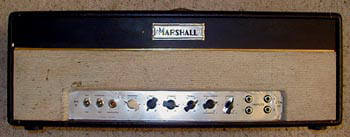
Another issue beyond the component values is that we’ve opted to keep the power transformer in stock form for the time being in the JTM-45. As a result the transformers will supply a different amount of B+ current to the plates and so it will not respond in exactly the same way as the original Badge logo model.

One final, and perhaps most important point, which Mercury Magnetics vice-president Sergio Hamernik added: “The transformer in a 30-year old amplifier will sound characteristically different as it ages compared to a new replacement, even if the replacement is built with the same materials.” And while the component materials and manufacturing methods used by Mercury Magnetics are made to the exact same standards as the originals (Sergio also added “Every turn, every layer, is copied and blueprinted exactly, including any original manufacturing anomalies found during our rewinding process of the original, vintage specimen, Sergio emphasized that the ToneClone™ series transformer will still sound different, but “like the original did in the amp when it was new” and not like the tone of the aged 30-year-old transformer. Since much of our favorite tones were recorded at least 20 years ago, perhaps this isn’t such a bad thing?
Sergio did suggest breaking in the new Axiom® transformer with 20 to 40 hours of hard playing time. He also said that this break-in period will get the transformer about halfway there to that 30 year seasoned tonality. Thermal cycling and running magnetizing currents through the transformer (playing the amp) will definitely sweeten things up in that period of time.

We could and may still make further changes to the reissue JTM-45 in the future and report back. However, with the point-to-point board, reduced “vintage” filtering, and tube swap that we performed last time around, along with the planned replacement of the on-board capacitors and output transformer for this second round, we thought that we’d be in really good shape with the final tonal results of this amp. And for those that missed it previously, we had previously written about Mercury Magnetics output transformers used in a 50 watt Marshall and were very pleased with the results. We anticipated nothing but the same results with the change in the reissue JTM-45 this time as well.

So far our project amp has KT-66 power tubes, 32x32uf and 16x16uf filter caps and a Metro Amps point-to-point circuit board.  At this stage, we were very satisfied with the results.  We could have stopped here and had a real tone machine, but we wanted to see if we could get even closer with a few more changes. Sonically, the reissue at this point prior to the SoZo caps and output transformer change, did exhibit more of the growl and gain of the original, but it still wasn’t nearly as smooth or as dynamically punchy as the badge logo JTM-45 was.

Mike Mullen on testing the SoZo Caps

While waiting for our Mercury Magnetics output transformer, I read about some capacitors that created quite a buzz on the Plexi Palace vintage amp forum.  We found that SoZo Amplification was offering custom made capacitors aptly named “mustard caps”.  They are obviously mustard yellow but apparently these caps are also made to the same specifications as the yellow mustard capacitors which were originally found in tube amps from the 1960s and 1970s.  These little yellow jewels keep the foil thickness, polyester film dielectric and voltage ratings the same as the originals.  In addition to the material makeup of the capacitors they also share the same physical dimensions.  According to the SoZo Amplification website, the physical shape has a lot to do with the sound because it changes the slew rate.
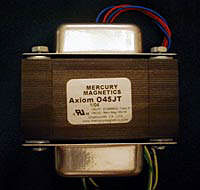
The SoZo Mustard Cap is longer and thinner as compared to most high production caps readily available today.  The additional length results in a different signal delivery time, changing the harmonics of the capacitor and yields smooth, clear, thick lower-mids.  Polyester film was chosen because of its deeper tonal character and aluminum foil was chosen to exactly recreate the capacitor’s original sound and performance.  SoZo also chooses to use tin-coated pure copper leads, which SoZo claims aids in the retro mustard cap sound.

I promptly received the package containing five .022uF and three .1uF SoZo Mustard Caps and soldered them in.  In about thirty minutes all the caps were installed and I was ready to hear the results.

I flipped on the power, plugged in a Seth Lover-loaded Gibson Les Paul and let the KT-66’s warm for a few minutes.  Turning off standby, I decided to start with my best impression of Angus Young from AC/DC to entertain my neighbors. What I heard from my Celestion loaded 2×12 cabinet was clear, warm guitar tones that sounded ALIVE!  The tone of the amp was basically the same, but it was much clearer, richer and more complex than what I heard before.  I was very pleased with the improvement.

Anyone that is due for a cap job on his or her favorite amp should really give the SoZo “mustards” a try and change those along with the electrolytics while you’re already there.  I think the results are very satisfying and the cost runs about the same as a decent guitar cable.  The caps can be ordered direct from SoZoAmplification.com or from MetroAmp.com.  MetroAmp.com is offering these SoZo caps individually or they can be ordered with one of their point-to-point boards.

A final point is that SoZo amplification states that there is a break-in period for the capacitors and that the tone will actually improve and be at best form sonically sometime between 40 and 70 hours of use. While I’m not there yet as far as hours of use, I definitely like what I’m hearing so far!

Installation and listening to the Mercury Magnetics™ O45JT-C Output Transformer

The Axiom® 045JT-C output transformer is part of the Mercury Magnetics Axiom® ToneClone™ series, and is 100% hand wound in the USA by Mercury Magnetics at their factory in Southern California. Mercury Magnetics offers a number of transformer clones for JTM-45 amplifiers as Marshall used a few different suppliers during different times with its own JTM-45s originally. Some people may have a preference for the earliest transformer equipped in JTM-45s, which were those built by the Radio Spares company. According to Mercury Magnetics, the Radio Spares output transformer has more “high-fidelity” characteristics in its tone. According to Paul at Mercury Magnetics, their Radio Spares clone is a special, intricate transformer that produces a subsequently wider frequency response and in some ways mirrors other transformers in design such as the early famous Partridge units in the Hiwatts.
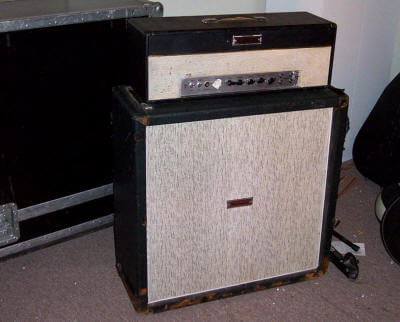
However with that said, there aren’t comparatively as many JTM-45s equipped with original Radio Spares output transformers so we went with the more commonly found transformers as found in later JTM-45s. When speaking with Paul, he also noted that the original, vintage “Radio Spares” equipped JTM45 amplifiers are highly sought after and can command big dollars in the musical marketplace. Perhaps we’ll experiment with one in the future to hear the differences for ourselves.

The installation of any output transformer, while seemingly “simple” (“hey there’s only a few wires right?”) should actually only be performed by either a professional technician or by an enthusiast with a minimum of Electronics 101 knowledge, including the ability to read schematic diagrams, an understanding voltages and polarity, etc. This is the advice directly from Mercury Magnetics.

The transformer includes a wiring diagram sheet listing the color-coded primary and secondary wires, and these may not necessarily match the wiring in your amp. Mercury Magnetics also warns that installers put safety first, as there are literally hundreds of AC volts that can come off of the primary. A typical technician will charge 30 to 90 minutes of labor for the installation, which can average anywhere from $50 to $150.00. Prices and the time required to install an output transformer can vary from technician to technician.

*Installation tip: anyone planning to replace both the output transformer and circuit board may want to remove the old circuit board and output transformer first and then mount the new transformer.  Then you can install the point-to-point board and not have to mess with it later to get at the output transformer mounts.

After some time and with the transformer installed, it was time to play! But first, a few minutes with the badge-logo JTM-45….

Taking a Classic for a Test Drive

The original badge-logo Marshall JTM-45 is truly an example of a wonderfully responsive guitar amplifier.  In its best state, it can provide a range of tones that vary between the liquid and thicker lead tones of early Clapton, to the warmer side of the Marshall crunch a la AC/DC that we all know and love. The vintage badge-logo JTM-45, that we have the good fortune of borrowing courtesy of our good friend Woody (thank you!), had recently gone through a full check-up through southern California’s own Plexi Palace, so we knew that it was in fine form.

And it certainly sounds like it. No other Marshall seems to be as well suited to provide such a wide tonal range as well as being able to provide a feel with beautiful harmonics and compression as a JTM-45 circuit. The sense of dynamics that can be controlled with one’s technique was right on the money. This JTM-45 plain and simply is THE ultimate blues and rock amplifier.

It stings and bites as musically as one could imagine with a Fender Stratocaster using the bridge position pickup with the Marshall’s channels bridged and the volumes set at about 7. With the neck pickup, the tones are fluid and with a bit of a gain boost from a floor box could easily capture the full sustain similar to what a player like Eric Johnson would get. The power output on the amp is moderately high, but at the JTM’s power range, it really is a nice match against any solid-hitting drummer and the perfect club amp for small and mid-sized venues.

With a Gibson Les Paul in hand loaded with LegendaryTones.com’s current favorite Seymour Duncan Antiquities and running the badge-logo JTM-45 through a basket weave Marshall cabinet (NOT the cabinet photographed here which is an earlier pinstripe) with original 25 watt greenbacks, the tone of the bridge pickup was pure AC/DC circa “Powerage” when running the volumes at about 6. With the volumes set at 7, the added gain and thickness moved into “Highway to Hell” territory. Switching to the neck pickup provided a wallop of a fat tone that seemed like it could sustain for days. Think early Cream here.

Listening in on the reissue JTM-45

After that experience with the 1964 badge-logo JTM-45, part of me didn’t want to turn the amp off, but alas it was time to move to our modified reissue. Running the same controls (and in fact the same tubes were used and setup in both amps) and equipment, I started playing the reissue with the Strat first. The immediate first impression: the reissue JTM-45 felt great – the same feel of compression and control of the dynamics was there. And there was also a noticeable improvement between the circuit since the change of both the output transformer and SoZo caps. Besides having a bit more power and punch in the signal, these changes really seemed to smooth out the reissue JTM-45’s tone and were definitely much more pleasing to the ear.

But specifically what were the differences between the reissue and the original? Well, the modded reissue stood out with a bit more attack in the high frequencies. It’s definitely a bit of a brighter amp than the 1964 badge-logo, but not by a great deal and not bright in such a way as to be “piercing.”  The reissue JTM-45 could definitely mimic the original with a simple reduction of presence and treble controls and it did very well. Also, both SoZo Amplification and Mercury Magnetics told us that there is a break-in period for the parts to obtain their final adjusted tone. Again, for the SoZo caps, its 40-70 hours, and Mercury Magnetics stated the average break-in period should be a minimum of 20 hours of hard playing time with its transformers.

All said, we couldn’t wait that long nor did we have the time to play continuously to then report on the changes, but maybe we’ll add a brief report in the future after the break-in period.

When switching to the Les Paul with the newly transformed JTM-45, the same characteristic bold crunch with a warm full bottom end was evident. The modified reissue JTM-45 is definitely smooth when overdriven and power chords are a thrill to bash out in AC/DC style. Leads in both pickup positions of the Paul sang nicely. The neck position is always powerful with the JTM-45.

Final Thoughts….

In both amps, the feel, sustain, and tone was tremendous. The reissue in its current form has a little bit more of a faster attack, while the original badge has a bit more of a relaxed sag to it characteristically. It’s also a little bit darker. That said, we expected differences especially considering that each amp’s circuits are not identical. But what they do both share together is the original Marshall tone that we grew up on and know and love. And the fact that this tone can be captured without the need to hunt down a costly original is a nice thing for players indeed. There is something to having an original — it’s a testament to a wonderful period of musical history that NO reissue would ever be able to capture from that perspective. But at the same time, one thing that the reissue has going for it in its favor is the fact that most players would feel much more comfortable taking it out to a gig or the all-night jam. I would be a bit paranoid taking out the original personally.

It’s a shame that some of our greatest musical instruments, whether we’re talking about a ’59 Les Paul or an original Marshall amp, are so highly-valued in this day and age that it’s difficult to “enjoy” playing them. However, isn’t it a nice thing that companies such as those featured in this article are so passionate about their products and in finding ways to empower musicians with great tonal solutions today? I’ve said it before — we’re definitely living in times of a tonal renaissance with the options we have and the number of great instruments, effects, and amps that we have available to us.

And though some people may say that, “they don’t build them like they used to,” I would actually agree. In the case of these dedicated companies and people, I believe they’re in fact building them better than they used to with care and meticulous detail that may not have always been present back in the day.

Source: https://mercurymagnetics.com/pages/news/LegendaryTones/LegendaryTones-02.htm

Output Transformer in Neil’s Deluxe

Of course, the perfect segue would now be to decipher the “special” nature of the original output transformer in Neil Young’s narrow panel tweed Deluxe, providing you with a timeline in which these happy accidents appeared, or better yet, a source for clones of thee special gems via, say, Mercury Magnetics. Sorry… we asked, and while the guys at Mercury had heard the same story about the output transformer in Neil’s Deluxe, we can’t offer any definitive clues to what Larry described as “the most perfect way form.” However, we can immodestly suggest that you snag a TQ Clarksdale [ed. note: built using custom Mercury Magnetics trannys]—a faithful clone of our original 1959 DeArmond 1×12. It’s Neil’s amp in spades and he doesn’t even know it. The first batch of ten have been shipped and a gutsier, louder or more soulful 20 watt 1×12 has never been built. We can’t (and don’t) take credit for the original design—that belongs to an unknown engineer at Rowe Industries in Toledo, Ohio circa 1959—but we can state without any doubt whatsoever that the Clarksdale nails the tone and attitude of the original, and the original is the most impressive 1×12 we have ever heard. It’s got more bottom end and stronger mids than a tweed Deluxe, and where a Deluxe folds up, the Clarksdale roars all the way to “10.” Ain’t no quit in the Clarksdale, and like Neil Young’s Deluxe, a lot of the mojo is found in the DeArmond’s mammoth, original output transformer.

With Young’s legendary tweed Deluxe off the board, we chose to put the vintage Vox AC50 Larry provided for Frank “Pancho” Sampedro on the Ragged Glory tour and recording sessions in play. Now, for those of you who tend to shy away from the potential complications that 40 year-old amps can present, the tale that follows will not inspire confidence, even though in the end, we did reach the promised land.

We found a 1965 gray panel Vox AC50on eBay with a “best offer” option. A search of previously completed auctions revealed that vintage AC50shad recently sold for anywhere from $900 to $1600 (more for the earliest, small box candy panel models with tube rectifiers). Since Larry’s “Pancho Vox” was a mid ’60sgray panel with silicone diode rectifiers, we made an offer of $950 for the ’65, which the seller accepted.So far so good. When the amp arrived from Florida,however, we immediately noticed that the chassis had dropped inside the cabinet. Vintage JMI Vox chassis are mounted on a plywood shelf that allows the amp to slide in and out of the cabinet, and due to the seller’s pathetic packaging job, the plywood board in the AC50had splintered and cracked beneath the weight of the chassis. The shelf was shot, but since a cursory fire-up led us to believe the amp was in good working condition as advertised, we asked for and received a $100 credit and cut a new plywood shelf for the AC50from a reproduction AC30 cabinet we had used to house a vintage ’63 AC30head. Piece of cake, and a very quick and proper fix.

In the interest of authenticity, we also ordered a 4×12 cabinet loaded with aged Celestion G12H30s (Hellatones) from Avatar Speakers. They were running a clearance sale on loaded 4x12s for just $378 and $49 shipping, so we bit, and people, this cabinet kicks the living shit out of our vintage Marshall 4×12.

With the cabinet delivered, we were anxious to uncork the AC50at full roar, and we did—for maybe five minutes. The thick sound of the Vox filled the room, the house and the block with a gorgeous,incendiary bloom through the Avatar cab and our blacktop Les Paul, until the joyous noise was suddenly contaminated with a most noxious and fear-some popping, fizzing and spitting, while we sighted a glowing red spot on the plates in one of the Svetlana EL34s. Not good. Off to Bakos Ampworks….

After an hour of probing on the bench, Jeff asked,“Do you smell that? Man, I think the output transformer is smoked. It’s probably been going out for a while.” Jeff patched in a substitute which eliminated the crackle-spit and confirmed, “It’s toast.” We immediately punched the number for Mercury Magnetics, and with our print deadline looming large, we had the Vox tranny shipped 3-day UPS from California. Jeff popped in the Mercury ToneClone tranny and replaced the original silicon diodes with FREDS. We also A/B’d an older pair of original “Winged C”Svetlana EL34s with a matched pair of NOS TeslaEL34s acquired from KCA NOS Tubes. At $80/pair,the Tesla’s are reportedly comparable to NOS Mullard sat more than three times the price. We also installed two lightly used Mullard ECC83sin the Normal channel and a spare NOS RCA 7025andNOS Teslain the Brilliant channel. But we were still missing an essential ingredient in the “Pancho” rig….

With the Vox AC50 brought back from the brink and the ’57 Junior found, we were finally poised to experi-ence Ragged Glory. We prudently set the volume controls for both channels of the Voxon “7,” following Larry’s recommendations for tone controls—treble dimed and the bass low. We’d ease into “10” on the volume controls later…. With a flick of the toggled tripwire the Vox lit up, and within 10 seconds the P90 was humming through the four Hellatones. We stepped back a few feet, brought the volume control on the Junior all the way up, turned away from the four twelves and cut loose with a tight, slashing chord progression out of E major. Digging deep into the Junior, the Vox responded as the twin EL34s became fully inflamed, gorging on 430 volts. The tone was thick, complex and gloriously ragged with a clarity, punch and trebly character that masked nothing—the perfect burning, churning, flannel and leather rhythm tone. Hit the low E string on a fat E major and it holds…. Come over the top with an upstroke on the E and B strings and the Vox responds with a gorgeous, penetrating cymbal splash that hangs as long as you wish. Need a dash more mids? Dial back the tone poton the Junior, Pow! There it is. Thanks to the FREDS, the entire rig breathes with an extraordinary touch sensitive feel, and even on “7” the Junior could easily be coaxed into howling cries of polyphonic feedback. After 15 minutes, we reached over and dimed both volume controls…. Now we were welding some very serious shit—Mississippi Queen meets Powder finger…. And this was 50 watts of classic, vintage Voxtone, mind you…. Harmonically richer, better endowed and far less linear and one-dimensional than a vintage Marshall—a cross-bred beast with a level of gain, distortion and raw heat far beyond the capabilities of any other vintage British amp unaided by a pedal. The tone, the vibe, the drama of this amp is stunning, and it left us wondering why the vintageAC50 gets so little respect. We can think of no other vintage or current production amps that do what the Vox does. Not one. Of course, your results could vary, so here are a few tips for you brave souls willing to take the plunge.

Don’t be fooled into thinking that the Voxis solely a“rock” amp. Kid Ramos blew us away at a blues gig playing an AC30with a Fender reverb box, and his was one of the best blues tones we’ve ever heard anywhere. Expect the same from an AC30.

Do not fear replaced transformers. You’ll pay less for the amp and the ToneClone replacements from Mercury Magnetics will outperform many tired originals.

Expect the unexpected and coolly deal with it. Voxamps aren’t Fenders—things like speed nuts on the chassis for the cabinet mounting screws are often missing or broken, but they can easily be replaced.Good tubes are also essential, but not every brand will provide reliable performance or the best tone in aVox. You must also exercise extraordinary caution around the AC50when handling the chassis outside the cabinet—even when performing simple tube swaps. The preamp tubes are mounted directly above two uncovered filter caps that remain hot even when the amp is unplugged. One slip and your Quest for Tone could be over.

Plan on investing in a thorough checkup by an experienced amp tech who can deal with cold solder joints, degraded components, old filter caps and proper biasing, before your amp takes a dump. Recommended amp techs follow, along with contact info for Mercury Magnetics.

View PDF Article

Overdrive Supreme Guitar Amp

The term “imitation is the sincerest form of flattery” has particular meaning in the music industry, where popular guitars and amplifiers have long been used as templates for the creation of “new” brands. This is particularly true in the boutique amplifier market, where probably 99 percent of currently available models are based on classic designs by Fender, Marshall, and Vox. Given that reality, it’s inevitable that some of the more recent amp builders who have managed to innovate and create truly original sounds will also see their designs cloned to one degree or another. The raison d’etre for copycat products is typically that demand for the real thing outstrips the supply, or that relatively few can afford to purchase the authentic product. Both are true of the amplifiers made by Howard Dumble, and the fact that the vast majority of guitar players will never get closer to one of his Overdrive Specials than the front row seats of a concert makes it no surprise that a small number of builders offer their own takes on that extremely rare and expensive amp (we’re talking around $30,000 these days). One of those is Fuchs Audio Technology, which with its Overdrive Supreme (a name that can also be conveniently abbreviated as ODS) makes no attempt to conceal where it draws its inspiration.

But Fuchs has packed plenty of cool things into this amp that any tube freak could appreciate. A peek inside the aluminum chassis reveals a mix of neat handwired and PCB circuitry, chassis-mounted pots, jacks, and switches (the mini toggles reside on one of the three PC boards), and chassis-mounted sockets for the four Svetlana 6L6GCs, two Ruby 12AX7As, and two Groove Tubes GT12AX7Ms. For low noise, the tube filaments are heated by regulated DC voltage, and regulated high-voltage supplies the preamp stages. The fan-cooled amp sports a high-quality Mercury Magnetics output transformer, and biasing adjustments are facilitated by the addition of bias trim pots and test points for each output tube.

Controls

Not that the Overdrive Supreme is overly complicated, but a few of its functions warrant explanation. In basic terms, this amp consists of Clean and Overdrive channels (or preamps), both of which feed a common set of tone controls, a reverb, and a Master volume. The Gain knob adjusts the amplification level in the Clean preamp, which in turn feeds the Overdrive preamp when you switch to distortion mode. Then there are three Overdrive controls: an internal (but user adjustable) trimmer that determines the amount of signal flowing from the clean preamp into the first stage of the Overdrive preamp, an Input knob that sets the amount of distortion (by adjusting the drive level between the two pairs of overdrive stages), and an Output control that’s essentially a lead master volume. This combination of controls gives you the ability to precisely tailor the amp’s gain stages to suit your guitars, pickups, and playing style.

The Overdrive Supreme also has a number of switchable functions that affect its tone. The Brite switch operates on the Gain control to provide a boost in treble (which diminishes in effect as the knob is turned beyond the halfway point), the Deep switch shifts the overall tonality of the amp to emphasize lower frequencies, and the Rock/Jazz switch alters the range and depth of the tone controls to provide for more gain and a more aggressive EQ in the Rock setting, or a smoother, more neutral response in the Jazz position. There’s also a Mid-Boost pull function on the High control that shifts the range of the circuit to emphasize midrange and a Gain-Boost pull function on the Mid control that bypasses the tone controls to increase gain on both channels. Lastly, turning up the Accent control reduces negative feedback at higher frequencies in the power section to increase edge and sustain.

Supreme Tones

Auditioned with several different speaker setups (including Marshall 2×12 and 4×12 cabs and a Celestion-loaded Dr. Z 2×12), the Overdrive Supreme never failed to impress. The closed-back Dr. Z cab worked particularly well with this amp (the cab’s width was a perfect fit too), and Fuchs also offers a matching 2×12 loaded with Fuchs FAT-1S speakers ($695 retail/street N/A). But even driving two 12s, the Overdrive Supreme is a loud amp that seems to find its “sweet” spot at levels that would be overkill in a small club. You can tame the blast with the Master Volume, but as this amp struts its stuff best when let off the leash, you might want to consider one of the lower-wattage Supremes if you don’t regularly gig on big stages (head and combo configurations are available in power ratings from 30 watts to 150 watts, and at prices starting at $2,395).

In its cleanest mode with the Rock/Jazz switch in the latter position, the Overdrive Supreme delivers crisp clean tones to the limit of its output stage. If you like to play clean at high volume, this amp does the trick. These tones sounded great with a Strat, though humbuckers also elicited a good degree of sparkle, as I discovered when playing it with a new PRS 12-string. The reverb is smooth and pleasing throughout most of its range, though the higher the setting, the more detached the effect seemed to become from the notes. I couldn’t obtain any sproingy surf textures either, even with the Reverb knob turned all the way up, but Fuchs probably intentionally voiced it for more “hall” and less “beach.” Interestingly, when the effects loop is set to Series mode with nothing connected to the Send and Return jacks, all you hear is output from the reverb tank. You either need to have a device in the loop for serial operation, or keep the switch in the Parallel position, which you’ll probably want to do anyway if you’re using a delay or a digital reverb.

Switching to the Overdrive mode, the Supreme delivers soaring lead tones that are ballsy and articulate. I had no trouble obtaining massive distortion from a Strat and a Tele, and even without kicking in the extra gain boost there was no shortage of creamy “forgiveness” in the dynamic response. Pegging the Gain knob is necessary for obtaining maximum grind from this amp, but the cool thing is, when you switch back to Clean mode the sound is dead clean. I didn’t notice any significant tonal difference between the Deep switch settings, but activating the Mid Boost fattens up the sound of single-coils quite effectively. The Overdrive Supreme has a strong midrange presence anyway, a quality that allows it to cut amazingly well in a loud band. (In fact, one tester reported being able to hear this amp clearly from the opposite side of a large stage, even when standing right in the blast zone of the other guitarist). The Overdrive Supremeis also louder and definitely more aggressive with the Rock/Jazz switch in the former position.

It’s very easy to get carried away with the sheer amount of distortion that’s available in Overdrive mode, however, by backing off on the Gain and Input knobs, it was possible to get killer medium-grind tones reminiscent of a cranked Fender Deluxe’s. This is a perfect mode for loud blues playing, especially with that output stage ready to leap into action like a cornered tiger when you dig in with your pick.

Supreme Court

There’s enough to like about the Overdrive Supreme that one can almost forgive its four-button Artist footswitch (an essential item that costs an additional $395; a standard 2-button switcher is no extra charge), which has a rather generic housing, label-machine stickers to ID its functions, and uses a fairly stiff type of high-tech cable with a multi-pin connector on the amp end — don’t count on an easy replacement if this baby fails in the field. (Fuchs states that the footswitch is being revised, and will have an aluminum bezel to replace the stick-on lettering.) A hip thing, however, is that its large LEDs are so intensely bright that you’d likely have no trouble seeing their indications even when playing at noon on the Bonneville Salt Flats.

The Overdrive Supremehas that rare quality of being able to draw you in immediately, yet continue to reward and inspire you the more you play it. Considering what it’s based on, it would be a surprise if the Overdrive Supreme wasn’t an impressive amp.

Specs

  • Two footswitchable channels with shared EQ
  • Bright, Deep, Rock/Jazz switches
  • High, Mid, Low controls
  • Footswitchable gain and mid boost
  • Accent control
  • Spring reverb
  • Effect loop with Series/Parallel switch and Send/Return Level controls
  • Four Svetlana 6L6GC output tubes
  • 100 watts
  • 35 lbs

Instant Gratification

Who’s It For?
Blues, rock, and jazz-fusion players looking for Dumble-style tone and dynamics.

Kudos
Outstanding clean and overdriven tones. Compact, lightweight, and powerful.

Concerns
Footswitch is an expensive option.

Price
$3,195 retail — street price N/A

Contact
Fuchs Audio Technology
(973) 893-0225


The Next Big Amp

You’re are of the phenomenon… Suddenly a guitar, amp or some other new or pre-historic gizmo seems to come out of nowhere to achieve white hot, must-have status. The same thing can happen with previously unknown builders, too. Take Marshall 18W “clones,” for example… For the past 3-4 years these recreations of the rare originals were hot, hot, hot, with small custom builders sprouting and thriving from within the 18W Discussion Page. This was good for builders, good for players, and an unanticipated consequence was spawned — the rapid expansion of the cottage industry providing small amp builders with custom-made chassis, capacitors, transformers, cabinets, and just in time, an expanded range of guitar speakers developed by Eminence and Celestion. By the time Marshall jumped into the game with their own hand-wired 18 and 20W amps, the custom-built 18W wave had begun to crest and break, but there is now a new ripple on the horizon that we predict will soon form a formidable new wave among custom builders — the Vox AC30. Granted, Korg has already issued their own limited edition version of a hand-wired AC30 following the success of the British-made Vox AC30 TBX reissue, and we have reviewed the AC30 Custom Classic in this issue with backup color provided by The Radiators’ Dave Malone. While the Custom Classic is a very affordable and perfectly respectable alternative, it would be unreasonable to expect an economically built, mass produced amp to seriously rival a vintage JMI AC30 in original condition that has been competently serviced by an experienced tech. What about the original Matchless DC30 built by Mark Sampson? Great amp, but not the same. Players craving the authentic sound of an original AC30 have four choices today—find an restore an old JMI, buy a reissue and play it as is, have the transformers, caps and resistors in the signal path of your reissue amp upgraded, or buy booteek.

Well, it’s one thing to lovingly resurrect the rather Spartan Marshall 18W circuit, and quite another to tackle the original JMI design, which is much more complex, costly and labor-intensive. Furthermore, some builders may succumb to the temptation to significantly “improve” the original AC30 circuit. That would be a mistake. The successful builder will locate a vintage AC30 with truly bitchin’ tone (assuming they are capable of identifying said bitchin’ tone) and build more, per the specs revealed by blueprinting the old one. As far as we know, this has yet to happen on a meaningful scale. To date, we have located one potential candidate built by DST Engineering that will be reviewed next month. If anyone reading this believes there are more, please let us know.

Meanwhile, let’s address the common belief that 45 year old Vox amps are too unreliable — dangerous, even — for ecstatic thrashing, let alone regular gigging. While it is true that the design of the AC30 (and AC50) provide precious little ventilation (the top vents are stingy at best), we have seen AC30s used by touring musicians and there were no flames shooting from the back (Daniel Lanois didn’t even bother with a backup). So we asked ace amp tech Don Butler (Toneman) to precisely describe the steps he takes to make a vintage Vox roadworthy…
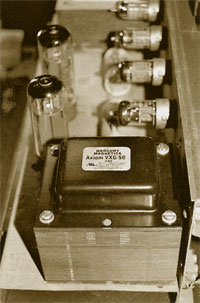
Don Butler: Vintage AC-30s suffer a lot from neglect. People are under the misunderstanding that all you need to do to any vintage amp is replace valves/tubes occasionally, but it requires much more than that. Here’s what I do when I get an AC30 or AC50 in for service that hasn’t had anything done to it since the day it left JMI in Darford, Kent…

Replace the dual 16uf @ 500v can, replace the 32uf @450v cap in the supply line that goes from the bottom power amp section to the preamp, and replace the dual 8uf can in the pre-amp. Replace the 32uf @ 450v cap for the Top Boost circuit (if the amp has integral Top Boost). Replace all the 25uf @ 25v cathode bypass caps (I see a lot of Vox amps where all of the main filters have been replaced but not the cathode bypass caps. It’s really just as important to replace these as well, as they set the gain for each area of the circuit they’re in). While I’m at it… Electrolytic caps have a lifespan of 7 to 10 years. After 10 years they start to deteriorate and slowly affect the way your amp functions (and not for the better, either). If you have an amp that 35-45 years old with original filters in them, well then, you’re asking for a lot of problems by not changing them. I’ve had a few vintage amps where the filters were not changed and they eventually shorted, taking the output tranny or choke of the mains tranny with them. To me they’re cheap insurance to keep your amp working properly and sounding good. By the way, the worse thing anyone can do to any amp is not turn it on for at least an hour a month. That keeps the electrolyte in it’s liquid form and prevents it from drying out and crystallizing.

Back to JMI-land — replace the output section cathode bypass cap (250uf @25v) and the four 100 ohm resistors on each EL-84 socket. These almost always drift way out of tolerance. Use 1 2att 100 ohm carbon film. On any voltage path resistor that needs to be replaced, use a carbon film. But, in the signal path, never use anything but carbon comp, otherwise it won’t sound the same. Vox always used carbon comps for everything. These days you can get 5% tolerance carbon comp resistors — in the sixties you were lucky to et 10%, and most used + or – 20% resistors.

Check each resistor with a meter. If the resistor is more than 20% off, replace it. Check the output tranny. Measure the primary side from center tap to each anode. The center tap is always soldered onto the main supply filter can. Be sure to discharge the cans before you do this!! The anodes are hooked up to pin #7, and they should read very close to each other from the center tap to each anode. Each era had different readings. A Haddon output transformer has a different primary reading than a Woden and different from an Albion as well.

Clean each valve socket, input jack and pot with Caig DeOxit D-5 contact restorer. And here’s a bit that is as important as everything else — make sure every nut, bolt, screw and pot nut is tight. You would not believe how much you can improve the noise and hum in an AC30 simply by doing this. I’ve had amps where every one of them is loose! On the 12AX& that is used for the Normal and Brilliant channels., JMI used a wire from pins 4 & 5 to ground to keep the filament supply grounded. Cut this wire off from the pins to ground. Take two 100 ohm resistors and attach them from each side of the filament supply at the pilot lamp to ground. This is what Fender did for years to make the filament supply quiet. It’s an easy “center tap” for the 6V AC filament supply.

Check all your valves/tubes. Always use a matched set of EL-8rs and good 12ZX7s and a decent 12AU7. Spend the money for a good rectifier! You have to look at the cost of valves as an investment in your tone. Good preamp valves should last at least 10 years for NOS. I’ve seen many Ac30s with perfectly working Mullard GZ-34s that were 40+ years old. EL-84s get beat-up pretty good, but still important to buy quality valves. This is also important: With any and every JMI Vox Amp, use a Variac! Why? My wall voltage reads anywhere from 114v to 122v A.C. Vox amps want to see 105v to 110v MAX! The voltage selector may say 115v, but Sergio at Mercury Magnetics has told me many times that the real input voltage of old JMI amps was 110v max. If you plug your AC50 into the wall at 1222v, instead of your B- supply reading 470v like it should, you’ll get over 500v D.C. Most of the components are rated at 400v-500v max. By putting more in you run the risk of shortening the life of most of the components if not frying them outright. If you follow this advice and servicing recommendations and use a Variac, you should have a happy AC30 that will work for you for years without trouble. It doesn’t hurt every few months to tighten up all the screws, nuts, etc. If you tour or gig with an old AC30, you have to know at least a little bit about how to maintain your amp. If you’re too lazy to do that, then buy a new Custom classic and send it to me to mod into one that sounds very close to a JMI-era amp. There’s a good book you can get from a guy named Stephen Grosvenor in the U.K. called “A Service Engineer’s Guide to the Vox AC30 Valve Amplifier.” This just came out in June (’06).
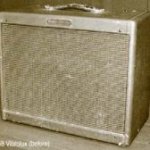
TQR: Not all power tubes can take the heat that Vox amps produce. What are your favorite choices for output tubes in old AC30s and AC50s and do you have any suggestions for keeping these amps running at lower temps?

Don Butler: AC30s — Tungsrams and Polem/Telem (same manufacturer — these are made in Poland) for NOS and EI Elites for new tubes. The Tungsrams are very clear, open sounding with nice chime on the top end and a good tight bottom. Same with the Polems, but the Polems have a bit more midrange. I find Mullards very dark and flat by comparison. I’ve tried just about all the NOS EL-84 types in my Voxes and Marshall 1974X. The EI Elites are a great sounding tube but lack just a bit of the detail and harmonics of the NOS. Still, a great sounding tube compared to the rubbish that’s being made these days.

TQR: You’re known for upgrading stock “reissue” amps. Describe the typical upgrades and modifications you make to reissue AC30s and the most recent AC30 Custom Classic.

Don Butler: I replace the output tranny with a Mercury Magnetics clone, same with the choke, as the choke is a very important piece of the puzzle. I replace every resistor and cap in the signal path with carbon comp resistors and Sozo caps. I have an audio “break-in” CD that I run into the amps after I’m done. About 4-5 times simulates the amp having been played for around 80-100 hours. I do this because every output tranny takes around 20 hours to break in, and the Sozo caps take around 100 hours to break-in. This way when my customer gets their amp back it’s as if it’s already been played for a bit and should be more open and touch responsive than if it hadn’t been played. I do also play through them when I’m done. I have to make sure they sound right. I play them again after I run the CD through them, and it’s fun to hear the actual difference!

Source: https://mercurymagnetics.com/pages/news/ToneQuest/_2007/TQRJan07-1.htm

Restoring Old Amps and Transformers

Finding and restoring old amps and cabinets is a slow process that demands patience. From the time we first began trolling eBay, ultimately scoring a tweed Vibrolux and Tremolux, to final delivery of the aged cabinets and assembly of the amps, six months had easily passed.

We first found and bid on a ’58 Vibrolux in September ’06. Sold by an eBay seller in Texas, it had been recovered in reddish-brown cloth similar to the stuff used to cover hymnals or a bad ’60s pleather recliner for the double-wide. Otherwise, it was pretty straight, with the original blown Jensen P10R intact, and the original transformers, caps and resistors. The inside of the cabinet had been painted black, but the cabinet, grill cloth, baffle and control panel were otherwise intact, and the wooden tremolo footswitch was included. We bought the Vibrolux for $1,590.00 with 4 bids placed.

Inspired by Larry Cragg’s detailed description of Neil Young’s tweed Tremolux, a1958 Tremolux surfaced on eBay in November 2006, and we scored it for just $1,082.00 from a seller in San Francisco. We suppose this amp was so cheap because the output transformer had been replaced, and the cabinet had been completely stripped and stained mahogany brown. The original speaker mounting screws in the baffle board were about to fall out. However, the original Tremolux circuit was well-preserved, and a small strip of tape remained in the chassis signed in a delicate hand by “Lilly” – one of the many women in Fullerton employed to assemble amplifiers like the Tremoluxin 1958. God bless her. The Tremolux also arrived with the original wooden foot switch.

The Vibrolux kicked some serious tail right out of the box. We send the original Jensen P10R to John Harrison at A Brown Soun (www.abrown.com) for a re cone, mounting a1965 Jensen C10Q sent by Larry Pogreba in its place – a very stout choice and original equipment in early blackface Vibrolux Reverb amps. Like the Tremolux, the tremolo circuit in the Vibrolux required some TLC,with four caps needing replacement to restore the swampy oscillator circuit to full wobble-weave. We also replaced all the newish tubes with NOS RCAs, Philips and GEs. Once we had the amp mounted in the restored and aged cabinet, we were throwing down hard with our No caster nightly, wallowing in the big sound coming from such an innocent-looking little biter, when the original output trans-former gave it up in a final, glorious gasp. A quick call to Mercury Magnetics produced a ToneClone replacement within a week and we were soon back in business,sounding better than ever.

The 10 watt, 3-input ’58 5F11 Vibrolux is housed in the same cabinet Fender used for narrow panel tweed Deluxe– a fat little featherweight with greasy tremolo and a smooth bark tailor made for a Telecaster. And 10 watts may be the perfect power notch for low-volume home recording and jamming – crystal clear, bright and drenched in gorgeous Fendery overtones at low volume (3-5), and absolutely on fire from 7-10. In all respects, the 5F11 Vibrolux is a big amp in a small package worth pursuing for its outstanding tone and personality at truly usable volume levels.

We were amazed by how Gregg had managed to remove every trace of black paint that had been sprayed inside the cabinet, and his aging job, complete with three coats of amber stain and lacquer, faint water stains along the bottom,worn seams and corners, aged L&L leather handles and scorch marks from the power tubes on the inside of the back panel were flawlessly conceived and applied. Hopkins even recreated the original tube chart with a 1958 date code after requesting that we send him the chassis number and power transformer EIA code for production verification. When we brought the restored Vibrolux to Jeff Bakos’ shop (www.bakosampworks.com), he looked it up and down as it sat on the floor of his workshop, peered into the back and said, “That is totally sick.”

The ’58 Tremolux provided a further study in what can be involved buying 40 year-old amps. Upon arrival,the amp was really smokin,’ even with the Jensen hangin’ off the baffle board. The tremolo was DOA, however, so while the stripped cabinet was getting the spa treatment in St. Louis, Jeff replaced two caps in the trem circuit, we replaced the already replaced output transformer with another from Mercury Magnetics, and stored the chassis away until we received the finished, aged Tremolux cabinet from Gregg in late March ’07.

The 5E9A (’55-’56) and 5G9 (’57-’60) Tremolux are housed in the same taller, wider cabinet Fender used for the 1×15 narrow panel tweed Pro,and the later 5G9 circuit is quite different from both the 5E3 Deluxe and the ’55 5E9ATremolux, being fixed rather than cathode biased, employing a long-tailed phase inverter common to the bigger narrow panel tweed amps, and the addition of an extra filter cap and choke enabled the power to be increased from 15W to 18W in 1957.

Compared to the narrow panel tweed Deluxe and the 5E9 Tremolux, the 5G9 Tremolux develops more volume and headroom, and should you chose to replace the 12AY7 preamp tube with a 12AX7, gain is further increased (it’s already righteous with the 12AY), while the bigger 10” x22” x 10” cabinet produces a much rounder, warmer tone with superior ambience and presence. In the month or so since we’ve had the Tremolux put together in the restored cabinet, a new Tung Sol6V6 blew (after we had opted not to use a couple of spare ’50s RCAs for safety – they are in the amp now and killin’ us with bogs of good thang),and we just took the amp back to Jeff when it began spitting some nasty distortion provoked by low frequencies from the guitar. Turned out to be a few bad solder joints.

Like the Vibrolux, Gregg had stopped short of creating a “3-legged dog with an eye patch,” taking the aging to a moderate level with frayed edges and seams on the amber tweed, a single beer can ring on the top with a foam overflow stain running down the grill cloth, a slight orange stain on one side from pine knot bleed, and assorted scuffs and light abrasions. He also repaired the baffle-board, filling in the old holes for the speaker mounting screws.

We hate doing this to you (again), but truth be told, we have to give the nod to the Tremolux as the most toneful and inspiring amp in its power class (18 watts)that we have ever heard or owned. It’s ascension to Numero Uno status was a bit of a surprise, but then again, we considered the initial source of our inspiration for finding one – Neil Young, via his tech, Larry Cragg, and in hindsight we should have expected as much. With all the attention paid to the tweed Deluxe as the big time bonerizer of the tweed family, the Tremolux seems to have been overlooked for the usual reasons…. In the nose-to-butt-crack daisy-chain march to mediocrity, the masses never seem to acquire a view beyond the first lazy dumb-ass directly in front of them. In the immortal words of the great hoosier educator and smack-down artist Earl Dosey, they are “stepping’ over dimes to pick up nickels.” Let’s hope the lemmings continue to keep their heads down.

So here’s the move…. Sad as we are to share this, our strategy was as obvious as it seems. Forget about original speakers, don’t let a replaced tranny run you off (we’ve never replaced one with a Mercury that didn’t sound better than the original), and deliberately track down the fuglies told girls you can find from the tweed era. Busted baffle boards? We luv that….Ricky-ticky cabinets are good, and the coverin’ don’t matter. What you want is a beater with a totally neglected chassis and as many of the original fat Astron caps and original resist or present as possible. Yeah, some of them may have to be replaced, but it’s far better to allow a prudent and judicious amp tech determine that rather than buying an old amp that has been raped by a hard chargin’ cowboy hooked on Sprague Orange Drops.Buy one of those and your old amp will sound new,never to sound old again, and that’s most definitely not the play you want to make here. A little component drift is good.

There is luck involved, too… not all vintage amps were created equal. Some of them left the birthing bench endowed with incredible tone – a happy accident created by the melding of variable components that resulted in extraordinary sounds. Others were created by the same roll of the dice, but with a different outcome altogether – mysteriously dull, flat, or simply lacking whatever you wish to call it… that tone, mojo, bloom, the harmonic complexity of your first Schlitz, depth, fatness… whatever. To experience the blissful afterglow of unanticipated discovery, you must be willing to risk something, which is another way of saying that faith must be exercised in the absence of a guarantee. In this respect, buying old amps is a lot like life itself…. The greatest obstacle to discovery is the flawed perception of an impossible challenge. And the window of opportunity is closing on these great old amplifiers faster than you may think. Like vintage guitars, the best old amps are being taken out of circulation by col-lectors willing to pay prices that are based on potential future value (more than they are worth today, perhaps, but less than they will be worth tomorrow). For you, hombre, the time to bust a move is now.


View PDF Article

Transformers are a Crucial Piece of the Puzzle

After a hiatus of 45 years or so, Fender has been carefully re-entering the business of building hand-wired tweed amplifiers with the resurrection of the narrow panel ’57 tweed Twin and the ’57 Deluxe. Of course, there are scores of small amps that have been inspired by the Deluxe, and many more 5E3 knock-offs being built today in the “subbooteek” cottage industry comprised of solo solderers who build in their spare time and often put their work up on eBay. For some cost-conscious players, a tweed Deluxe for $600–$800 is a deal that cannot be refused—even if the amp was wired up by an unknown tonehead on a basement workbench in Akron. But Fender is Fender, and while they chose to ignore the thriving boutique market for hand-wired tweed circuits that blossomed in the early ’90s with the appearance of Victoria, they have not forgotten how to put an amp together, and in the case of the Deluxe sent to us for review, it stands apart from all the rest with a very unique voice.

We asked Fender’s Shane Nicholas and Sergio Hamernik at Mercury Magnetics to explain the process of natural selection that evolved during the development of the ’57Deluxe….

TQR: Describe the process in which your design team evaluated various vantage examples of the 5E3 Deluxe, and how widely the actual sound of the vintage amps you listened to varied, specifically?

Shane:There are several guys here at Fender who own old amps, and we also have friends who do. When we were ready to begin the’57 Deluxe project, we brought in a few original vintage examples, and a couple of “boutique” versions of this type of amp. We listened to all of them with various guitars, and listened to each amp chassis hooked up to the others’ cabinets. Keep in mind that every amp—especially 50-year-oldones, will sound a little different than another one of the same model. It’s pretty well documented that Leo Fenders some times changed components “on the fly,” while the official schematic documentation would be updated later. My old Deluxe might have been built with some different stuff than yours, even though they were both “stock” 1957 5E3models. Then add in aging, abuse, repairs, etc., and it’s a wide target that needs to be narrowed. For example, we had one amp here that was much more distorted sounding than the others, so unless you are only laying 1951 Howlin’ Wolfstuff, you probably wouldn’t like that amp as much. For me, the ideal is an amp that gives a beautiful clean tone with the volume set low, and a dirty, harmonically rich tone with the volume set high. You should also be able to set it on, say, “5” and control the amp’s distortion by simply varying your pick attack. We decided that one of the old ’57s was the most desirable example of a 5E3 Deluxe, and we used it as the golden sample.

Once we got to this point, project engineer Nick D’Amato really got down to business. The final schematic and components we chose were basically picked so the prototype would sound as close as possible to our golden sample amp. Obviously, we use new parts, not 50 year old stuff from a flea market or whatever. We also had to make a few changes in order to pass modern worldwide safety regulations; things like shielding, ground wires, and the three-prong power cord, which negated the use of the old ground polarity switch. We put a Standby switch in its place, which is a good thing. These changes don’t really affect tone, but they do reduce hum and improve playability.

We also decided to go with 12AX7s in the preamp, even though the originals were designed with the 12AY7 in the front end. Our thinking was, not only is the 12AY7going to be tough for us to get in quantity, but many players in fact prefer the 12AX7s higher gain. If you are playing ZZ Top stuff, for example, you’ll probably prefer this. The12AY7 will work, however, so some owners will buy one and stick it in their amp.

The transformers are also a crucial piece of the puzzle. We auditioned quite a few prototypes, and some of them were too efficient or too distorted, etc. One of the vendors we contacted was Mercury Magnetics, whom we’ve worked with in the past They sent us five different power and output samples, each based off an original transformer set found in a vintage Deluxe amp. During A-B tests, one of these closely matched the OT in our golden sample amp. We worked with Mercury to make a few tweaks, and soon we were positive we had the right transformers.

TQR: How many different types of speakers did you consider?

Shane: Well, the original Jensen in my old Deluxe really sounds and looks perfect, like you’d expect. We found that the new Jensen P-12Q sounded close enough, so we stopped looking. In my ten years at Fender, I have discovered that no matter what speaker we supply in a tube amp, a certain percentage of customers are going to try something else. Celestion, Jensen,Eminence, and boutique guys like Weber all have their supporters and detractors. It’s human nature to tinker with your machinery, and a speaker swap is one of the easiest mods you can do to an amp.

Now, having said all that here’s where it gets fun. One of the boutique amps we tried happened to have a Celestion Blue Alnico speaker in it, and it sounded very good. So we tried that speaker with our prototype 5E3 amp, and said,“OH MY WORD!” I had heard that speaker before in different amps, but this combination was stunning. The amp became a lot louder, for one thing.We thought for a minute about using this speaker in the ’57 Tweed reissue, but it’s not really the authentic, original sound or look. It’s also a lot more expensive. So, we remained sold on the Jensen, but when we developed our limited edition, black lacquered version—the Fender 57 Amp—we decided to equip it with the Celestion Blue.

TQR: What are the unique challenges involved in building hand-wired amps, compared to those with a printed circuit board?

Shane:Making it look and perform like the old amp while using readily available parts that we can buy in quantity. I am a stickler for performance, but if our customers didn’t care to look inside, we wouldn’t worry about the looks of the components and wire so much. For example, Alexander Dumble told me he likes our new ’57 Deluxe, and was surprised that we used such heavy wire in the chassis, as it’s really not necessary. We can’t pass modern safety regulations using cloth wire, so we got the next best thing. I’d also like to mention that, while we build higher quantities of hand-wired amps than all the other boutique builders, it’s still a very small number compared with the number of PCB amps we build, like our Hot Rod series and all the sold-state models. Our factory estimates about eight times the labor in a Vibro-King versus a ’65 reissue amp with a PCB.

TQR:We would assume that Fender has a separate group of employees devoted to building the hand-wired amps.

Shane: We do have the hand-wired team in a separate area in the factory. They are highly trained, patient employees who take a lot of care with these amps. Most of them are women, same as Leo’s day, maybe because they tend to be more patient than us dudes. And women’s hands tend to be smaller, making it easier for them to run wires and solder connections in the tight confines of the amp chassis. I don’t know the training regimen off hand, but I believe many of them cut their teeth on guitar wiring before moving on to amplifiers.

TQR: With the tweed Deluxe in production, are there plans to develop additional hand-wired Fender models of the past?

Shane:Yes. The list of great old Fender amps begging for reissue is a long one!

In case you don’t know, Mercury is known for having acquired and cloned hundreds of stellar vintage transformer sets that com-prise their ToneClone and Radiospares series…

TQR: How did you become involved with the development of the 5E3 specifically?

Sergio: It call came about as a follow up to the ’57Twin-Amp reissue project that we were a part of a few years ago. Mercury designed and supplied Fender with the transformers for those amplifiers, which was a very successful endeavor—so much so that Eric Clapton made them his main amps for his own tours and the Cream reunion tour.The momentum started by the ’57 Twin-Amp project quickly created a demand for some sort of follow-up amp in this positive vibe, and Fender’s decision to reissue the 5E3tweed Deluxe came as good news to us. It is probably the most copied circuit on the planet, and I couldn’t think of abetter project to sink our tranny designer teeth into.

Years ago the late Ken Fischer, of Trainwreck, told me that the Deluxe was an early inspiration for him to get into amp building. He went as far as to refer to the Deluxe circuit as the cornerstone of the boutique market. It’s a truly different dynamic when the company that started it all wants to reintroduce a benchmark in amplified guitar tone, and especially when their goal is to make the amp sound as fresh as it did when it was first launched. We’ve worked for decades acquiring our extensive library of transformer designs that originate from variants of pre-production to pilot runs of many vintage amps, so amplifier companies often consult with us because we’re a small but dedicated group just nutty enough to be the conservators of such things.


View PDF Article

Experience with Electronics and Guitar Amps?

Somewhere along the way, guitar amplifier tone got carelessly shoved into two broad categories – American and British. Fender being the quintessential American tone and Marshall being the obvious default for midrangey and reverb-less British tone. Within each, of course, there are distinct variations… Ampeg, Magnatone, Valco and Gibson, for example, are also American through and through, yet they remain distinctly different in sound and construction, and would rarely be mistaken for a typical Fender. Among British amps, Hiwatt, Sound City and Vox present equally diverse varieties of “British” tone that won’t be confused with a classic plexi Marshall head. But simply adding reverb or delay to a British amplifier will often throw listeners completely off as to its origins, while plugging into the Normal channel of a vintage Fender brown or blackface amp with the right guitar can produce an exceptional “Marshall tone.” Our recent experiment with our ’62 brown Vibrolux and a Goldtop Deluxe Les Paul with Lollar mini humbuckers rammed this point home with alarming clarity…. The point is, labels don’t always serve creativity and discovery well, and in the realm of supposed “vintage amp tone” where different examples can vary so dramatically, labels are worthless in generating much more than “skull chatter,” to quote Kye Kennedy. But, we still crave “Marshall tone,” whatever our individual perceptions of that sound may be. Well, since you asked….

ZZZZZZZZZZZZZZZT!Yes, Gear Page wankers, we just did it again. Careful you don’t get a scab on that thing… it might get infected and fall off. We’ve unearthed two alternatives that will give you the bigger, bolder version of Marshall tone that you remember from your early Jeff Beck Group, Zeppelin and Cream albums, but at a volume level you can easily live with and actually enjoy in 2008.

A reader alerted us to Roy Blankenship, oh, about a year ago, and it took that long to get an amp shipped for review and develop an interview. It was worth the wait. Blankenship builds a manageable range of custom amps in Hollywood, and he seems more interesting in building what he wants, the way he wants, than going big time. We like that. So here’s an introductory dose of Roy Blankenship – an entertaining and frank fellow to e sure. Our review follows Roy’s interview.

TQR: Can you summarize your experience with electronics and guitar amps? How did you get started initially with mods and repairs, and how did that evolve into actually building your own amplifiers?

RB: First, I was born in California. My father worked for North American Aviation, and was transferred to Columbus, Ohio when I was 6 months old. Therefore, I was born crazy, but grew up normal. My father was a genius – he could build anything, and, in fact, he built my first guitar amp. It was a single-ended 6L6 design and had a field-coil speaker. It wasn’t loud enough to play in a band, but I still have it and it still works. I later discovered the cabinet he used was the extension speaker for an old film projector.

I started playing piano when I was 3, and played brass instruments in the school band. When I was a Junior in high school, I bought my first guitar. A Kent solid body, for $49.95. I finally convinced my dad to let me buy a Health kit 2×12 solid-state kit so that I could play out, and that was my first experience with electronic assembly. I was the guy in the band who would dick with all of the equipment. We bought some PA cabinets that had JBL’s in them, I refinished and rewired them, having no idea what I was doing, but it always worked. My dad had a whole workshop including lathe and drill press, so I often did small projects and repairs, like building my own speaker box to house two Jensen 6×9 speakers for the car. I wish I would have had the vision to go into production….

I was a hobbyist for the next 20 years, getting into tube hi-fi and going through a dozen Dynaco Stereo 70s, not knowing anything about them, but doing little stuff like biasing and tube exchanges. I was employed in the music biz as a sales rep for four different firms, and the pinnacle of my career was as national sales manager of Symetrixin Seattle, WA. In 1991, I had a three-state sales territory selling body shop equipment. I stopped to see my friend, Dan Abell (of Abell Audio, 909 King Ave., Columbus, OH), best tech in the world, and drop off some octal sockets my dad had left me. Dan was all upset and expressed that his assistant had quit that day and he was in a bind because he had so much work. On a whim, I said, “Hire me. I have always loved this stuff.” “Can you troubleshoot a circuit?” I said, “Not yet, but I have people skills and can do any number of things so that YOU can work.” I knew his assistant wouldn’t answer the phone or wait on customers, so, after the first day, Dan said,“Man, I can’t believe how much I was able to get done. You’re hired!” Within two weeks, I was repairing circuits. The info that opened the door was the difference between negative and positive polarity transistors. We worked together for the next four and a half years, never an angry word between us. At one point, I wanted to live in California, so I went to a NAMM show and was hired by Groove Tubes as production manager. The learning curve was straight up – there is an incredible amount of information in that place. From there I started my own place in Santa Monica. To escape the chaos that is L.A., I moved to Florida to escape. I realized the repair biz was not a big money maker, so when two clients started encouraging me to build my own designs, I was up for it. We beat it around fora while, they finally ponied up and I built two EL84 amps.They loved them, I was shocked (they were nothing special),but they were the start. I still have number 1 that I bought back from the third owner. My experience with amp repair changed when I came to L.A. People in Ohio and Florida were happy when their amps worked… players in California wanted their amps to sound good. That opened a whole new area of learning. About the same time, I was running into a lot of overly-modified amps that oscillated themselves to death, so I added “demodification” to my business card. People would call me back and say, “Man, this amp really sounds great now,” and I would reply, “Yes, I made it stock.” The only mods I deem worthy are tone-stack bypasses on Fenders and one of two master volume circuits that actually work well. They each allow you to attenuate volume without losing everything, and they both originated with Ken Fischer, amp guru, God rest his soul. Tube amplifier technology stabilized in the mid ‘60s, and very few amp builders have done anything innovative since that time. In order to separate myself from the pack, I wanted to improve on the existing circuits. When these amps were made, people were playing clean, now everyone wants to crank them up,and in order for them to deliver, my belief is that they need a stiffer power supply. I get a lot of comments on how “loud” my amps are for a given wattage rating. One client said, “I have played a lot of these amps, they give up when you hit them, but yours sounds like a big amp.”

TQR: Describe the different models you build in terms of features, construction and tone, how they differ from vintage or other custom built amps, and what you specifically wanted to accomplish and/or improve on with each model.

RB: I build my own take on American and British circuits,and I employ a stiffer power supply than most. I am currently using turret and eyelet board construction, but a printed circuit board can be useful if made properly. The compromises made by volume manufacturers is where the “circuit board-is-bad” myth started. Proper CAD design can lend itself to a quieter, more reliable product as long as the bean counters don’t try to take a nickel out of it at every turn. All of my current product is hand-wired, and as you know, there is a lot of snob appeal and dick-measuring in this business. For example, some of my clients wonder why I do not use Clarostat potentiometers… I have tested all of these devices, and I have never had a bad Alpha pot, but the Clarostats I ordered for testing were 50% defective!

In the Leeds amp, I went with different trannies than most and a stiffer power supply; this gives it more beef. In the Fatboy, I discovered an output tranny that would allow me to use 6V6’s (for 15 watts) or 6L6’s (for 25 watts) without changing the speaker load. Though the tranny was originally designed for an 8 ohm load, it actually worked more efficiently at 16. Overall, using Mercury trannies has been one of the best decisions of this whole venture. Now when I hear an amp with any other tranny, they sound flat. I took one of my amps to visit a friendly competitor, he played it and enjoyed it, then fired up his own amp, and it sounded flat. He was looking at his amp as if,“Hey, what’s going on here?” I think that was his first side-by-side comparison and he could hear the difference, much to his own chagrin.

TQR: What inspired the use of a Variac with the VariPlex? Why not just build a master volume circuit?

RB: We wanted to create a cranked-up Marshall sound at lower volumes, but people have time and again expressed their dissatisfaction with the attenuators on the market and the smashed sound of a bad master volume circuit. I credit Dave Friedman of Rack Systems with the concept and the prototyping. We tried five different kinds of coupling caps, different types and brands of resistors, different trannies…you name it. Eddie Van Halen popularized the whole Variac concept, so we modified the circuit so you could go from full tilt boogie down to 1 watt and the amp would not shut off. We have sold 40 of those amps with no marketing other than clips on a forum. We are now introducing a similar amp with a master volume for those who want it whisper quiet, but saturated. There are two master volume circuits that I know of that sound great even when turned down to speaking levels. We are using one of those and a few other mods in the new model, the Custom 45.

TQR: You describe a process on your web site in which you A/B’d the VariPlex with a friend’s ’68 Plexi and you didn’t stop tweaking the design until 10 out of 10 guitarists chose the VariPlex in a blind test. Can you elabo-rate on how those tests progressed and the changed to the circuit that you made to achieve those results?

RB: I could, but I won’t.

TQR: In your experience, how much variation in tone and component values, including transformers, have you observed in vintage Marshall amps? Isn’t it necessary to listen to a lot of different examples and then choose an exceptional amp as a benchmark?

RB: Yes. We already had “the Holy Grail” plexi in house, so we compared to that one. Most amps will respond to love, but there are some that are just exceptional. The reason for this amp-to-amp variance is manufacturing tolerances. If your trannies are built with plus or minus 20% tolerances, that means your amp could vary as much as 40% from sample to sample.

TQR: The VariPlex doesn’t sound “new” in the sense that it isn’t shrill or bright and sharp like some replica Marshall amps. How did you accomplish this?

RB:That’s my secret.

TQR: How long is the wait for one of your amps once it has been ordered?

RB:We have Carry-Ons in stock for the first time. Generally, we like to say 3-4 weeks just to be safe. Most of this is the gray area of vendor delivery on cabinets.

TQR: What’s ahead? What do you want to accomplish in the future?

RB: I want to be a thorn in someone’s side so they will offer a butt load of dough, I will sign a non-compete, and go away. Then, I can sit on the beach and light my cigars with $100 bills and sip pina coladas. The funniest thing about that picture is that I don’t drink OR smoke. Actually, we are introducing a bass amp shortly. As we gain more exposure, I am sure we will have enough to do. I am happy with people’s response to my products. I do not want to get huge, and I will probably not offer many more models – it gets too confusing. But thanks for considering me as a worthy contributor to your magazine. www.BlankenshipAmps.com (818) 530-8853

Our experience with “vintage Marshall tone” was formed with two stout examples that we were fortunate enough to own and play for years. The first was actually a late ’60 Park ’7550 watt head, followed by a metal panel 1969 Marshall50 watt. Both amps displayed the classic tone, smooth distortion and touch-sensitive dynamics we love to love and eagerly oozed the warmth and dimensionality that reissues lack. This isn’t complicated…. We’d simply drag a newish Marshall clone of some sort into the music room, compare its sound to the old one and invariably say, “Not bad, but this one sounds and feels better.”

When we fired up the Blankenship, however, not only did it sound richer and fuller with more depth than our old Marshalls, but the tone controls actually produce changes in EQ that allowed the amp to achieve a level of versatility that has always been sorely lacking in the originals. And then, of course, there is the nifty Variac that allows the VariPlex to be played at nominal volume levels with no audible deterioration in the responsiveness or tone and the amp. Essentially equipped with features that mirror an original Plexi, the VariPlex is a 2 channel/4 input design with presence, bass, mid and treble controls. Channel 1 is the bright input; channel 2 is more bassy, and the two can be jumpered and mixed to taste.

We took our time developing an impression of the VariPlex, playing it for over two months. Bottom line – it produces an authentic, old-school Marshall voice with better EQ, clarity, and fresher, more vivid harmonic content. Its voice is exceptionally smooth, yet capable of acquiring the melancholy edginess of an early Clapton recording by simply managing EQ, and the Variac as a master volume control works brilliantly. The VariPlex impressed us as a near-perfect example of an overbuild, hand-wired, low-production amp inspired by arguably the best efforts of Jim Marshall and company, circa 1968. Just as the Balls M18 became our modern benchmark for low-powered, classic Marshall tone, so goes the Blankenship VariPlex in the 50-watt range. If there is a better-sounding modern alternative toa vintage Marshall, we have yet to hear it.

We also admired the neat, clean and easy-to-read design of the VariPlex silver control panel, somewhat reminiscent of our old Park. Among all the clones being cloned with Mojo boxes, this amp is a visual standout. And as far as internal build quality is concerned, let the pictures speak for them-selves. In all respects the VariPlexis a solid piece of work,returned to the builder with as much regret as any amp we have ever reviewed. In fact, we’re still thinking about it. Plex forth….

View PDF Article

Original Power Transformer in our ’73 Super Lead

While Michael Bloomfield was playing cranked up blonde Fender Bassman and blackface Twin Reverb amplifiers, Marshall 100 watt stacks suddently appeared thanks to The Who, Jimi Hendrix, Cream and Led Zepplin. Throughout the ’70s, rock was dominated by the sound of a Les Paul and Marshall amps, but despite its reputation as the ultimate rock machine, all four-input, 100 watt Marshall model “1959” heads are not the same….

The first 100 watt Marshall amps appeared in late 1965,and despite Marshall’s decision to drop tube rectifiers for the less forgiving, harder sound of solid state diode rectification, the “Plexi” 100 watt heads remained more closely related to earlier Marshall amps inspired by the tweed Bassman than the Super Leads that would follow. In the early ’70s, the 50 watt model “1987” head and 100 watt Super Lead were gradually modified to produce more gain faster, and the bright channel was pushed to a punishing level of thin, ear-shattering brightness, while Channel II remained too dull and bassy to be used alone.

We acquired a 1973 Super lead—the last year before Marshall switched to printed circuit boards—for the modest sum of $1,000, made possible by a recent Dagnall replacement output transformer. Two .022 mf caps had been replaced with Orange Drops and another removed altogether in a futile effort to reduce brightness and gain—other-wise, the original Super Lead circuit remained intact and unmolested. Our plan was to run the amp at approximately 60 watts with just two EL34s, requiring the amp to be set at half the rated speaker impedance of our 8 ohm 4×12 Avatar cabinet, loaded with two Celestion Gold Alnico 12s and two “Hellatone” 70th Anniversary G12H 30s.

As we discussed this project with Jeff Bakos, he mentioned that the 100 watt Super Leads not only sound very different from the 50 watt heads in ways that transcend a mere increase in power, but he also felt that the 100 watt Super Lead amps sound better with just two powertubes instead of the full compliment of four…“That’s very common down here—I know a lot of layers who prefer that sound.” We also consulted with Sergio Hamernik of Mercury Magnetics on a suitable replacement for the modern Dagnall OT, and he suggested the ToneClone’69 Marshall self-leaded version. “Self-leaded” means that the actual wires wound within the transformer are extended to connect directly to the amp, rather than smaller diameter lead wires being attached to the transformer internally. Installing a self-leaded version is a bit of a bitch, since you are cutting and bending much heavier gauge wire to fit in tight spaces, and the insulation must be scraped off the wires before soldering. But Jeff had been here before,and all was taken in stride.

We also noted that the original power transformer in our ’73 Super Lead was similar to those found in the early Plexi100 watt amps with plate voltages well above 500 volts.

Our amp measured 522 volts, while the plate voltage on most post-plexi 100 watt “1959” amps are usually lower—around 460 volts. The “hotter” transformer in our Super Lead produces a comparatively higher and less compressed distortion threshold, and if not for our pair of NOS MullardEL34s, we might need to be more selective about choosing current production tubes that can withstand +500 volts on the plates. Jeff was confident that JJs would hold up, less confident of Svetlanas.

We took the Marshall home and initially ran it with three spare Telefunken 12AX7s just to see if they sounded as sterile in a guitar as we had recalled in the past. They do. We could hear a distinct improvement in the mid and bass tones with the new transformer, but the bright channel remained far too bright to be used alone, even with a Les Paul. While we could manage to knock down some of the treble and acquire a decent tone with the bright channel set on “3” and the bass channel patch with the volume on “6,”pushing Channel II so far above the level of bright channel introduced an indistinct woofiness we didn’t care for. The next day we returned to Jeff’s shop for his standard Marshall 4-banger input channel mod, which simply involves moving the original .005 mf bright cap on the bright channel to the basier Channel II. We had done this before with our ’69 50 watt and a vintage PA20, and it unerringly transformers the sound of the notoriously dull Channel II to a fat, warm, musically rich and bright sound that works perfectly every time. We also replaced the two Orange Drop caps with Mallory 150s and pulled the super hi-fi Telefunkens, replacing them with NOS RCA 12AX7s—the warmest, creamiest pre-amp tube ever made.

With the Super Lead thus optimized and tweaked, its voice was transformed from an angry soprano chain saw to a classic Marshall with all of the requiste thick,rich, historic hall of fame tones at our fingertips. We could mine brilliant clean tones on “3” at a usable volume level that revealed all the gorgeous detail of the vintage patent number pickups in our Historic Les Pauls, and our Stratocaster, Nocaster and Les Paul Junior all sounded equally good. Add Fender outboard reverb and you do indeed have the Twin from Bloody Hell.As Jeff predicted, the big power supply in the Super Lead also produced a much more formidable and impressive presence than a typical 50W. Yes, the Super Lead is still a beast, tamed for your consideration and our enjoyment. But if classic Marshall tone is the sound you crave, a properly groomed Super Lead is hard to beat, and given today’s boteek and vintage amp prices, it’s a solid steal.

View PDF Article

Fender ’57 Guitar Amp

HISTORY TELLS US THAT Leo Fender wasn’t much for “fancifying” things. More meat-and-potatoes than chicken and walnut curry, Leo was a simply guy, and that ethos carried over to the goods produced by his company, whose early amps were covered in tweed or plain black Tolex (for flavor, sometimes brown) and guitars were mostly slabs of wood cut with no fancy arches, curves, routes, or headstock angles.

So it’s no surprise that Fender’s’57 Amp looks nothing like anything created by Leo – and why the company touts it as something he might have built if one day he’d had a little too much coffee, caught a glimpse of a passing Caddy, and suddenly developed an eye for design. We kid, of course….Conceived by Fender industrial designer Shaw Greene and design engineer Nick D’Amato, along with Shane Nicholas, Marketing Director of Fender guitar amps, the ’57 Amp is a limited-edition, hand-wired 1×12”combo that boasts several distinct features that separate it from the company’s standard amps. If you like, call it Fender’s“boutique” amp!

From the fancy, auto-inspired split grille to its piano-black-lacquer finish, knurled control knobs, sleep billet-cut-aluminum “speedboat”handle, the black grille cloth, in terms of aesthetics this is truly a custom unit. Inside, the ’57 Amp sticks to what works – its chassis is the tried and true Fender 5E3(the technical designation for the circuit, referring to its rectifier tube)Deluxe, with top-shelf components and hand-wired construction. One of the darlings of the vintage world,the Deluxe was introduced in1948. It used on 12AX7 and one 12AY7 in its preamp, running into two6V6GC power tubes. The combination delivered some of the most harmonically rich, slightly compressed sounds ever produced by thermionic valves (AKA vacuum tubes). A medium-powered amp, it was designed to give guitarists enough volume to compete with drums and other instruments. And because it so adequately handled virtually any playing style, from clean country background strumming to all-out blues and rock, it has been used by players of all genres.

In the literature and a nicely produced DVD packaged with the ’57Amp, D’Amato talks about listening to vintage ’50s Deluxes and newer clones as they searched for a shining example on which to base the sound of their concept.

For the sake of testing the sounds of the ’57 Amp, what could serve better than a trusty Fender guitar from back in the day – perhaps a ’59Esquire? And for serious head-to-head fun, why not a gen-u-wine Deluxe from ’67? To establish a reference, we first plugged into the ’56. At low volume and playing a traditional bouncy country rhythm on the Esquire, the elder amp offered the trademark uncompressed clean tone that earn edits reputation – big on the bottom, crystal clear on the top. Really nice,and really mellow – fun… for a while. But for most players, the amp starts to groove for real when you take its Volume and Tone controls up to where the 6V6s start to growl (about6). Strumming a second-position G chord (alternating with an open G and D strings for flavor – think“Honky Tonk Women”), the Esquire teams with the amp to give all the“Ahhhh, yeaahhh” tone you could imagine, its stock Jensen P12Qspeaker dancing in the pine cabinet, delivering all of the Deluxe’s 12 punchy watts. Classic, unmistakable, with glorious overtones and just the right amount of gain and compression.

Sitting next to the ’56, the ’57Amplooks shiny, new and other-worldly, its glossy piano-black exterior in stark contrast to the aged tweed of the ’56. Its split grille does look like a badass old car rollin’ in your direction, and its old aluminum handle, cap-head screws, chrome-plated tube covers, and custom-engraved big-burl knobs lend obvious custom touches.In terms of circuit and tubes, the amp has much in common with the’57 Deluxe Amp tweed

View PDF Article

Retro-King 18 Watt Guitar Amplifier

A few years ago the guitar playing community experienced a resurgence of low-wattage amps. I’m not sure if it was because of the weight or the sheer volume larger stacks delivered, but the search was renewed for amps that could provide the same tone at an easily manageable weight and sound levels that didn’t make bartenders/engineers/wives scream, “Could you turn that down?”

This brought renewed interest in an obscure Marshall amp, the model 1974, an unassuming 18-watt combo. Originally available as a 1×12 — and closely related to the 18-watt model 1958 (2×10) and model 1973 (2×12) combos — the amp featured two EL84 power tubes, three ECC83 preamp tubes and a 6CA4 (EZ81) rectifier tube. There was even a rare reverb-equipped model, but all of the amps featured both a normal channel and a tremolo channel. The magic of the model 1974 was that with just a Les Paul and a cable players could approximate the beloved Eric Clapton “Beano” tone used on the Bluesbreakers with Eric Clapton album. Although I should note that Eric actually relied on a JTM45 combo, interest in the Beano tone ensured the 1974’s place in guitar lore. As was to be expected, clones of this amp began popping up rapidly once the originals, now extremely rare, began fetching prohibitively high prices.
I was fortunate enough to have quite a bit of exposure to these early Marshall amps, having worked with a shop that had no less than six of the model 1974s in stock during my tenure. One exceptional example was retained for studio use. A number of renowned guitarists had used the amp over the years, and they all agreed that it was one of the best — if not the best — they had heard.

A few months ago I was invited to Houston, Texas, by guitar legend Billy Gibbons, to bring a 2×12 Marshall model 1973 to the studio for a new ZZ Top album. Billy is an avid fan of 18-watt amps and has numerous clones to choose from, in addition to two original 18-watt Marshall combos. While we were listening and comparing sounds, I noticed a green Tolex 2×12 combo called the Retro-King 18 Watt sitting in the studio. Once he plugged into it, I knew both the original of the tone and that I had to check one out for myself.

King for a Day

The Retro-King 18 Watt is a completely custom-built amplifier, with the features you would expect to see in an amp of this class, including a solidly built, Baltic birch cabinet and handwired point-to-point construction. The fit and finish on everything from the cabinet to the Tolex covering was impeccable. The model I tested for this review had a 12″ Mojo Tone British Vintage Series speaker, although builder Chuck Dean will install others by request. The entire enclosure is substantial and provides for a big box tone from a single speaker combo. An impedance selector is included which is great for those planning to use this amp with other speakers or additional cabinets. The transformers are custom-wound to original Radiospares specs (an optional Mercury Magnetics transformer is available by request).
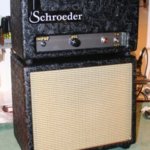
The 18 Watt has a couple of different features that I found to elevate this amp above some of the other 18-watt clones currently available. First, is the Master Volume control. You may ask why a Master Volume is needed for a low-wattage amp; while it does function to reduce the volume when the amp is cranked (bringing us back to that whole bartender/engineer/wives problem), it more importantly regulates how hard the power section is hit by the preamps. How the power section is driven affects everything, including the tone, overdrive and response of the amp, making the Master Volume a critical part of the circuit. The 18 Watt’s Master Volume circuit does not feel or respond like other Master Volume circuits I’ve heard; this one allowed me to get a wide variety of classic 18-watt tones, as well as the sounds of other model 1974 clones on the market. The Retro-King also features a tube biased tremolo like the original — it sounds wonderfully authentic, deep and a little Voxy. A footswitch proved to not only turn the tremolo on and off but to select between two speeds.

The second unique feature packed into Retro-King’s 18 Watt combo is a switch that allows for the selection of a tube rectifier or solid-state diode. The diode setting, while obviously not an original Marshall feature, provided more definition and headroom than the tube rectifier. When tube rectified, this amp has that sweet sag and compression that blues players love. If a player buys this low-wattage combo but is more accustomed to larger amps, this innovative feature will make it fee4l a bit more familiar — definitely a nice touch.

Of course, not all potential users of small amps are blues players. As a matter of fact, when I hooked the amp up to a Marshall Guv’nor pedal and set it for a very clean, high-headroom sound I was rewarded with a great rock sound. The tone was similar to Gary Moore, or even a bit more intense than that, if needed. The amp’s overdrive without a pedal ran from Black Crowes territory to the always-wanted, rarely granted “Beano” tone. Also surprising was that a Strat sounded excellent through this amp — something that I haven’t consistently found in other clones. The harmonics are rich, a la Billy Gibbons, especially when using pick harmonics. The 18 Watt cleaned up nicely and captured my picking dynamics perfectly.

The Final Mojo

I found the Retro-King 18 Watt 1×12 to be louder than the real thing, but with an authentic rendering of the actual tone for which these amps are famous was always there. I was also able to get higher-headroom, punchier tones that I was not able to get with the original. The original produced a slightly more compressed tone when driven hard with humbuckers but this would not have been obvious if the original had not been sitting right beside the Retro-King. In fact, the tones were so similar that I would have been guessing which one was which in a blind taste test. All in all, the Retro-King is more versatile than most other 1974 clones, without sacrificing the reason one buys an 18-watt Marshall-type amp in the first place.

Source: https://mercurymagnetics.com/pages/news/PremierGuitar/PremierG-12.htm

Mercury Magnetics Transformers Exact Specs

A couple of months ago, I checked in a pile of amps for repair/freshening up for a band that was going into the studio to record another album. While reviewing this pile, I found that I was in possession of the main recording amp for the front man. It was a little vintage Supro that had certainly been around and through the ringer. While it definitely had a fantastic tone, it had noise and reliability issues due to its age. I decided to surprise the fellow and make a replica as close to the original as possible. In my own amp designs, I try to add a dash of originality into the mix, but for this project only a carbon copy would do. I pondered the project endlessly, obsessing on the creation morning, noon and night. A couple of days after deciding on a game plan, I received a call from the band’s liaison asking me if I would mind making a clone of that amp only with less noise and increased reliability. I was now on the hook. Time to put my plan into action.

The first step was to try and find a schematic for the little Supro Super. A few were found in my files and on the internet, but they didn’t seem to be of this exact incarnation. Since my plan was to be blueprinting and cloning this amp anyway, I decided to dig in and make a schematic. I traced the circuit, noting the apparent values (what was written on them) of resistors and caps etc, as well as the type (composition) along the way. All of the resistors were carbon comp, and the coupling caps were mostly ceramic discs. I then traced the circuit again, this time measuring and taking notes on the actual values and voltages of the resistors, caps, transformers, plate voltages, cathode voltages, etc. The differences were substantial. The tolerances on these amps were fairly broad to begin with; on top of that, the values of the components would certainly drift over the 40 odd years since this amp was built regardless. Now that I had the blueprint made, I needed to acquire the parts.

I placed a call to Paul Patronete of Mercury Magnetics to get transformers with the exact specs required. We do quite a bit of business together and he has always been a great help with projects like this (as well as with my DB7 trannys). Surprisingly, they had them on the shelf and ready to ship.

With those on the way, it was time to start punching the chassis. I selected an aluminum box to be used as a blank and laid out the measurements. My goal was to create a replica in tone and feel only, so I took the liberty of moving some of the component placement to cut down on the noise. For example, I spaced the transformers out a bit and took into consideration the proximity of the output tranny and the first gain stage. During the construction, I also implemented star grounding and ran shielded wire. For the resistors I used NOS carbon comp where it made sense tonally (input, plate load etc.) and a mix of carbon film and metal film in other places. At times, I had to create values using two resistors to try to match the values of the ones that had drifted.

Ok, ok, I know that I said that I was making a carbon copy clone here but I just couldn’t bring myself to use ceramic discs for the coupling caps. Instead, I used caps that we have made to our specs for our amps by a high-end manufacturer here in the U.S. They don’t have the same two-dimensional graininess as the ceramics. Instead they have a very open and airy quality to them but shift to the point of flattening out a bit when using some right hand dynamics.

With the guts assembled and all of the voltages checking out, it was now time for the speaker selection and cabinet construction. I chose to make a separate baby head and speaker cab for this project. I used pine for its tonal qualities and tried to match the size of the original combo. For the speaker itself I used an 8″ Weber VST Alnico that was a direct replacement of the original. The cabinets were then covered in a very funky black cowboy print type Tolex. Tube selection was also very important. I tried many tubes from my private stash and finally rested on an NOS RCA 6V6 for the output and NOS RCA grey plates for the preamp.

The end result was satisfactory but there was something missing. The tonal characteristics were all there but it just didn’t seem to have the “magic.” I gave it to the client and told him to play/abuse it a bit to see how the character would change when the amp/speaker had some time to break in and then I would finish the voicing. A couple of weeks later I picked it up from their studio along with a wish list of how the tone was to be sculpted. I placed the amp on my bench ready to start the voicing, plugged the head into a very weak and old 10″ Alnico Jensen that I use as one of my test speakers and strummed a chord. WOW! It sounded amazing! Hmmm, what happened I wondered?

I then plugged the amp into the cab that I had made for it. While it still had the tone, the dynamics just weren’t there. The speaker that was in my test cab seemed to be the missing ingredient! Fortunately, it was one of four that I had pulled out of an old Hammond organ cab of mine. The new speaker cab was taken apart, a 10″ hole cut in the baffle board and one of the speakers installed with hardly any room to spare. I tried again… WOW! With this combination you could play perfectly clean, sparkling chords and using right hand dynamics shift into blistering, compressed distortion. Truly outstanding! The Weber is a fantastic speaker — don’t get me wrong — it’s just that for this application I needed a really tired, old, crummy speaker to do its thing. The end result far exceeded the greatest expectations of both my client and I. Certainly well worth the time spent on a small pet project in a busy shop. But hey, who needs sleep anyway?

Source: https://mercurymagnetics.com/pages/news/PremierGuitar/PremierG-16.htm

A Fantastic Guitar Amp Transformer

It was originally built around the design of one of Jim Marshall’s favorites, the Fender Bassman; like the Bassman, the JTM45 was actually a fantastic guitar amp. Because of its consistent popularity, Marshall has offered a reissue version of the head — more than 20 years after production of the original JTM45 ceased. While the reissue is built with modern components and assembly techniques, it retains much of the tone, responsiveness and character of the original, hand-wired versions of the early days. No wonder builders today still carry on the tradition of the JTM45, and guitarists continue to seek out the pure simplicity and touch response of this tone machine. To celebrate the JTM45, I got together with my Sunday afternoon amp group, after contacting a handful of respected amp builders who sent us their versions of the amp. We fired them all up alongside an original and a reissue JTM45 to take a listen — and to enjoy one of the best amps ever designed.

About the Authors

About 5 years ago, while playing a 9/11 benefit show, I had the good fortune to meet two people who would not only profoundly impact my life with tube amps, but would become lifelong friends. John Rossi and Tony Burns were there that day; Tony, a killer player and a regular on the Tempe/Phoenix music scene, and Johnny, his friend and amp tech, making sure Tony’s amps were running well in 115 degree heat at the outdoor amphitheater. When I saw Tony’s wall of Marshalls next to my backline of Marshalls, it was an instant conversation starter.

We spent time between sets that day discussing the various finer points of our amps and gawking at each other’s rigs. The show went great but my ’67 Super P.A. felt a bit stiff, and wasn’t reacting in the most flattering way. This incident proved to be the catalyst, as Johnny was an underground semi-retired tech and ultra-fanatic Marshall enthusiast, and he had some ideas that he wanted to try out. He invited me over the following Sunday to check out the amp, and to experiment with various preamp and power amp tubes while BBQ-ing and having a beer. Tony was there, and it became clear that we all had a deep respect for these amps; rather than modify them, we wanted to bring them back to their former glory. After five years, and dozens of hacked-up Marshalls coming back from the dead, here we are. Over that time we’ve learned more about these amazing amps than any of us ever anticipated, and we’ve have had a blast in the process. I have no doubt in my mind, based on my readings of the various amp forums, that there are plenty of groups just like us all over the world doing the same thing.

The Lineup

The lineup consisted of our own 1965 original and 1990 reissue heads, two MetroAmp JTM45s (a kit version as well as the GPM 45), a Germino Classic 45, a Wallace Amplification BKW45 and Mojave Ampworks’ new Special Edition Plexi 45 head. After searching through our collection of cabinets, we settled on both an eighties Marshall JCM800 4×12 with black back 25s, and a Mojave 2×12 cab with 1963-era Celestion Alnico Blues. It may sound strange that there were no pinstripe or basket weave cabs used for the roundup, but that wasn’t for lack of trying. Among all the members of the amp group, we actually have a pinstripe, a basket weave and a variety of Marshall 4x12s, but for some reason we always come back to the early-eighties JCM 800 cab with black back 25s.

That particular cab has more clarity, tone and authority than any other, and it remains our favorite in the bunch — despite the cool factor of the older cabs. The 2×12 with Blues was a natural choice, as that flavor shares similarities with the mid-sixties Marshall cabs and is also a popular speaker configuration for Bluesbreaker combos. The guitars we used were our standard array of Les Pauls from the ’70s, ’80s and 2000s, as well as a newer 2008 Fender Strat and two early-seventies Strats. With everything in the room (it was quite a sight!) we were ready to begin.

Original 1965 JTM45

To get our ears accustomed to the JTM45 sound, we began by firing up our ’65 head with a Les Paul. Normally, this head has EL34s in it, but we borrowed the Genelex KT66s from the Mojave and biased the amp to accommodate them. It made sense to us to use KT66s, because they were what the amp was designed for. With everything looking good, we flipped it from standby and beheld the beauty of this vintage masterpiece. It’s no wonder players and collectors are paying big bucks for these amps; everything we played through it sounded incredible.

What was amazing was how much of a rock ‘n roll amp this really is. Considering how long it’s been since it was conceived, the amp’s sound remains surprisingly current. The distortion is organic, full-bodied and earthy, and it allowed the personality of the guitar and player to shine through. While it was very easy to play, this is an amp that still requires a level of discipline and control to fully harness its capabilities. It makes sense that players who want to be heard would play on this style of amp, because like it or not, whatever you play through the amp is… well, amplified. It just comes out better.

We played through it for a good long time, switching guitars and speaker cabinets to hear it in as many different configurations as possible. Whether it was a Strat, a Les Paul, a 2×12 or a 4×12, the sound was always remarkable — perhaps the very definition of great tone. Subjective? Yes. Brilliant? Absolutely. Rolling back the volume on the guitars exposed a beautiful clean tone that was harmonically rich and defined, never muddy or dull. Even with the guitar’s volume knob all the way up, the dynamic response of the amp, and the way it musically fed back, was awe-inspiring.

Once we had established a base tone for comparison’s sake, it was time to play and listen to the other amps. Before I break down each individual amp and builder, I must observe that each and every one of the amps had ridiculously good tone, and they all sounded like JTM45s, but each had its own unique voice. Aside from the reissue Marshall, all of the amps are hand-wired. The reissue Marshall was of PCB-construction, and used the standard parts and components that Marshall was building their amps with during that era. I spoke with Mitch Colby from Korg USA (Marshall’s US distributor), who told me that the reissues have not undergone any significant changes since their reintroduction 20 years ago. While they are using the components that Marshall builds with today, they should yield very similar tones to the earlier reissue amps.
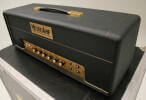
MetroAmp JTM 45 Kit and GPM 45 Custom Build

George Metropoulos is no stranger to the world of Marshall amps or to the online amp building community. Having run MetroAmp for some time now, George offers everything from fully built replicas of many classic Marshalls to ready-to-build kits and hard-to-find replacement parts for vintage Marshalls. A player, George honed his amp-tech skills by adopting a DIY approach, taking care of his own amp repairs on the road. This extended into repair work at home, and then really took off when amps began coming in for restoration rather than simple re-tubing. After his ’73 Super Lead was stolen from a gig, he realized it might be best to leave the valuable amps at home, and so he embarked on a never-ending quest to replicate the tone of the old Marshalls.
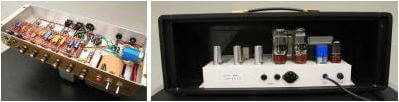

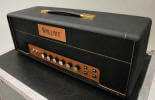
Like all the builders in the roundup, George is passionate about vintage Marshalls and obsessive over the details that make these amps so coveted. We received two amps from Metro: the JTM45 kit (which can be purchased already assembled for an additional $400) and the GPM45, George’s custom-built JTM45 using NOS vintage parts. When we fired up the MetroAmp 45s, it was clear that they both came from the same camp. Both amps were meticulously built and incredibly precise in their layouts. The main physical differences between the amps came down to the caps, resistors and tubes. Both amps shared the same iron and layout, so they also shared a lot of the inherent tone in their circuits. As George is a fan of the mid-sixties JTM45s, Metro’s transformers are based on the Drakes, rather than the earlier Radiospares iron [editor’s note: Kit also comes with optional Mercury Magnetics transformers]. Still, there was no question that the GPM45, which included NOS Phillips mustard caps, Allen Bradley carbon comp resistors and a gorgeous set of Genelex KT66s, was sweeter sounding.

While those differences accounted for a tonal upgrade, what made the differences even more compelling was the way they affected the touch factor of the amp. Much like our ‘65, the custom-built Metro had an ease about it that felt like a broken-in vintage head, making it a breeze to dig in, or to lay back on the strings and feel the amp act as an instrument. It was truly inspiring. Of all the amps in the roundup, this amp sounded most like our ’65 — frighteningly close! I should mention that the Metro kit version was actually plugged in first, and before comparing it to the GPM45, we all agreed we’d be thrilled to have one in our collection. We may be splitting hairs here to some degree, but knowing that anyone can buy a complete kit for under a grand, and have that kind of quality and tone — that says a lot.

Metro’s JTM 45 Kit:

Metro’s GTM 45 Custom Build:

Wallace Amplification BKW45

www.WallaceAmps.com

Brian Wallace has electronics in his DNA. His father, an electronics engineer, and his grandfather, an RCA tube repairman, were both instrumental in his early education and development in tubes and electronics. When he was young his father gave him a 75-in-1 electronic projects kit and further encouraged Brian by letting him watch as he built his own projects. Like all of the builders in the roundup, Brian is a player. He began modifying amps in 1974, when he removed the speakers and baffle in his Checkmate amp and replaced them with a baffle he created and some purchased speakers — altering the sound of the amp and thus beginning his lifelong journey. In 1995, he was approached by Guytron Amplification to help out while they were getting started. A positive experience, it propelled him to the next level and led to the creation of Wallace Amplification, which now offers several amp models as well as replacement transformers under the Marstran name.

Wallace’s first amp is the BKW45, but he is more than a clone maker. Recently he introduced the Abaddon, which is a 50-watt master volume head consisting of four gain stages in the preamp. There is much more to come, including a line of pedals and a reissue of the Fuzz Ace pedal he made back in the early ’90s. The BKW45 is a unique flavor of JTM45. A hair darker in tone and possessing slightly less gain than all of the other models, including both the vintage and reissue Marshall, it yielded enormous bloom and a bold, thick, sustaining quality. Even though there was a little less gain, it didn’t affect playability, and we never struggled with the amp. It was one of the rarest qualities I’ve experienced in an amp, and certainly an unexpected bonus.

The Wallace had a magical ability to push notes through loud and clear while still being able to dish out gritty and harmonically pleasing chords that didn’t fight the non-perfect intervals they were built on. This all came out of an amp that was using tubes you can buy today without breaking the bank.
Speaking of breaking, check out the sidebar on what the BKW45 was subjected to by UPS en route to our roundup. In spite of the gorilla treatment it received, the amp arrived without shattered glass and performed flawlessly throughout the entire set of three sessions of playing and listening. That’s a testament to a solidly built and roadworthy piece of equipment. And one look inside the amp will show what a dedicated and precise builder Wallace is. In tone and build quality, the amp is a work of art.

Ever wonder what could happen to your amp in shipping? In the case of Brian Wallace’s BKW45 amp, UPS had a field day, and decided it would be a lot of fun to throw it around. When the amp arrived, it was packed neatly in a new cardboard box with padding inside suspending the padded road case that housed the amp. That’s double-boxed and protected by a case built for heavy abuse. Sadly, it took one good slide down the end of a ramp and collided with either another box or the wall of the truck. Though the box didn’t show any signs of abuse on the outside, it was clear that something had shifted when I opened the case. Take a look at this picture of the damage and the way the entire amp was shifted to one side because of the impact. Believe it or not, the tubes didn’t shatter and the amp worked fine, but it was cosmetically damaged by a broken front Plexi panel. This isn’t the first time this has happened, but it’s the first time I’ve seen it happen with this type of road-worthy packing. Let this serve as a reminder to always insure your amps, as the shipping company can’t tell if you’ve got a bag of peanuts in a box or an amp that was lovingly built by somebody like Brian.
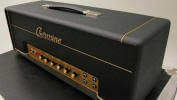
Germino Amplification Classic 45

www.GerminoAmps.com

Greg Germino is another lifelong guitarist who was bitten by the tube-amp bug after catching the Allman Brothers Band back in 1972. He was so inspired by that show that he switched over from acoustic to electric guitar and began taking electronics classes in high school. In 1979, he requested schematics from both Ampeg and Unicord (Marshall’s US distributor at the time) and began his hands-on education with tube amps. He spent the ’80s at an electronics job, and by the early ’90s he was moonlighting doing tube amp repair for a few music stores. He continued to play live with both 50W and 100W Marshalls during that time and moved to Durham, NC to work at Bull City Sound — working on tube amps from the big-name amp companies.

This led to Greg’s being commissioned by Mojo Musical, where he built their Tone Machine amplifier. The following year, 2002, he began work on the prototype of his Lead 55 amp, which debuted in May of 2002. The Classic 45 model is based on the earlier Radiospares-style output transformer, rather than the Drake 1202-103used in the ’65-’66 era, and the circuit is exactly what you would find in an earlier original. The Radiospares-style OT is supplied by none other than Chris Merren, who is highly regarded in the world of Marshalls, and known to make some of the most accurate transformer replicas out there.

The Classic 45 was the only amp in the roundup that used 6L6 power tubes. Greg’s decision to use them was a combination of staying true to the earliest tubes Marshall used on the original JTM45 amps and his belief that the current crop of 6L6s sound and perform better than newer KT66s. NOS and vintage 6L6s are also less expensive and more plentiful than NOS KT66s. Our immediate response to the Classic 45 was that it was a lively and aggressive amp, with tons of power that made the pick explode off the strings. In ways it reminded us of our favorite ’67 Super Bass in its volume and attack, but it still retained the sound of a 45. It may very well have been the loudest amp of the bunch, and that volume translated to a feeling of excitement that made the amp extremely fun to play. It was present without being shrill and had a super-tight bottom end, no matter what guitar we played through it. While the Classic 45 had tons of natural gain on tap, it also cleaned up nicely when rolling back the volume on the guitar, revealing a bright and sparkly chime. This amp is a real beast, and it could hold its own against 100W amps without flinching.
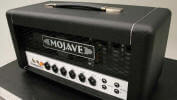
Mojave Ampworks Special Edition Plexi 45
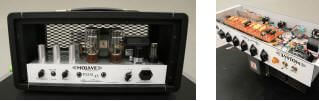
www.MojaveAmpworks.com

Anyone familiar with the JTM45 would surely be jealous of Victor Mason. Not only has he seen more than his fair share of vintage Marshall, Vox, Hiwatt and other rare treasures come through his shop, but Victor recently acquired 26 of the all-time greatest JTM45s ever assembled via the Kronemyer collection, and he’s got the pictures to prove it! This is just one of the factors contributing to the obsessive nature of Mojave (and the associated Plexi Palace). Having been around for over a decade on the internet, Vic has been repairing, restoring, buying and selling vintage Marshalls for quite some time now. Stemming from his early desire to find out how EVH created the classic brown sound, Victor embarked on his journey through countless hours of digging into vintage amps and learning where their strengths and weaknesses lay. Mojave now offers an entire line of amps to serve the classic Marshall tones and well beyond with innovative features and designs. The Mojave Plexi 45 also has two very unique features over a stock JTM45. First is a simple feature to allow volume control by way of throttling the power level. Second is a line level output, which is adjustable and incorporates a ground lift.

Standing apart cosmetically from the rest of the amps, the Special Edition Plexi 45 is built on the same footprint as the Coyote and Scorpion designs, with a white-and-black color scheme and chrome hardware. The head is built with an open grille cage that allows for maximum airflow to keep the set of completely NOS glass cool. The 45 supplied for the roundup consisted of a pair of 1970 NOS Genelex KT66s, 3 Mullard 12AX7s and a Mullard GZ34. Like the Germino, the Plexi 45 is based on the Radiospares transformers, which are custom wound by Mercury Magnetics.

The chassis is a thing of beauty; the .09″ thick aluminum, with a high tensile strength and welded edges and seams will ensure it will not flex, bend or develop fatigue, like the early, folded, softer chassis, and will prevent the heavy transformers from causing the chassis to sink in and sag. Mojave deviates from the original JTM45 by using modern, tight-tolerance parts. Custom manufactured caps and metal film resistors allow each amp to sound as close to the one built before it as the one after it. Consistency is something that Vic definitely strives for, and it shows in the build quality and attention to detail, and the desire to add convenient functionality to his amps.
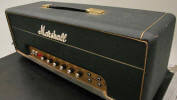
We found in testing that not only did the amp have an extremely low noise floor, but that it was an authoritative and powerfully voiced amp. There was definitely something different in the tone of the Plexi 45; it was cleaner sounding, but still very bold. Having been to Vic’s shop, I was fortunate enough to play one of the 26 JTM45s he had acquired, and I’m positive that the experience with those amps had more than a little to do with the design of the custom Mercury Magnetics’ Radiospares transformers made for his Special Edition model. The amp is built like a tank.

Marshall Reissue JTM45

www.MarshallAmps.com

While the reissue looked very similar to the ‘65 on the outside, especially due to the fact that it’s already 20 years old, the differences on the inside were quite pronounced. Assembled with more modern methods, and using a PCB rather than hand-wired turrets, you could easily be fooled into thinking that it wouldn’t perform like the others. This particular amp was the only one in the bunch to use EL34s rather than KT66s or 6L6s, so the sound was definitely different. It was incredibly loud and focused sounding, and actually had many of the characteristics of a Super Lead. The sustain and power of the amp was incredible, and for an amp that can be found used for around $1000, this is a sleeper bargain. Marshall has taken some flak for their amps sounding stiff and cold from the factory, but with a little attention — slightly hotter bias and good tubes — this amp is a monster. And just because it says it’s a 45-watt amp, don’t harbor any illusions that it would be a good bedroom amp. This is a loud and powerful beast, and a tone machine as well.

The Blindfold Test

As a final, fun test, we did a blind study, to see how accurately I could identify each of the various amps in the roundup. Johnny and Tony set up the group of amps, and I sat in a chair with my back turned away from them. With the guitar plugged in, they began to fire up the various amps, and we got rolling. Out of all the amps, I was always able to distinguish the Wallace BKW45, due to it’s slightly darker sound. The Metros were also fairly easy to spot, but I ended up guessing the kit as the custom build and vice-versa. The ‘65 was also an easy amp to recognize, but as ear-fatigue set in, the lines began to blur substantially. Pretty soon, I was confusing the Germino for the reissue JTM, the Mojave Plexi for the Wallace, and the Metros for the real JTM. It just goes to show you that all of the amps performed remarkably well, and you can be fooled when you’re not seeing what you’re playing, so never discount a PCB reissue head as a second fiddle to the real thing. In the mix of a band, these differences become small, and any one of these amps would hold their own any day of the week.

Wrapup

To have the opportunity to play through so many variations on a classic theme was not only fun, it was educational. Each one of the builders excels in creating their own unique version of the great rock and roll amp that Ken Bran, Dudley Craven and Jim Marshall built back in 1962. While like all Marshalls, the JTM45 went through changes in tubes, components and designs over its lifetime, there is a trademark flavor and color that still can be found in all of them. Not everyone can afford a vintage 45, but with the help of these builders we have the opportunity to get into that sound and have build quality that will last for years.

Source: https://mercurymagnetics.com/pages/news/PremierGuitar/PremierG-20.htm

Output Transformer Upgrade

I have a cool little 1980s Fender Super Champ. It’s one of the amp models that was designed by Paul Rivera. This little guy puts out about 18 watts through a single 10″ speaker. It also features Reverb and an overdrive mode. This is a great little amp to take to jams or recording sessions. It’s an all tube design and one of the last point to point hand-wired Fender amps. A few shortcomings of this amplifier are:

  1. The footswitch design that engages the overdrive mode sucks… it completely changes the tone of the amp the instant you plug the footswitch in.
  2. The stock 10″ speaker sucks… nothing left to say.
  3. The tiny output transformer holds back this little monsters potential.

Two of the three shortcomings can be fixed pretty easily and for not too much money. The one that cannot be fixed is the footswitch circuit… I’ve tried and it’s just the design… oh well. First thing is to ditch the stock speaker and put in one that’s more efficient with more clarity and better bass response. I chose an Eminence Ragin Cajun and the amp totally came to life. You can do a gig with no problem once you install the Cajun.

If you want to take the amp up another level or two then you have to replace the puny output transformer. I removed the stock unit and replaced it with a Mercury Magnetics FBFDR-O model. This is the clone of the blackface Deluxe Reverb output transformer. It is definitely bigger and if you install in on a slight angle you can catch a mounting screw hole for a terminal strip so you do not have to drill any holes in the chassis.

The result is absolutely astounding!! It has been a long time since I upgraded a transformer in an amp and this swap reminded me how effective upgrading an output transformer can be. The whole amp just opened up and the bottom end got much tighter and defined… almost piano like. The overall volume of the amp increased and the dynamic range was broadened. There was much more harmonic content and overall the amp sounded and felt much more solid. Besides sounding and feeling better this amp was now a lot more gig worthy. A simple transformer swap did all that and only took about an hour from the time I dropped the chassis until I hit the first note. To me that’s a total home run!!

If you have an amp that sounds and feels good but want to take it up a level or two then let me suggest two reasonable upgrades: New speakers and a transformer swap… at least the output transformer. These two upgrades can transform your amp into something magical. Plus it is a lot less expensive than getting a whole new amp, not to mention the time you have to invest trying a bunch of them until you find one that works for you.

I am affiliated with both Eminence and Mercury Magnetics. If you have any questions and are interested in upgrades please email me and I can help make a recommendation or two on speakers and/or transformers. You will be amazed… I am every time!!

Amp Transformers, Output Transformers & Chokes

Dumble-Inspired Guitar Amplifiers

Something very cool is happening the basement of Mr. Music, Boston’s favorite family-owned music store in Allston, Massachusetts.

After a lifetime of gigging, amp repair, studio building, and tone tweaking for stars like Joe Perry of Aerosmith, master technician Rob Lohr is building some of the finest boutique tone monsters to come along in a while.

I have always been impressed with anything I heard that was built in his shop, located in the basement of Mr. Music. Rob is a person of great detail. A technical question put forward to Rob usually yields a tutorial on the workings of electrons with respect to our favorite instrument, the guitar. Through the years, Rob and I  have had many conversations about what a practical amp should sound and look like. A veteran of the gig scene himself, Rob understands what the working artist needs. In my world, 50 percent of the reason why something sounds good is because it does not need a crew of roadies to transport it, set it up, and break it down. These days, as indie artists, even for high-profile shows in theatres, we usually show up with our own favorite rig. It had better be light and tone-worthy!

When I heard Rob’s Dumbalina, an amp inspired by the legendary Alexander Dumble’s Overdrive Special, I was instantly hooked. Here was an amp the size of a Fender Princeton Reverb that was a very high quality, point to point, hand-made tone machine that had a kick like amps twice its size. Rob Lohr had somehow managed to pack all of the essential features of the best Dumble-inspired amps into a space the size of a Fender Princeton Reverb. He did this with no sacrifice in power (45w) and the highest quality components!

There are many other great D-Style amps whose components are a cut below Dumbalina’s. Yet Rob charges a modest $1800.00 for the basic amp, with additional costs for any custom work. Okay, yes, I did have to pay extra for him to add my name to the front in vinyl lettering with Fender-style script. Don’t be confused though, this is not the “Thaddeus” amp!

With a switchable  4, 8, 16 ohm extension speaker output, the amp offered everything you might need to grow your rig. Small gig: use the onboard 12-inch G12-T75 and walk in with the amp in your right hand and guitar in the left. Large gig: take an extension cab and utilize all of the 45 available watts to rock the stage with two or more 12-inch speakers.

The footswitchable Overdrive channel sounded like the mating of a Dumble Overdrive Special and a Two Rock Custom Reverb Signature. Overdrive that sings without over-saturation and responds to tonal tweaks on your guitar or subtle finger ornaments. The quality of OD of this amp, I will testify, is simply one of the best I have played. The clean channel can be crystal, but if you push it, you can get a singe on the top notes and a roar on the power chords.

The +4 effects loop provides you with the opportunity to use the highest studio grade effects in the loop. Aside from being whisper quiet, plugging in a high-end effect processor seems to lend a three-dimensional quality to the amp that makes it sound much bigger than its physical proportions might suggest. Of course, you can use a dumble-ator or clone thereof to use line level floor pedals, but why not use some of the high-quality studio grade pedals that are coming out these days? TC Electronics makes a couple and so does Eventide. More and more pedal manufacturers are giving you the option of the studio level +4 signal, ready to plug into your D-style effect loop. (See previous post on Effects Loops).

The three switches that you normally find on D-clones for Bright, Mid, and Bass are neatly hidden in Dumbalina: Each  tone knob (Bass, Treble, Mid) has a hidden, whisper quiet, pop-less pull-boost feature which takes the whole thing up to a different kind of 11 heaven. The Volume knob has a presence boost. When the Tone Bypass is engaged (often called Pre-Amp Bypass or PAB in other Dumbl- inspired amps) the treble pull pot doubles as a bass boost. The result is the most useful “PAB” option that I have ever seen with a corresponding increase in low end that makes this feature a very practical and useful option for me. Usually I shy away from PAB because it might sound a little gnarly, or less friendly in lower volume settings, even though it works wonders for cutting through in the heat of the mix at high volumes.

My most recent gig was a power trio gig, a Hendrix tribute concert. I used Dumbalina’s overdrive channel for the solos that were not over-the-top, so to speak. When the band started really bashing, I could get away with using my Tone Bypass to cut through the mix. Really very flexible tones on this puppy! The 45w is just what you need to sing at lower volumes. Push the envelope a bit and you get great power amp overdrive without scaring the non-guitarists out of the room. In addition, there is a master volume/loop send level that allows you to get the tones you are using at lower volumes without changing the character of the settings. A well thought out amp for the working musician. At 34 pounds, the amp is welcome at any gig that I play!

In the studio, Dumbalina reigns supreme. I have just completed tracks for a tribute cd. R&B versions of Jimi Hendrix tunes. I used Dumbalina for many of the guitar solos and rhythm tracks and, well, tune in next year in the Spring to hear what I think are pretty amazing guitar tones.

OLYMPUS DIGITAL CAMERA

Rob builds every aspect of the amp. From the cabinet and grillcloth to the faceplate (painting and vinyl lettering)
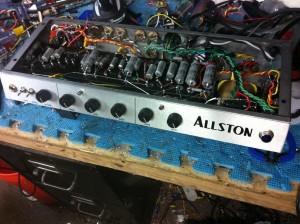

the meticulously wired components inside this amazing amp.

Current wait time is only something like three months, since Rob is building each one by himself. I am sure as the word gets out, that list will grow and grow. It will still be worth the wait, I promise!

Here is the icing on the cake: roughly six months or so after you get the amp, after the amp has been broken in. Rob will sit there with you and do the final tweaking of the components WHILE YOU ARE IN THE SHOP! He will look at the levels and settings that you choose and tweak the internal components so that a great amp becomes an even greater amp, tuned to YOUR signature style of playing. This is an amazing benefit and it is the feature that pushes Rob to the front line of amp builders. (Isn’t that why Dumbles became so popular and expensive? Alexander Dumble would tweak them to the playing style of the owners). Rob recently spent 10 hours—yes folks, 10 hours in the basement at Mr. Music—tweaking an amp for client Alex Potts, so he could have it ready for his move to LA. In my Berklee Online course, Funk/Rock and R&B Soloing, I talk about signature tone. Folks like Robben Ford, who within a couple of notes, announce their presence on the recording whether or not you are even close enough to read the album credits. I believe that this amp can open a door to this concept, and with the post-build tweak, you just might be creating some new history.

Here is the latest version of Dumbalina that Rob is completing, with a couple of new tweaks and slightly different cosmetics on the faceplate, which include corresponding faceplate lights for the lighted footswitchable Overdrive and Tone Bypass features: Sweeeeeeet!!

Here is the scoop on Dumbalina, from the hand of the builder himself, Rob Lohr:

CABINET-The cabinet is Grade “A” pine joined with machine cut half blind dovetail joints and internally braced with poplar. I will cover the cabinet with any available tolex and grille cloth, and you have your choice of appropriate loudspeaker*. The standard faceplate is brushed aluminum with black letters, but I can do colors for a small upcharge and you have your choice of knobs**. The handle is a good quality faux leather that comes in brown, black, or blue, and I use 1″x2″  heavy duty rubber feet and stainless steel cabinet corners and hardware.

*speaker must be of appropriate power handling.

**knobs must fit 1/4″ shaft and comply with existing chassis hole spacing.

CHASSIS– The chassis is steel with welded joints and all hardware is stainless steel. The transformers are MERCURY MAGNETICS FBFVL-P 120v power transformer, FC-VIBROL choke and FBFVLR-OS Fatstack output transformer(4,8,16 ohm selectable). I can do selectable AC input for a small upcharge. The tube compliment is: 2x 12ax-7(pre), 1x 6sl7(PI) 2x 6L6GE(output) and a GZ34(rectifier). I use Belton tube sockets and retainers. I use a combination of Alpha, Clarostat, and Bourns potentiometers, Cliff and Switchcraft jacks, plugs and switches. All shielded leads are Mogami console cable. All unshielded signal leads are teflon coated solid copper core silver clad. All power supply wiring is PVC jacketed stranded copper.

ELECTRONICS– 100 percent hand-wired point to point construction. Hand made 1/8-inch fiberglass turret board, a combination of Metal oxide, metal film and carbon composition resistors, Oil and foil signal capacitors, and high quality electrolytics. There are some other solid state components, but they are related to the switching circuits and are not in the audio path.

LIMITED LIFETIME WARRANTY– I don’t warranty speakers, tubes, or output transformers for obvious reasons …but if anything else ever breaks I will fix it for free for ever and ever. Or until I die, which ever comes first.

Here is the bullet list of Dumbalina Specs:

Output power———–45 watts

Tube compliment——–2x 6L6GE, 2x 12AX-7, 1x 6SL7, 1x GZ34

Output Impedance——4,8,16 ohm selectable

Effects loop———— post pre/ pre power half normalled break out with send level.

Foot switches———-Over-drive and tone bypass(PAB). Both can also be controlled by front panel switches and are indicated with both front panel and foot switch mounted LED’s. The footswitch over-rides the front panel switches.

Controls—————-Volume, Treble, Middle, Bass, Overdrive, Level (ratio), send level.

Pull Pots:

Pull Volume————-Bright

Pull Treble————–Hi mid boost

Pull Mid—————–Lo mid boost

Pull Bass—————-Bass boost

Speaker Celestion G12T75, 8 Ohm

Rob Lohr can be reached at Mr Music in Allston Massachusetts at 617-783-1609 or at  robmadoak@hotmail.com

Here are few demo videos that I just did:

OVERVIEW:

Output Transformer Changed to a Bassman

Hey, Jeff.

I love your column! I look forward to reading it every month. I have a ’67 blackface Super Reverb that I gig with. Really an awesome-sounding amp!

I just realized that the output transformer has been changed to a Bassman reissue or a Super reissue OT (output transformer). I’m not really big on keeping it original — it doesn’t really matter to me because I will never sell this amp — but like every other tone searcher out there, I want the best possible tone that this amp can achieve. I am curious about changing this out for a higher-quality OT. I heard the Mercury transformers are really good vintage replacements. What kind of differences in sound/tone will I hear by doing this, and is it worth it? Also what kind of tubes do you prefer in these amps? Thanks so much, and keep the awesome columns coming!

Ben

Hi Ben,

Thanks for reading PG, and thanks for writing in. It’s the much-appreciated support of the readers that enables all of us to write for such a cool publication. Now… on to that horrible amp you’re forced to gig with. I kid, of course. The Super Reverb is absolutely one of my favorite amps. The multiple 10″ speaker configuration helps give it a unique voice and sets it apart from most other combos using the ubiquitous 12″ speaker. It’s a shame that the output transformer needed to be replaced, but occasionally these things happen. A reissue Bassman or Super Reverb transformer, since they both have an output impedance of 2 ohms, will certainly get the amp working properly, but yes, you can do better.

Mercury Magnetics offers a couple of different lines, and they are some great-sounding replacement transformers. Their ToneClone series transformers are replicas of the original transformer designs, and the Axiom series takes them to the next level with design modifications for tonal improvement. Which one you choose will depend on whether you desire to have the amp sound as good as a great-sounding Super Reverb can, or to, as Emeril Lagasse says, “Kick it up a notch!” Either way, you should notice tonal improvements. Some may be very noticeable, and some may be subtler. Things like tighter, extended bottom end, smoother top end, more harmonic content and better note definition are all improvements you might expect. These attributes can all be affected by the quality of your output transformer. Whether it’s worth it or not is completely dependent on any cost limitations you put on your search for the ultimate tone.

You also asked about tube preference. This is always very subjective and depends on the type of music you play and your expectations of the amp. In general, my preferred preamp tube for amps that were not designed with heavily overdriven preamp sections is the Sovtek 12AX7LPS. Its large plates seem to make it a very full-range tube, so your guitar or effects will be very full bodied. In amps with major front-end gain, this extended frequency range can become too much of a good thing, but that’s certainly not the case with a Super Reverb like yours.

Also, here’s a little helpful tip to remember: Even new tubes can be microphonic. If you install new tubes in your amp and you experience ringing or feedback when the volume is turned up with nothing plugged in, try swapping the positions of all the tubes of a same spec. (In this case, it would be the 12AX7s. The 12AT7 tubes in Supers are in locations that are generally not too susceptible to microphonics, so they shouldn’t be an issue.) Certain locations in the circuit are more susceptible to microphonic tubes than others, so moving them often clears up the ringing, or at least minimizes it.

Preference for output tubes is much more dependent on the use of the amp and style of music. If you play mostly blues or classic rock, I would recommend going with a smaller-bottle tube that will have a nice, smooth breakup that occurs sooner — making it easier for the output stage of the amp to be pushed into clipping and achieve that glorious nirvana that is output-tube distortion! Recommendations might be the new reissue Tung-Sol 5881 or Groove Tubes GT-5881C. If you’re more into big jazz chords or country twang — or if you get your signature tones from stompboxes and prefer that the amp be as big, loud and proud as it can be — you’ll probably want to go with a larger-bottle tube. This generally yields the fullest, cleanest performance. Recommendations here might be the JJ/Tesla 6L6GC or the Ruby 6L6GCMSTR. Another suggestion here might be the new reissue Tung-Sol 6L6GC-STR. I just installed a quartet in a Twin Reverb and it was surprisingly loud ‘n proud. I hope that helps you on your way to a more super Super.

An Excellent Choice Transformer

We always maintain a steady flow of gear arriving for review, but sometimes we also employ a fascinating if time-consuming research strategy that involves logging onto eBay, picking a broad category such as “guitar amplifiers,” and settling in for as long as it takes to patiently scroll through every page of listings. Yeah, that’s often 50 pages or more, but since we can’t possibly think of all the items that might interest us and search for them by name, it’s far more revealing and productive to just hunker down and scroll. Rarely do we fail to find something intriguing that would have otherwise been missed, and such was the case on a morning in August when we stumbled on a listing for a 1959 tweed Deluxe. Were we looking for a tweed Deluxe? Nope. Wouldn’t have crossed our mind at the time…. We had already reviewed 5E3 reproductions from Fender, Clark and Louis Electric within the past 3 years, and we have frequently referenced our 1958 Tremolux as being our desert island #1. Isn’t a Tremolux just a tweed Deluxe with tremolo in a bigger box? No… not even close. That would be like saying you wanted to date a blonde – any blonde. For the record, our fixed bias Tremolux possesses a cleaner tone with a bigger, booming voice created by the taller Pro cabinet. The Two Fifty Nine is a completely different animal….

Sporting a February 1959 date code on the tube chart, the ’59 had been listed by a seller in Arkansas who turned out to be Tut Campbell, formerly a well-known guitar dealer in Atlanta. Still buying and selling gear, Campbell had described the Deluxe as being in original condition with the exception of a replace output transformer – a big old mono block Stancor dating to 1957. Given the otherwise original condition of the Deluxe, which included the Jensen P12R, we made Campbell a “best off” below his asking price and scored the amp for $1,850 shipped. We wouldn’t say we stole the Deluxe, but it seemed a fair price of admission for the opportunity to experience and explore still another rare classic and supremely worthy piece of Fender history on your behalf.

The Deluxe arrived with the big Stancor dangling from the chassis despite Campbell’s careful packaging. Wasn’t his fault, really – in a feeble effort to avoid any additional holes being drilled in the chassis, the fellow who installed the Stancor in the ’60s had merely tightened set screws over the small tabs at the base of the heavy tranny, which was designed to be mounted upright – not hanging upside down in a guitar amplifier. Of more concern was the fact that while the amp was lighting up, there was no sound…. Well, we’ve been here before, so we made a call to God’s Country and the Columbus, Indiana domicile of Terry Dobbs – Mr. Valco to you. We had already set aside a spare output transformer (Lenco, McHenry, IL) that had been the original replacement installed in our ’58 Tremolux when we first received it, replaced with a Mercury Magneticsfor our June ’07 review article. Mr. Valco cheerfully answered his phone and as we explained the situation with the Deluxe he agreed to walk us through the installation of the new replacement – a simple process involving four lead wires being connected to the rectifier and output tube sockets, and the speaker jack. As long as you put the correct wires in the right place, a piece of cake, and we had the new tranny in within 10 minutes. Pilot lamp and all tubes glowing, still no sound…. Valco patiently guided us through a series of diagnostics with the multi-meter and the Deluxe was running on all cylinders, pumping 380 volts. Stumped, and with the hour growing late, we called it a day. Leaving the mysteriously neutered Deluxe chassis on the bench until tomorrow.

Morning came with a whining voice delivering a plaintive wake up call – “It’s got to be something stupid and simple….” Inspired by a huge steaming mug of Jamaican High Mountain meth, we sat back down at the bench, tilted the innards of the Deluxe chassis forward beneath a bright halogen desk lamp and peered in for answers. We began slowly examining the chassis in sections, looking for broken or dull solder joints, loose or broken wires, while gently pushing and prodding wires and connections with the eraser tip of a #2 pencil as we had seen Jeff Bakos do so often at his bench. After ten minutes or so we were about to give up, when we turned our attention to several places where the circuit was grounded to the chassis adjacent to the volume and tone pots, and damned if a solder joint for one of the uninsulated ground wires hadn’t separated from the chassis. No ground, no sound, and as soon as we had restored the solder joint the Two Fifty Nine arose from the dead with a mighty A major roar.

The amp was indeed remarkably well-preserved in all respects, with the typical amber patina of old tweed. The burnished chrome control panel remained bright and clean with no corrosion, the original handle remained intact, and a couple of small ciggie burns on the edge of the cabinet added a stamp of historic legitimacy to the Deluxe’s pedigree. The top half of the Jensen’s frame was coated in a fine film of red clay dust from the Delta, and while the cone was in remarkably good shape with no tears, an audible voice coil rub called for a recone. We would send the speaker to Tom Colvin’s Speaker Workshop in Ft. Wayne, Indiana, requesting that he leave the original unbroken solder joints for the speaker wires intact if possible.

Meanwhile the first order of business was to listen to an assortment of NOS tubes from our stash, and audition no less than a half dozen speakers. Different sets of power tubes and individual preamp tubes will sound surprisingly different, so we started out with a matched pair of NOS RCA 6V6s, a GE 5Y3 rectifier, and an RCA 12AX7 and 12AY7. From there we subbed in a dozen different RCA, Amperex, Tesla and GE 12AX7s, noting varying levels of brightness, warmth and intensity among them all. For an edgier, more aggressive voice, the GEs and Amperex typically deliver the goods, while RCAs produce a slightly warmer, richer, fuller tone. We also experimented with a 12AT7 and 12AX7 in place of the lower gain 12AY7, and while those tubes ramp up gain and distortion faster and with more intensity than the 12AY7, they seemed like overkill for us. Our Deluxe possesses a tone of gain using the stock 12AY7.

Rather than repeatedly reloading the Deluxe with different speakers, we used a Bob Burt 1×12 cabinet built from 100-year-old pine for our speaker tests. The original Jensen had never been pulled from our amp, but multiple speaker replacements in an old Fender inevitably cause the speaker mounting screws to loosen in the baffleboard, making speaker swaps unnecessarily clumsy and complicated. When we do run into loose mounting screws, we simply run a few small drops of Super Glue around the base of the screw and surrounding wood. Allow to dry and your screws will stay put provided that you don’t torque the nuts on the mounting screws like an idiot with a socket wrench. Don’t be that guy,

We tested a range of speakers that included a Celestion G12H 70thAnniversary, Colvin-reconed ’64 Jensen C12N, Eminence Wizard, Private Jack, Alnico Red Fang, Teas Heat, Screaming Eagle, Red, White & Blues, and Warehouse Green Beret, Veteran 30, Alnico Blackhawk and Alnico Black & Blue. The Alnico speakers generally produce a tighter, smoother, slightly more compressed tone, with a variable emphasis on upper mid-range and treble frequencies, while the speakers with ceramic magnets possess a wider, more open sound. Higher power ratings of 75W-100W offered by the Red, White & Blues, Screaming Eagle and Warehouse Blackhawk typically translate into more graceful handling of bass frequencies, and in a 20 watt Deluxe, zero speaker distortion, for a clean, powerful voice.

Let’s cut to the chase with speaker evaluations, shall we? It has become clear to us that even after reviewing a dozen speakers in as much detail as mere words allow in a single article, many of you remain uncertain about which speaker to choose. No kidding. We would absolutely love to hand you a single magic bullet when it comes to speaker swaps, but here’s the dirty little secret about choosing speakers…. The overall character of the amp you will be installing your new speaker in is critical, and to some extent, the type of guitars and pickups you play most often are important, too. Tailoring your sound with the unique gear you play is not a one-size fits-all proposition – you have to invest some thought into the process. Are you going for a classic “scooped” American Fendery tone, or something more British, with a bit of an aggressive edge and upper midrange voice? Are you playing guitars with single coil pickups or humbuckers? Is there a specific, signature tone you are searching for, or are you playing a wide variety of musical styles that requires a broader range of tones? Do you like the more open sound of speakers with ceramic magnets, or the smoother compression of Alnico? What are you not hearing from your amp and the speaker that’s in it now? Do you want a brighter tone, darker, better bass response, or fuller, more prominent mids? Do you want to really drive the speaker and hear it contributing to the overdriven sound of your amp, or do you want a big, clean tone with no speaker distortion in the mix? The truth is, if you don’t know what you want, you are far less likely to get it. On the other hand, nothing is accomplished with paralysis by analysis. To be perfectly honest, there are lots of speakers made by Celestion, Eminence, Warehouse and, if you can wait long enough for them to break in, Jensen, that we could and would be perfectly happy with, but we would also choose them carefully, taking into account all the factors mentioned above. After a couple of days spent swapping speakers, we ultimately concluded that we preferred the ’64 C12N for a classic tweed Deluxe tone, and a broken-in Celestion G12H 70th Anniversary for the most mind-altering 18 watt Marshall tone we have ever heard. Seriously. More on that in a minute….

Having split more than a few hairs with our speaker swaps, it was time to start picking nits off of gnats with some output transformer evaluations. We first contacted Dave Allen of Allen Amplification, who also stocks Heyboer transformers built to his specs. We found a variety of appropriate output transformers on Allen’s site that offered subtle variations on a stock original Deluxe OT, and we asked Dave to describe the TO26 model we wished to try in the Deluxe:

“The TO26 was intended as a hot rodding upgrade to a stock Deluxe Reverb OT. While maintaining the stock 3-1/8” mounting centers, its fat stack of hotter core steel and multi-tap secondary make it a good choice for builders wanting to maximize the performance of a pair of 6V6s and who may also want to push the envelope with 6L6/5881s while still being able to clear the speaker in a stock cabinet. There are physical limitations in small amps, so its short low profile is welcome. The orientation of the laminations is also good for low hum pick up from the power transformer. I found that an OT mounted the tall way (like my TO30D) picks up considerably more hum simply due to its orientation to the power transformer, so, shoe-horning a ‘tallish’ OT into your amp may cause it to pick up hum from the power transformer – not much of an upgrade. “The TO26’s 7K to 8 or 16 ohm rating makes it ideal for a pair of 6V6s as well as 3,500 ohm to 4 or 8 rating for 6L6/5881s. Notice you always have an 8 ohm option with both types of power tubes. An impedance switch could be wired (I use a blackface grounding switch) as a power tube type selector for an 8 ohm speaker to go between 6V6s and 6L6s. The TO26 will typically give slightly more output with 6V6s due to its more efficient low-loss core steel and will keep the bass clean longer for more perceived clean headroom. As it takes the most watts to reproduce the bass, you notice distortion there first, and since Fender-type amps are so bass heavy, you can quickly hit the wall with headroom, so a noticeable increase in clean bass response certainly feels like a more powerful amp with the TO26. It is kind of like you installed a new speaker with a larger ceramic magnet that is more efficient than the old speaker. The amp is a little louder and the bass a little tighter or cleaner.

“There seem to be a lot of 6L6-based 5E3 amps out there now to get a little clean headroom from a circuit normally not known for much of that. The TO26 is a good choice for that type of amp as it will fit typical available chassis and cabinets. It has extra long 12” topcoat leads ready to strip and solder. I would reckon it would handle up to about 30 watts before starting to saturate and compress – plenty of cathode-biased 6L6s. I find that the Heyboer paper stick-wound and interleaved output transformers with premium core steel and heavy core stacks have typically better clarity or definition than ‘stock’ OTs. Call it fidelity or whatever you want – just clearer distorted and complex tones and better separation of notes in chords, etc. I use the TO26 in the Allen Sweet Spot, Accomplice Jr. and Hot Fudge with Nuts amps with excellent results. All of these amps can use either 6V6 or 6L6 power tubes. You know how a 5F6-A or Super Reverb has that huge 4 bolt OT for a pair of 6L6s to get the maximum clean bottom end? That is sort of what the TO26’s OT is to a pair of 6V6s. It just doesn’t even come close to saturating.

When we informed Dave that we planned to run the Deluxe with 6L6/5881 power tubes as well as 6V6s, he recommended that we try the TO26 since it had been specifically designed for such applications. He also sent a smaller TO20 transformer, described as being designed with a wider 1-1/4′′ lamination “fat stack” that provides 60% additional core mass than typical ¾′′ stack units for improved performance. The TO20 is a direct replacement for Blues Jr. and Princeton Reverb amps, and also suitable for dual EL-84 amps with an 8 ohm load.

Mr. Valco also sent us a replacement 5E3 output transformer he had bought on sale from Clark Amplification a few years ago made for Mike Clark by Magnetics Components in Schiller Park, IL – a company that has been producing transformers since 1943, having been the primary supplier for Valco and various Gibson amps in the ’50s and ’60s. A call to the company revealed that ToneQuest ReportV12. N1. Nov. 20104the transformer Valco sent was essentially their replacement for a Deluxe Reverb, model #40-18002 without bell ends per Clark’s request. We also learned that the company offers a complete range of Classic Tone vintage power and output transformers, including a reverse-engineered clone of a ’55 Triad 5E3 output tranny, model #18022.

We also contacted Paul Patronete at Mercury and requested a ToneClone “brown Deluxe” output transformer, since Larry Cragg had provided them with specific measurements from original OT in Neil’s ’61 tweed Deluxe, confirming that it was indeed a ’61–’62 brown Deluxe tranny. With a total of 6 output transformers to listen to, we took the Deluxe to Jeff Bakos, who set up a rig on his bench that enabled us to clip in each transformer and very quickly switch back and forth between them as we played a guitar through the amp. Are we having fun yet? Here’s what we heard:

Lenco – An excellent authentic “vintage” vibe for those that prefer the classic, if somewhat murkier sound of a tweed amp being pushed, lots of sag in the low end and a jangly pop in the top. And “old,” rather “lo-fi” sound indicative of the ’50s era amps.

Magnetics Components Clark Deluxe 18002 – Similar to the Lenco, but stronger and more robust, with a prominent growling character and voice. Thick, wooly and willin’ with better treble presence and clear string definition then the Lenco, yet an entirely “vintage” character. This tranny is comparable to those found in Deluxe amps from the brown era through silverface. Excellent power, punchy and fat with exceptional clarity and tone.

Magnetic Components 5E3 Clone – Percussive and dynamic with a faster attack response than the Clark/Deluxe Reverb version, this transformer was reverse-engineered from an original ’55 Deluxe OT. IT imparts an intense, throaty tweed character with enhanced mid and treble presence, remarkable clarity, and an authentic vintage ’50s vocal tone with softer bass response and slightly less volume and power than the Deluxe 18002.

Allen/Heyboer TO20 – An interesting variation with a much more modern, percussive dynamic character. The sound was not as heavy and imposing in the vintage style, and with this transformer the Deluxe reminded us of the more refined sound of a Fender Princeton, with excellent dynamic punch for slide and Allen/Heyboer TO26 – As advertised, the low end held up loud and proud with very little sag and an audibly higher threshold of clean headroom, although beyond 6 on the volume control the Deluxe was still holding nothing back. Overall, this transformer imparts a cleaner, high fidelity tone with more clarity and stout bass response than a typical stock 5E3 transformer. An excellent choice for enhanced low-end and maximum volume.

Mercury Magnetics brown Deluxe – Immediately recognizable, the Mercury displayed a trademark sound that is smooth, exceptionally musical, warm and balanced. Sounding more “high fidelity” than the Lemco or Magnetic Components transformers, but still seductively unruly enough to get yer ya-ya’s out. Sweet, rich, detailed and sticky.

Now, you may be wondering why we would bother to audition so many output transformers…. How much difference can it make? Well, forty-odd years ago when someone rigged that old Stancor tranny in the Deluxe, the only choice available to most repair shops was whatever was on hand in the scrap pile. Today we can shape the tone and dynamic response of an amp with a variety of “vintage” or more modern, custom transformers that allow us to recapture the original sound and feel of the amp, or improve upon the original design. Why did Cesar Diaz install output transformers for a Twin Reverb in Stevie’s Super Reverb amps, and Bassman transformers in his Vibroverbs? Because the first thing that chokes and overwhelms a smaller output transformer are the bass frequencies, and Cesar wanted Stevie’s amps to produce a rock-solid, thundering low end that could handle his massive wound strings. The tone we’re celebrating with our ’59 Deluxe is quite the opposite…. The raucous sound of the amp teetering on the edge is the key to it’s exploding tone, but if you wanted to go in the opposite direction with more headroom and a tighter low end, transformers like the TO26 have been specifically designed for that purpose. We once replaced the output transformer in our Pro reverb with a bigger MercuryToneClone Bassman, and the Pro grained a tone of clean headroom and unyielding bottom. Wanna make it even harder still? Use a plug-in diode rectifier in place of the 5AR4 rectifier tube. No saggy britches now. As with so many choices we make in the Quest for tone, the final decision comes down to your mission and individual taste, and Jeff agreed that between the Heyboer TO26, both Magnetic Components trannies and the Mercury brown Deluxe, the question wasn’t which one was “best” – all four were exceptional, but different. Some players would prefer one over another for different reasons described here, but all of them represent stellar examples of just how far we’ve come since the day that old Stancor tranny was used to put the Two Fifty Nine back into service.

One last detail needed to be addressed…. Could we safely run the Deluxe with 5881s or 6L6s if we preferred that sound over 6V6s? Once again, we asked the prescient Mr. Valco for some Hoosier insight:

“The impedance mismatch in this particular amp using the 6L6s is really not a big concern, it won’t hurt the amp and will either sound good or it won’t. The 6L6s draw 1.8 amps and two 6V6s draw 0.9 amp, so using the 6L6s will add about 1 amp more current draw that the power transformer needs to supply from the 6.3 volt heater windings. On some small 6V6 amps, using 6L6s can and does cause the power transformer to run hotter because more current equates to more heat. The concern is that the power transformer in the Deluxe, not being a large one to start with, has the extra 1 amp of heater current capacity to safely use the 6L6s. One way to determine if the power transformer is really stressed out with the 6L6s is to measure the AC heater voltage on pins 2 and 7 on the power tube sockets (or on the pilot lamp) and see if the AC voltage drops significantly from the reading using 6V6s versus 6L6s. It should be a bit over 6.3 volts AC with the 6V6 anyway (since the wall voltage is higher these days than in the early ’60s) and with the 6L6s you sure don’t want to see a large drop in voltage below 6.3 volts AC. If there is a large drop it means the transformer is having trouble supplying enough current for the 6L6 heaters if given enough time with the 6L6s could damage the power transformer. If the drop is only a few 10th of a volt, and doesn’t go below 6.3 AC, then it would indicate that the transformer is supplying the demand for the heater current and should be OK. Most Fender amps used power transformers that could handle some extra current demand.

And now we arrive at the moment of truth. We’ve been steadily reeling in a parade of new and classic amps for review in these pages for 12 years now this month – Marshall, Fender, Magnatone, Hiwatt, Vox, Valco, Silvertone, Ampeg, Gibson, Gretsch, Mesa Boogie, Park, Supro, Dickerson, Traynor, Budda, Western Auto, Standel, Dumble, Cornell, Clark, Crate, Divided by 132, Reeves, Bad Cat, Gabriel, Fuchs, Koch, Star, Category 5, 65 Amps, Balls, Bakos, Callaham, Blankenship, Reinhardt, Grammatico, Siegmund, Chicago Blues Box, Roccaforte, Headstrong, Rivera, Mad Professor, Talos, Maven Peal, Reverend, BC Audio, Savage, Goodsell, Fargen, Carol-Ann, DST, Two Rock, Germino, Matchless, Louis Electric, Swart, Demeter, Juke, Aiken, Bluetron, DeArmond, Carr, Victoria, and Dr. Z, with more coming. Lots of amplifiers, multiple models from the same builders, and among the foremost classics – Fender, Marshall, Vox, Hiwatt, Gibson, Ampeg and the entire Valco catalog, we have acquired, optimized and restored dozens of amps considered to be among the most desirable vintage models ever built. In the 20 watt wheelhouse occupied by the Two Fifty Nine, it has no equal by a mile. Game over.

After a lot of back and forth testing with different sets of output tubes, we became hooked on the thundering sound produced by a pair of Philips small-bottle 6L6WGBs. Thanks to Larry Pogreba’s talent for scavenging rare tubes (in Montana, no less), we are flush with several outstanding and stout pairs of RCA 6L6s, but the brighter Philips really lit up the Deluxe with a fresh and lively attitude that mirrors the bounce of a newer amp. With the ’64 Jensen C12N loaded, the Deluxe spookily nails the tones of Neil Young’s rig on Ragged Glory – a “studio” recording cut live with the Deluxe and Old Black in a barn on Young’s ranch with Crazy Horse. With the volume backed off to 4-5 a bluesy jangle emerges anchored by solid low end, rich midrange, the sweetest treble tones imaginable, and variable levels of sustain and edgy distortion that can be controlled both by the volume on the guitar and pick attack. The Deluxe does not discriminate between single coils or humbuckers, ravaging both with equal fervor, and the responsive dynamic character of this amp simply is not of this world. Rotating the single tone control sharpens treble without dumping lows or mids, while also subtlety increasing gain, as if you were using a boost pedal. A “Y” cord plugged into the Instrument and Microphone inputs enables the two channels to be mixed with great effect. As Neil Young described, bringing the mic input volume up with the instrument volume set between 6-8 gradually deepens the tone while slowly igniting an intense explosion of thicker second order harmonics and distortion as the dynamic character of the amp softens. Pushing the Instrument volume level up into the 8-12 range brings the volume up to a perceived level that exceeds 20 watts, while provoking an angry, pissed-off cascade of astonishingly rich musical distortion as the notes swerve into controlled harmonic feedback.

Switching from the Jensen to the Celestion transforms the Deluxe into the most stunningly toneful 20 watt Marshall you could possibly imagine. To be honest, you probably can’t imagine it, because we have never heard anything like this ourselves, even after owning a couple of vintage Marshall PA20s, a rare Lead & Bass head and 1×12 cabinet, and a Balls 2×12 18 watt. We could easily live with either speaker, and the Deluxe also just kills pushing our 8 ohm 4×12 pinstripe cabinet.

For those of you who appreciate a somewhat tamer vibe, we can assure you that the Deluxe loaded with a fine pair of 6V6s is equally mind-altering. The overall sound is a wee bit smaller in girth and less imposing, yet abundantly overflowing with vivid harmonic depth, a supremely touch-sensitive response, and brilliant combination of fidelity, clarity and bloom. Compared to a black or silverface Deluxe Reverb, the ’59 presents a more musically complex soundstage, less harsh, stiff and linear, and it lacks both the sharper treble of a blackface amp, and the scooped midrange character. The tone is rounder and meatier, the treble sweeter and less dominant, with an enhanced 3-D image.

Now, if you’re the type that skeptically requires a qualifier to add a stamp of legitimacy to such an over-the-top review, here it is, Mr. Been There-Done That…. The Deluxe doesn’t and won’t spew big clean tones at stage volume. Our ’58 Tremolux produces a cleaner tone with a higher threshold of clean headroom by far at comparable volume levels, and the taller tweed cabinet encourages a stronger, cleaner resonant bass and low mid response. The Tremolux is also equipped with a Mercury ToneClone Tremolux output transformer, which creates a tone that is less wooly, raucous and indistinct.

The busted-up sound of the Tremolux above 5–6 is gloriously righteous indeed, but with more clarity and less provocative intensity than the Deluxe. Taken in context, what we’re suggesting here is that in our experience, the Deluxe has no equal as both a Fender and Marshall style 20 watt rocker (depending on speaker selection), and we’ll add “blues” to that description equipped with 6V6s and the Jensen C12N. During our 2-month test period, we also routinely used our Lee Jackson Mr. Springgy reverb, Analogman-modded Boss DD3 digital delay, and a very cool, versatile (and cheap) Flip tube tremolo pedal reviewed here. Can a modern replica of the 5E3 Deluxe deliver the same inspiring tones as the Two Fifty Nine? The closest thing we’ve heard is the Louis Electric “Buster,” but no, magical happy accidents like this Deluxe can’t be reproduced today – and that is as it should and shall always be. Quest forth…


View PDF Article

Interview with Sergio Hamernik of Mercury Magnetics

It doesn’t take too much digging to find a laundry list of boutique amp builders using Mercury Magnetics transformers in their products. From Mojave Ampworks to Joe Morgan Amps to kits from MetroAmp, builders have found that Mercury knows their iron. While transformers rarely receive the same level of attention of NOS tubes, speakers, or even guitar cables, they are a major contributor to tone. Think about it—the power and output transformers are the start and end of the line with any amp.

Based in Chatsworth, California, Mercury Magnetics has been building transformers for close to 60 years. I recently had a chance to talk with Mercury’s Sergio Hamernik to dig deeper into their roots, find out what one can expect from upgrading their iron, and what sets Mercury apart. Prior to our conversation, I had the opportunity to witness the remarkable transformation of an Epiphone Valve Junior modified from stock to hot-rodded, using one of their transformer upgrade kits. Not only was it a noticeable upgrade, it was a revelation in just how important the role of quality iron in an amp is. But because it is the single most expensive part of any amp, it’s no wonder we see so many modern amp manufacturers skimp on the iron to keep costs down. Let’s see what the passionate, and often hilarious, Sergio has to say about his part of the business.

PG: I’ve been seeing Mercury transformers in amps for at least a decade. When did you get into the amp scene?

SH: This happens to be one of our most often asked questions. Even though Mercury Magnetics’ roots go all the way back to the early 1950s, there are guitar players who are only now discovering us. But if an industry insider like you has been aware of us for at least a decade, then I suppose it means I don’t need to lay off any of our sales and marketing staff.

I would attribute most of our lingering anonymity to the old days. Back then, most of our clients from the audio community preferred to keep us as a trade secret from their competitors and the press. The typical transformer-savvy amp builder also didn’t usually want to share the credit with us, or reveal what their “unique” technical advantage was regarding audio and tone. Consequently, we were asked to maintain a low profile and generic look for our transformers for quite some time. On occasion, a customer in the know will spot a small “MM” mark on a transformer from an older piece of gear, and ask if it’s a Mercury. Odds are that it is.

It was the guitar amp crowd that pushed us to go above ground. Now Mercury gives any electric guitar player or amp restorer a taste of what the pros were using, talking about in their studios, and among themselves. Many players have told us their amps increased in value when upgraded with Mercury transformers, and this became evident when insurance appraisers began to contact us for verification. However, it wasn’t until the mid-1980s when we began to market our services and various brands to guitar players.

For me personally, I got into the amp scene around the mid- to late 1970s. I just found it to be a nice way to relax from the strain of oversleeping.

PG: Your website shows a large number of amp manufacturers you have replacement/upgraded transformers for. What are your best sellers and why?

SH: There are so many different camps loyal to their particular amp brand, so it would be difficult to single out the best sellers. The best sellers are transitory and change from week to week because guitar amp players are a fickle bunch. That’s why we’ve built the world’s largest catalog of guitar amp transformers where nobody is left out.

But trends tend to follow their own dynamics. And the current worldwide trend seems toward smaller wattage amps—regardless of brand. Conversely, the 100-watt heads are not selling like they used to. Players are gigging with no more than 15 watts and a few pedals. Regardless of playing style, they’re doing just fine abiding by sound level restrictions and kicking ass with the tone we feel Mercury upgraded amps deliver.

These players really get the fact that an amp lacking in tone can’t be fixed with higher power or covered up with a gain mod. An amp that coughs out an asthmatic tone at 50 or 100 watts easily fatigues both music listeners and guitarists. But the audience will stay until the bar closes if the band plays well and sounds great—even with as little as a few watts going through the available PA system.

PG: What can a guitarist expect to hear when upgrading their transformers in a newer amp?

SH: An amp’s transformers are the most important component in determining the quality of amplified guitar tone. And it’s no coincidence that they’re the most expensive parts in an amplifier. Many of the newer amps just don’t have the same “overkill” factor with their transformers as the amps in the ’50s and ’60s. Why? Ignorance and a bean-counter mentality. What’s good for accounting isn’t necessarily good for tone from an amp. Sadly, the people making these decisions are probably not players themselves and don’t seem to realize the damage they’re doing to the industry.

It’s not unusual to find a current production amp with a power transformer running hotter than hell, even without cranking the amp all the way. Or having an undersized, cheaply built output transformer whose sphincter begins to tighten the moment the guitarist reaches for the amp’s volume knob. An amp built around anemic transformers yields only to dull, thin, noisy, fuzzy mids and mushy bass. That’s what makes your notes sound more like farts through a pillow. This overkill factor is probably the only edge that some of the vintage amps have over the newer amps.

We have made it our mission to duplicate the performance of the best original transformer designs of all time. In terms of amplified guitar tone history, these transformers represent the best ever produced.—Sergio Hamernik

Have you ever noticed how most newer amps often weigh less, sometimes a lot less, than the older ones? That’s usually the weight difference between the old and new transformer designs. There is a direct relationship between weight and having transformers that seem to stay cooler and “loaf around” with power to spare, until a player demands more from their amp. It’s like they are waiting around having a card game, waiting for the player to do something. The best vintage tone was born that way. Newer amp tone can be easily improved—if the builder follows some of the same ideas.

Upgrading with quality transformers gives a second chance to a new amp owner to make things right with their tone, by reclaiming that overkill factor. Assuming there are no issues with the amp’s circuitry like bad parts or worn out tubes, a guitarist should hear and feel improvements with the very first pluck of the guitar. They should expect to hear the notes more detailed with overtones, and a quicker and more immediate response to their playing. Clean notes will have less sonic collisions with noise and reveal more bell tones, chimes, etc.

When more distortion is required, the player will sense better control of crunch and when break-up begins to happen. The coughing and hacking that happens when a stock amp is pushed, will vanish with a transformer upgrade. It will be replaced with longer sustains and notes that reach farther. The amp will also sound closer and bigger than the power it puts out—and the bass notes will have a tighter, rounder bottom end. And when pushed, she will still be able to hold that quarter from dropping—no matter how tall her high heels—something most musicians are looking for.

It’s not uncommon for guitarists to report that it took a few weeks of playing to fully realize what they’ve gained in terms of harmonic richness. These players have typically played longer and felt more inspirational emotions sucking them in, as they have invested more time into relearning and becoming reacquainted with their amps.

PG: Many players become very attached to the transformers in their vintage amps. When you create ToneClones or Radiospares and Partridge versions of these classic transformers, how close are they get to the originals?

SH: Radiospares and Partridge are our brand specific clones, whereas ToneClones are “best-of-breed” duplicates culled from the hundreds of other brands that have made transformers over the years.

We have made it our mission to duplicate the performance of the best original transformer designs of all time. In terms of amplified guitar tone history, these transformers represent the best ever produced. In the grand scheme of tone pursuit, these designs are incredibility important and deserve to be considered treasures.

This is an ongoing project for us, spanning almost three decades now. And it couldn’t have been accomplished without the enormous amount of assistance we’ve received from top players and amp collectors around the world.

What about Axiom transformers? Where do they fit in?

The Axiom transformer line takes over where the limitations of vintage transformer design ended. No bean counters here—simply the sincere pursuit of answering the age-old question: What if there were no constraints on budget, time, or material quality to achieve the best possible performance? That’s our objective with the Axiom line.

Axiom transformer designs represent many new approaches—new tone with the best materials and designs money can buy, so they’re not intended for the timid or the low-budget crowd. Check out our FatStacks and SuperStacks for the Marshall DSL and TSL families for interesting comparisons.

PG: Mercury’s vintage transformer restoration service has been gaining a reputation for quality work. Why would someone want to restore a transformer instead of replacing it? And vise-versa?

SH: Some vintage amp owners prefer to pay the extra cost of our restoration services, because it’s very important to them that their amps retain authenticity. Collectables or rarities are valuable. They’re of the “why take chances” mind. The high road. But on the flip side, we have pro musicians who insist on touring with their vintage gear. To play it safe, and not sacrifice the tone of their original transformers, they have their techs replace the stock transformers with Mercury’s. By doing this, they preserve the original transformers from road abuse while taking advantage of our reputation for tone, durability, and warranty. Restoration of vintage transformers is a tricky and highly specialized art. Sadly, too many of the great originals have been lost forever due to technically inept and musically disinterested people. We see attempts at “rewinds” here all the time.

Occasionally, it appears some people confuse “demolition” with “restoration,” and the preservation of the original tone is lost forever. There’s no shortcut to doing a proper restoration.

PG: I understand you’re doing all of your labor and get all of your materials in the USA. How does that impact your business aside from just the straight costs?

SH: Well, we figured that someone has to do it—and we really do make everything here with 100 percent American materials. There are plenty of products out there stamped with “Made in the USA,” but are actually assembled with non-USA, low-price materials. But yeah, we’re the real deal and proud of it.

Building transformers that make an amp sound good requires highly specialized technologies, highly skilled labor, and the right kind of materials. We love music and owe it to the players out there to do all the work “in-house,” so we can keep tight control over every aspect of our transformer designs. It’s really old-school military spec style, so our transformers don’t vary at all from batch to batch. If you need a replacement transformer 10 years from now, it’ll sound exactly the same as the one it’s replacing.

We’re hard-liners when it comes to not playing shell games with a musician’s hard earned dough and quest for better tone. Perhaps I’m a fool for doing it this way, but I was brought up in a musically minded family. From a very early age, I was taught that music is as important and necessary as food. If there is a day our services are no longer needed or appreciated, I’ll pursue my dream of owning a car wash in the valley, and get into the business of making money.

PG: Any new or exciting projects in the works at Mercury?

SH: Yes, but we’re planning on releasing the news sometime around summer. For quite some time, we’ve been fielding requests for accessories to accompany our transformer line. We’re being asked to apply our know-how to other aspects of guitar amps.

PG: Do you have any advice for guitar players and techs in their quest for tone?

SH: Don’t let anybody fool you—every player has the ability to discern the difference between good or bad tone. Unfortunately, there are a few too many self-styled “experts” who irresponsibly dispense advice without having a clue. As a result, we’ve all seen amps completely lose their tone by being modded to death.

There’s no excuse for the old “damn, I’ve done it this way for many years so it must be right” mentality. More than ever, it’s so easy to seek opinion, advice, and help online and elsewhere. I highly recommend the old textbooks from the 1950s and 1960s as a good place to start on vacuum tube audio circuits.

Do your homework and follow what the smart players are doing—improving your tone isn’t that elusive. If what you have sounds good to you, leave it alone. But if you know your amp’s tone could use some improvement, then start where it begins… the transformers. PG


View PDF Article

Mercury’s P.O.P. Display for dealers

Requests for educational consumer handouts about Mercury have been pouring in. So, we’ve designed this simple P.O.P. (point-of-purchase) display to make information on Mercury’s quality transformers available. The brochure discusses transformer upgrades and restorations, as well as our ToneCloneAxiom and Radiospares lines of vintage and next-generation products. A must-read for any guitar player!

Help your customers to learn more about the sonic-qualities of great transformer designs. Our eye-catching display is designed to hold 40 Mercury Magnetics “Unleash Your Amp’s Tone!” brochures.

BROCHURE PAGE 1


BROCHURE PAGE 2

It’s available for dealers and resellers — free! Getting a display for your store is easy — just give Patrick a call (or email) and ask for one!

Source: https://mercurymagnetics.com/pages/SSN/pages/POP1.htm

Mercury product logos and artwork

With permission, Mercury’s logos and artwork may be used on websites, printed advertising, business cards, affixed to MI products that contain Mercury’s transformers or chokes, and other product as well as promotional material. For permission or other special uses, please contact Mercury’s sales department sales@mercurymagnetics.com for details.

LOGOS


Mercury Magnetics


“The Heart & Soul of Your Amp”


ToneClone


Axiom


Radiospares


Mercury Custom Shop

Mercury Vintage


PHOTOS & ARTWORK


“Beauty” shot #1


“Beauty” shot #2


“Beauty” shot #3


“Beauty” shot #4


“Beauty” shot #5

Source: https://mercurymagnetics.com/pages/SSN/pages/MercArt.htm

Should you become a Mercury dealer?

What’s at the heart of your amp restoration, repair and mod business?

When an amp comes to you for service, which best describes your method?

  • Making an amp operational again? Or…
  • The value-added approach of upselling improvements, tweaks and enhancements?

You’re the expert in your customer’s eyes and he often depends on you to not only fix his busted amps, but deliver the best possible tone and reliability from his gear.

Here’s your chance to truly impress your customers by making tonal improvements they never imagined possible. And the best part is how easy Mercury makes it for you to become their “go-to-guy.”

Transformers 101―Design Matters

The simple truth:

  • Ordinary quality transformers are not only hot-running and unreliable but they give an amp inconsistent (drift), thin, brittle and lifeless sound.
  • Premium Mercury transformers are reliable, run cool and give you amazing levels of harmonic response and dimension.

Ordinary transformers are at the root of many difficult to diagnose amp problems, not just tone. Excessive noise and heat, tone drift, and reliability issues are just some of the symptoms you should be aware of. When a transformer dies you’ve probably always ordered a replacement from the amp’s manufacturer or a parts distributor. Have you noticed that you never hear any tonal improvement with their generic-sounding transformers? And how replacements often further degrade an amp’s tone?

It’s not your fault!

You’ve only been offered replacement transformers from whatever was available — rather than what amps actually need to perform at their best. A dirty little secret is that they just don’t get it — so, they’ve cut way back on transformer quality for purely economic reasons. Tonal quality is not a first consideration. In fact, it’s not even on their radar!

On your next repair, mod or restoration, try something new. Forget about those anemic other transformers — give Mercury a call. We offer you a whole new world of golden-voiced designs to be explored. Everything from “clones” of the best-sounding vintage gear ever made to the latest tonally-enhanced models. Give your customers something that’ll blow their minds (and help your business grow!) go with Mercury.

Join Mercury’s Service and Support Network (SSN) Program

As more and more musicians discover the awesome tone of Mercury transformers we’re getting bombarded with requests to install replacements or upgrades for everything from modern tube amps and reissues to classic old amps. Although that’s great news, our business is designing and making transformers, not installations and service.

We’re looking for qualified amp techs and music stores with amp service departments to become Mercury distributors and service centers.

There’s nothing better than customer loyalty. Aside from making it possible for the amps you work on to sound better than they ever have, we can help build your business by:

  • Referring new customers to you.
  • Providing you with educational and FAST TRACK tech support.
  • Special discounts on Mercury products.
  • Support advertising and promotional materials to aid sales.

Our expert tech support team will also help you with the all-important “which transformer to use” decisions. The time to start learning about the benefits of high quality transformers is now — call us today! Ask for the Service & Support Network (SSN) manager. He’ll answer any of your questions and if it sounds like a good idea to you, he’ll get you started on our SSN program.

What your customers need to know about the transformer connection to great guitar amp tone

Which components have the single-most dramatic effect on a tube-amp’s tone? Its tubes, speakers or transformers?

Surprisingly, an amp’s transformers are the actual backbone of any tube-based amp’s tone. If your customer is not happy with his amp, or just wants to make it sound a whole lot better, start with its transformers. When you work with premium-quality transformers as a foundation, you’ll discover how much easier it is make the final tweaks to an amp’s tone.

Why are some amps more inspiring to play than others?

There is a phenomenon known as “ear fatigue.” It is caused by unmusical, muddy and confused tone. With tube-based amps, low-quality transformers are one of the main causes of ear (as well as listener) fatigue. As an amp tech you can open up an amp’s sonic potential by upgrading its transformers. And quality magnetics generate the kind of lush tones that inspire guitarists to create more.

I’ve been told that ordinary transformers sound just as good as premium units.

Maybe if you’re tone deaf… or the amp’s circuit is of an extremely poor design. But, even at their best, cheap transformers barely mimic, in a lifeless sort of way, an amp’s tonal capabilities. An alarming number of amp makers cut corners by not using high-quality and better-sounding transformers. By upgrading an amp’s transformers you are essentially correcting this design error. The result is often startling. By simply upgrading the transformers you can give your customers’ amps vivid harmonic overtones, added sparkle and more dynamic headroom, with much better note separation. They’ll love you for it — and that’s good for business!

* * *

The bottom line: Inside every great-sounding amp is a set of quality transformers. If they’re not vintage originals, then they’re probably Mercurys. If your amps don’t come alive when you plug in, it’s time you called Mercury.

Source: https://mercurymagnetics.com/pages/SSN/intro.htm

When Smoke Gets in Your Eyes

Did you know that the transformers and chokes in your amps are aging? If your amp is 20 years or older you really need to know this. Over time, the materials that were used in the construction of these transformers have changed — actually degraded, and become increasingly fragile. Before the “smoke gets in your eyes” hang on to your power cord and don’t plug in just yet until you understand the following.

Basically, transformers can be broken down into three components. The first being “copper,” which is what the wound coils inside and the lead wires are made of. The second is “steel” which is what the stack of metal plates in the core are made from. Third, and most important to overall life expectancy, is “insulation” whose function is to keep things alive and running properly by not letting the other components touch each other and/or conduct when they are not supposed to. A breakdown with any one of these components will eventually grenade your amp!

Copper by itself doesn’t really age, but the thin, clear coating of insulation around it does in the form of microscopic spider web cracking. This will lead to high voltage break down in the winding. Lead wires are also susceptible when their vinyl or cloth jackets become old and brittle — sometimes causing arcing through the cracks and splits in the insulation. Phantom clicks and pops heard through the speaker are also telltale symptoms of aging.

Steel can degrade over time and extended use, especially if contains traces carbon. Carbon is a contaminant and has no positive contribution towards tone. The older the amp is, the higher the possibility. When that happens, the core begins to be less conductive to magnetism (magnetism is the essence of how transformers work!). Symptoms of that occurring include higher transformer operating temperatures, general dulling out of tone with the absence of treble frequencies, fuzzy mids, and a noticeable softening of the bass notes. None of which has anything to do with rust. Remember, rust on your core is a helping friend. For more information on this check out the article “Transformer Rust—Friend or Foe?

Insulation is where most of the aging problems lie. The older your amp is, the more likely its transformers were wound on paper tube bobbins — with Kraft paper as its insulation (which is no different than the paper used to make shopping bags at your local grocery store). This material has a tendency to suck up moisture and retain it. Moisture alters the delicate balance of reactive values in the transformer throwing off your tone into less interesting domains. The more destructive side to this moisture absorption is that it harbors mold and bacteria which consumes the paper, further diminishing its insulating properties. Even if this material has avoided moisture altogether, it will eventually crumble into dust over time.

Are all vintage amps time bombs? Certainly not. But to be safe don’t play Russian Roulette with your valuable, irreplaceable, and highly-prized collectible vintage amps. If your amp hasn’t been fired up in years, don’t just plug it in and flick that switch on. You risk seeing your investment go up in smoke.

If you are in possession of a Variac, a volt meter and a current meter then you have the necessary tools to properly and carefully ramp up the input voltage while monitoring the current draw. This will also help reform the filter caps as well as avoid the “smoke test” with your transformers. If you don’t know what any of this means then we strongly recommend getting an amp tech to do it for you. If you don’t know of one, call us and we’ll help you find one qualified to do the job. When the fuses in your amp keep blowing it is your amp’s way of telling you something’s wrong and to take it to a professional.

One of the most important services Mercury Magnetics has to offer is free to all customers. We will evaluate your transformers with the most thorough and advanced testing. We do this at no cost providing you cover the shipping costs to and from Mercury. Transformers with no fault found are sent back to be reinstalled in the amp with a least the knowledge and confidence that things were double-checked. Transformers that failed in testing are either rebuilt/restored or replaced with ToneClones®. Free estimates are always given in advance. Either way you leave satisfied with the confirmation that your original works fine or the problem can be fixed.

Source: https://mercurymagnetics.com/pages/_misc/FAQ.htm#When_the_Smoke_Gets_in_Your_Eyes

Early Marshall Amps Odds ‘n Sods

Some interesting discoveries were made during the course of our research, development and playing a whole bunch of the original Marshall JTM-45 amps to help us achieve our benchmark ToneClone transformer series for this mighty amp.

Many thanks also to our player and collector friends for loaning us their amps and offering their insight for the cause. Many hours of tasty licks included. Incidentally, we do actually own one of the first coffin logo offset chassis amplifiers built by Mr. Marshall and crew.

There are more JTM-45 amps built using EL34 tubes than with the legendary KT66 tubes and there is nothing wrong with that. But a change of tube type also requires swapping out the output transformer to get the correct operating impedance and tone.

All of the original (limited run) handmade amps had 6L6, 5881 or KT66 tubes connected to a Radiospares “De Luxe” output transformers. The “De Luxe” model being the premium offering followed down by the “Heavy Duty” and “Hygrade” models. Primary impedance was selected at 6.6K.

The Bluesbreaker’s legendary tone was made by using KT66 tubes and Radiospares (RS) premium transformers. The transformers did most of the work here with their unique high primary inductance and low leakage inductance combined with padded (surplus) primary impedance as compared to Fenders of the time.

Note: With the exception of the transformers the JTM was a copy of the Bassman. An interesting discovery came to our attention here. It seems that most of the amps made during that era had the output leads connected in reverse phase (backwards). Was it by intent or a happy accident? We and a number of pro players seemed to prefer the reverse phase connection after many A/B tests. We had the impression that the speaker cabs sounded better, more articulate.

When the JTM-45 went into full production, the KT66 tubes were switched for EL34s and the Radiospares transformers were replaced with Drake transformers (judging by build quality and style). All to save BIG on costs since at the time Marshall was being hammered by a distribution deal that shot up retail prices for his amps right through the roof (a deal Jim Marshall later regretted). The EL34s were decent sounding tubes, but the new transformers (not so Bluesbreaker-ish) bore no resemblance to the original RS designs. These simplified transformers had a primary impedance of 3.4K with a much more simple (lower labor cost) design.

The bonus here, though, was in the easier to hook-up speaker connections for the player on the road, which also made it more difficult to connect speakers to the amp in reverse.

Another interesting piece of historical data is that when the EL-34 started earning the reputation as an affordable, reliable and great-sounding tube, the people at Radiospares added it to their compatible list of tubes for the RS “De-Luxe” output without changing the 6.6K impedance. And the EL34 still sounds great through the RS output transformer!!

Source: https://mercurymagnetics.com/pages/_misc/FAQ.htm#EARLY_MARSHALLS

What services do you offer at Mercury Magnetics?

With all of the money one can spend on an amplifier, be it boutique, reissue or just a good roadworthy unit there is one area that can be overlooked, the quality of the output transformer. It is essentially the final filter in your amp chassis from the tubes to the speaker, matching the two up so you can make music! Let’s talk with Sergio Hamernik and Paul Patronete of Mercury Magnetics™ to find out what we all need to know about this overlooked most integral part of getting the best overall tone from your rig.

MH: What services do you offer at Mercury Magnetics?

MM: We offer new hand-wound transformers and chokes. We also offer a rewinding service for vintage transformers. Mercury Magnetics™ can rewind a transformer back to its original specs. Founded in Southern California in 1954 and incorporated in 1968, Mercury Magnetics™ has built a solid reputation on superior quality, reliability and customer satisfaction.

Mercury Magnetics™ has the right combination of experience and a low overhead operation to meet specific requirements. Custom designs, quality assurance and safety standards are included as part of out total customer support with no-nonsense pricing that often beats out standard “off-the-shelf” components, while not being bound to their limitations. Mercury Magnetics™ has a long standing reputation for quality and reliability. These transformers are not built “offshore” or “south of the border,” they are 100% handmade in the USA and are backed by a money back tone satisfaction guarantee. Their line of Axiom® transformers are found in some of the finest and best-sounding modern production amps manufactured. We build transformers and maintain a high standard for tone in the tradition of our forefathers, making improvements that they would have made if they had access to today’s computer assisted designs and materials.

MH: To what degree of effort do you extend yourself when restoring a vintage transformer and how does it happen?

MM: We methodically unwind the vintage transformer by hand and document each wind detailing every anomaly and turn. We then rewind the transformer by hand so it will sound exactly as it did when it was brand new. The interior of the transformer is new and the exterior of the transformer is maintained so it will look like a vintage transformer and sound vintage as well. We attempt to use every piece of the original tranny that we can use. We DO NOT attempt to improve or alter the original tone or frequency response of the vintage transformer. Our rewinding service is more time consuming and can be more expensive than purchasing a new Axiom®transformer. However, with our attention to detail and experience the customer can be assured that their vintage transformer will look AND sound terrific! Professional musicians, technicians and studios regard our rewinding services as the best. For transformers, the core material suppliers’ industry sets a +/- 20% tolerance on characteristics like permeability to begin with, so most of the industry realizes that anything that’s an inductor or transformer has that kind of tolerance unless a particular manufacturer tightens the tolerance up. But when we were dealing with high speed stick winding methods of the ’50s and ’60s, they didn’t really have time to scrutinize each coil, because these coils were wound simultaneously. There could be six or ten coils being wound at the same time. For example, we’d find missing layers, or layers that had a different number of turns than what was specified. So what I did was blueprint a transformer, documenting every layer, the space between turns, the number of turns, type of wire, and in some cases oddball gauges and half sizes. I would also take measurements of dielectric constants, leakage reactance, and other characteristics to be able to clone a transformer. So we ended up providing a service where we would fully rewind and rebuild original vintage transformers. Imagine disassembling the laminations in a core, numbering each one and putting them back in the same sequence.

MH: Do you believe that an output transformer can decay and lose its tonality over time, and if so why?

MM: Absolutely. I’ve proven that point with some of my more cynical, high-end customers, and I did it in such a way that we took a Marshall JTM 45 or a Plexi, I forget which, but the amp had been in England for years and been brought over here. The owner thought that the tone had decayed over time, it seemed darker, lifeless, and the higher frequencies weren’t as pronounced. They removed the transformer, and all that I did was rebake it in an oven and drive out the moisture. We put the transformer back into the amp and it was pretty amazing; it became a lot brighter and more detailed from the upper midrange to the upper frequencies. I’m not recommending that anyone start baking their old transformers. What we do with our transformers to avoid that degradation process is use a resin process that hermetically seals the coils. We do it in a vacuum chamber in which the coils are impregnated with the resin material and then we bake it thoroughly. Because of this process, our transformers should way outlast older transformers, including those made today.

Transformers are still being made today with the same mindset, do it as cheaply as possible while offering the customer a decent value for the money. It’s correct for the required impedances and matches all of that, but the rest of the details have been omitted because they just don’t have the time and budget to do the longer process. Years of research led us to the conclusion that not every aspect of a vintage transformer needed to be copied. There were problems and limitations in their day, so why repeat them? We achieved better results by combining old and new technologies. Making the math work for the best tone characteristics together with improved consistency and longevity is the formula we chose to follow.

There are a lot of vintage amps today with transformers that are going bad simply because they have aged. The tonal quality of the amp is deteriorating along with the transformer. Paper and certain types of varnishes used in these transformers tend to have hygroscopic properties. Moisture is absorbed over time affecting the insulation system and increasing the chance for high voltage breakdowns. To make matters worse, the primary winding voltage is high enough to produce a corona effect whose ions help oxidize this insulation. Over time, reliability and tonality will suffer. Do you believe in transformer cancer?

MH: In conclusion tell us what you think makes you the best company to work with.

MM: Our customer service is second to none! Paul Patronete heads the Axiom® division. He is an accomplished guitarist and has an experienced ear for vintage tone. Paul is more than happy to help our customers find the exact transformer to fit their tonal needs. Our website is constantly being updated with vintage and modern transformer versions. We will probably always be 2 or 3 pages short of having all of the various models listed that people may be interested in. Of course, we can’t possibly list every one-off we’ve done. We offer modern, updated versions of many of the classic transformers. We have added impedance taps for many of the classic Fender transformers, which were never originally offered. Having a detailed transformer spec is only the beginning. Breaking down into fine details what materials and assembly techniques were used decades ago help us assure our customers an accurate reproduction of vintage tone. We have carefully selected the best of new and old technology to put performance and quality ahead of economy. Our transformers are hand wound and the cores are hand stacked. Some materials we fabricate in house and others, like our steel laminations, are custom ordered. Because we build them one at a time, Axiom® Mercury Vintage™ are only available in limited quantities.

There is an audible difference between a budget transformer and an Axiom® Mercury Vintage™!

A good output transformer should go beyond its job of impedance matching. An amplifier’s overall personality depends on it. A desirable output transformer’s distortion has more detail; the harmonics seem even and smooth. Played clean, the transformer should sound natural without harshness. Obviously within the boundaries of the authentic tone characteristic the player is seeking. Better said, we still can’t make an apple into an orange. The output transformer is pretty much the last tone filter in a series of components. Other factors like tube quality and speakers can play an important roll as well. Also if you were to look at an amplifier circuit as a modulated power supply, then the quality of a power transformer and choke, if a choke is used in the circuit, it also affects tonality. The ghost note phenomenon would be an example.

A lot of the people modifying Marshall amps don’t want their transformer to break up so easily when they really overdrive their amps, and they can have a custom transformer built that will handle gobs of gain and still hold it together. A boutique amp builder might come along and specify a particular classic transformer with a few improvements. It’s all passion, really, because this is not by nature a high-dollar, profitable business. In fact, the machines that we use to hand wind the Axiom® transformers are from the 1960s.

In the early ’80s there were dozens of companies doing what we do in this area, and now there are perhaps 3 or 4. It’s frustrating for most transformer makers to have a musician describe to them a desirable tonal characteristic when that can’t really be put on paper. You have to at least be able to see things from a musician’s perspective. Paul and I have a decent guitar and amp collection, and we try to stay abreast of what’s going on. And we also have a lot of walk-ins and a sound room, so people can bring their amps in and play and talk about what they want.

Most of the current transformer manufactures sell them cheap and dirty, their approach is cookie cutter, they offer an okay value for what you get, but they mainly use bottom of the barrel materials. Unfortunately, they are barely in the ballpark of what really needs to be done if someone is serious about getting a vintage tone. If you have an inductance bridge, a simple test is to measure the primary inductance on a vintage unit and then on a new transformer. You’ll find that the inductance on the new unit is usually less than half of the vintage transformer. There is no way that transformer can sound like the original, but if you aren’t interested in achieving the authentic sound of the past, then everything that’s out there today is all right. The devil is in the details, and there is no substitute for doing things by hand. Certain items for our transformers that I couldn’t source elsewhere, I learned to make here, because there just weren’t any other sources for them.

As you can see the people at Mercury Magnetics™ go to great lengths to make their transformers sound good and “correct,” not overbuilding them to prove a point. To get that tone back into your amp have your favorite repair shop get you a custom-wound output transformer from Mercury Magnetics™. We have only skimmed the surface here in this profile; the power transformer also makes a difference in the performance of your amplifier. Mercury Magnetics™also makes transformers and chokes which we will speak with Paul and Sergio about in the future. Until then check out their website at www.MercuryMagnetics.com and never stop learning about your tone!


View PDF Article

An interview with – Sergio Hamernik of Mercury Magnetics

VG: Tell us a little about the background of Mercury Magnetics?

Sergio Hamernik: Although Mercury was founded in 1954 it was around 1980 that we fully recommitted ourselves to designing and building transformers specifically for tube-based electric guitar amplification.

Most of us know that by the late 1970s the audio electronics world was going solid-state. Although it now seems absurd, back then tube-based amplification was being abandoned. We were amongst a relatively small group of hold-outs. We were also acutely aware that if someone didn’t step in to preserve the technology that decades of know-how (not to mention the essence of tone) would be lost forever.

We put out the word about Mercury’s mission and immediately began to work directly with a select number of top players and amp designers who were like-minded.

VG: Who came knocking?

Sergio Hamernik: We were surprised that much of the early interest came from British artists. They had the resources and seemed to understand the transformer connection to great-sounding amps. But it didn’t take long for the word to spread. Soon artists from all over the world were bringing us transformers from their most prized amps to study and clone. The feedback from this period set the pace for Mercury and we haven’t strayed since.

Today Mercury’s friends and customers include pretty much the entire upper echelon of professional players and recording studios. In the builder community our friends range from the legendary Alexander Dumble and Ken Fischer, to passionate enthusiasts building amps on their kitchen tables. I’ve always been amazed at the caliber of talent we’ve attracted and the level of interest in our goals.

VG: How did Mercury determine which transformer designs had superior tone? 

Sergio Hamernik: Think of what we’re doing as transformer archeology — not unlike opening ancient scrolls for the first time. Over the years we’ve unearthed some real sonic treasures!

Artists and amp collectors continue to bring us transformers from their most coveted amps to analyze, restore, duplicate or upgrade. They’re hard-won converts because they’ve all tried other replacements only to discover that the magic was gone.

By tradition, transformers have always been hap-hazard and inconsistent in design and build quality. Many of these amps were the freaks, factory prototypes, or often with one-of-a-kind transformers that just blew everything else away.

These are the transformers we have always been most interested in studying. Unfortunately, when it came to analysis, we discovered that the conventional methods only gave us a piece of the puzzle. Mercury had to devise its own proprietary methods of determining what made these outstanding transformers sound so amazing. Their “recipes” if you will.

… if someone didn’t step in to preserve the technology that decades of accumulated knowledge (not to mention the essence of tone) would be lost forever.”

It can take up to a week to properly analyze a single transformer. Aside from the need to catalog and replicate these gems, we’ve tackled these projects for other important reasons. What makes a great-sounding transformer tick is no longer mysterious. Prior to our research the engineering community did not fully comprehend the characteristics of a good electric guitar amp transformer. We’ve used this hard-won knowledge to look beyond the confines of conventional engineering to find the previously undiscovered rules behind the most desired electric guitar amp tones.

VG: If a transformer dies will a replacement change my tone? 

Sergio Hamernik: Until Mercury got involved if your transformer tanked there was a good chance that your sound would be lost forever. An amp tech could spend a lifetime fiddling around with caps, resistors and tubes and never find your sound again. The missing component in the equation was the transformers.

Oddly enough, duplicating build quality so that each and every transformer of a particular model, or period, sounds exactly the same had been a struggle in the past. Traditional manufacturing methods have always produced inconsistent-sounding transformers. Literally no two had the same sound. This only makes sense when you realize that few were aware of the transformer connection with tone. This also explains why the average amp tech uses random and generic transformers. They just didn’t know any better. The ability to buy an identical replacement transformer, or an upgrade for that matter, is a major breakthrough in amp tone — there’s no doubt about it.

There’s also a side benefit to consistent build quality that some players and amp techs are just beginning to discover. Mercury catalogs many design variations for all the popular amps. This means that you can easily and reliably experiment with the tone-enhancing qualities of other transformer designs and amp configurations.

VG: Why are transformer magnetics so vital to guitar amp sound?

Sergio Hamernik: Once you understand that generic “by the book” transformers can actually neuter your tone — the battle is over. Your choice in transformers opens the door to MAJOR tonal possibilities.

When you listen to all the different tube amps made over the years, it’s brutally obvious that the really bad-sounding variations had junky transformers (even though they were usually within design spec). We know this because when you simply replace the stock transformers with quality units they come alive.

There’s a curious phenomena associated with cheap magnetics — they tend to make an amp fatiguing to the ear — uninspiring to play or listen to. Boring, actually. With tonally dull transformers you just can’t get the other components to sound as they should. And the fun doesn’t stop there—inferior transformers result in amps that are unreliable, have a tendency to overheat, etc. You can easily identify them by their uninteresting, thin-sounding and harmonically anemic tone. Unless one is stone deaf, the sonic superiority of quality magnetics is obvious.

 “Once you understand that ‘by the book’ transformers can actually neuter your tone — the battle is over.”

It’s important to understand that the pioneers of the electric guitar amplifier and most of the techs that followed were self-taught. It only makes sense that much of what they came up with were results from happy accidents. But despite their trial-and-error methods with tubes, speakers, and other components, many of them misunderstood the role of the amp’s magnetics (transformers) as it relates to electric guitar tone.

Over the years there’s been an overwhelming number of hit-n-miss transformer designs used in guitar amps — even within specific models. Mercury has had the benefit of the rear-view-mirror, looking back over time, discovering what sounded great and what didn’t.

Mercury’s holistic approach has taught us that the unique nature of the amplifier seldom lends itself to just one ideal set of transformers. Can you imagine that for the Bassman sound alone Mercury inventories over 2,000 transformer combinations? The differences may be slight, but we cover just about every conceivable tonal and configuration variation for that model amp — factory, mod or custom built. And that’s just one amp line out of hundreds — Mercury’s growing library is approaching every amp ever made (including the odd-balls!), from 1948 to 2006!

Our current library consists of hundreds of unique transformer designs and their variants. Aside from vintage, we also have our enhanced next-generation Axiom designs. They incorporate many of the discoveries we’ve developed for even better-sounding, more inspirational amps.

VG: I understand Mercury has three separate electric guitar amp transformer lines? 

Sergio Hamernik: Everything we do has evolved from the real needs, wants and requests of our user base. Mercury’s products are all logical extensions of each other, but there are actually four separate offerings.

Mercury Vintage — our one-off service where we repair or restore otherwise valuable, usually vintage transformers. There are no modifications or enhancements added. These one-off restorations are ordered by players who are aware that their original (and valuable!) transformers are expiring but want to continue using the amp because they love its tone.

ToneClones are tonal duplicates of best-of-breed vintage amps. We have hundreds of designs and every one of them is from a stellar-sounding original. Indeed, it was our customers who helped to invent the ToneClone line. If you want to make your vintage-style amp sound as close as possible to the best-sounding amp of a specific period — you need to hear our ToneClone series transformers.

The Axiom series is a totally new concept in tube-based amp transformer design. They marry the best of the vintage-era and Mercury’s breakthrough discoveries. Axiom-ized amps give you more tonal “bloom” — vintage-sounding but more, a lot more. There’s a growing group of boutique amp builders, as well as tech-savvy players, that have been working with them. Of all the raves and testimonials we receive daily, the most emotional are those by our Axiom users. I’m particularly proud of the Axiom series because we believe they represent the future of tube-based amp designs.

And finally, custom transformer designs. Non-disclosure agreements prevent us from discussing our clients, but there are quite a few boutique as well as major brand manufactured amps out there with our custom designs in them.

Think of what we’re doing as transformer archeology — not unlike opening ancient scrolls for the first time. Over the years we’ve unearthed some real treasures!

All of our products are built like no other transformers in the world. We may be the only manufacturer who uses custom-formulated, American-made materials. Every single transformer is handmade, hand-tuned and tested by us before it leaves Mercury. Our proprietary processes and expertise are unique. We design and make every one of our transformers here in California — no work is farmed out to other countries.

VG: Where do we go from here? 

Sergio Hamernik: Our work is fascinating, and as our advertising reflects, we’re having a good time doing it. But we wouldn’t have gone through all the drama of creating these exceptional-sounding transformers if it wasn’t for the support and encouragement we’ve received from so many brilliant artists and passionate players. Their passion has fueled our drive.

We view Mercury is a catalyst — reintroducing what inspirational, non-fatiguing real tone is all about. We’re also confident that we’ve also raised the bar for the “old” guys who long for the tone they grew up with. Can you imagine playing modern equipment that sounds even better than you remember it did back then? It was transformer and tube-based sound that originally turned the world onto electric guitar tone — the tonal qualities you feel more than just hear. At Mercury we believe that transformers are the last key to the tonal puzzle.

Source: https://mercurymagnetics.com/pages/news/VGmag/VGbuilderprof06.htm

Mercury Magnetics’ Sergio Hamernik… Good Iron is Hard to Find

I have always had a passion for music and audio. Guitar tone through an amplifier aroused my curiosity early on because many of the design rules for hi-fi equipment didn’t apply to producing great guitar tone. In the case of vacuum tube amplifiers, transformer design has a significant influence on the characteristics of tonality. Unfortunately, there is not a lot of reference material available and many of the original designers have either retired or passed away. In the early 1980s my partner and I purchased Mercury Magnetics, a transformer design and manufacturing company, from one of the early pioneers who founded this company in 1954. Our close proximity to the Los Angeles recording industry gave us access to studio technicians and many well-known musicians. Out of necessity, and to meet the demands of this level of clientele, we had to develop precise, “no compromise” methods of documentation and assembly techniques to rebuild and replicate these transformers to exacting specifications. A past example of this was when a legendary guitarist sought our services to help solve a frustrating problem. A technician had replaced the original output transformer in his amp with a generic copy, which resulted in completely changing the character of the amp. Several breakthrough albums from the late 1960s and early 1970s were recorded using this particular amplifier, and the sound of that amplifier really had helped define his signature tone. Needless to say, most musicians are very concerned about maintaining the character and unique tonality of their amplifiers. We ended up rebuilding his original output transformer and we provided two additional clones as backup.

TQR:Are you referring to all types of guitar amps, or more specifically British amps rather than, say, vintage Fenders?

I think that in all guitar amps, regardless of origin or brand, you also supplying custom transformers to amplifier manufacturers. Our extensive collection of vintage transformer designs really began to take off at that point in time. The ongoing accumulation of the finest sounding examples we could find inspired our line of ToneClone® transformers.

TQR: What is it about those particular transformers that make them so special, and how do you evaluate them? Do you install them in an amplifier and A/B them, or is it done more or less on paper?

We do have the necessary test equipment and software to check various parameters, but ultimately the ear has to make that decision. We also plug in, play, and conduct A/B testing at our facility. I have a dedicated sound room at home that has been tuned for the purpose of testing and evaluating audio equipment. We are lucky, because the Los Angeles area offers us an amazing amount of guitar playing talent that continues to help us maintain a level of objectivity. Also, some of our best listeners are avid tone enthusiasts who work in and for the local studios. These people understand good tone and give us their experienced opinions.

TQR:And can you describe what it is that makes these transformers special? What would we hear, specifically?

Having a detailed transformer spec is only the beginning. Breaking down into fine details what materials and assembly techniques were used decades ago helps us assure our customers an accurate reproduction of vintage tone. We have carefully selected the best of new and old technology to put performance and quality ahead of economy. Our transformers are hand-wound and the cores are hand stacked. Some materials we fabricate in house, and others, like our steel laminations, are custom ordered. Because we build them one at a time, the Axiom and ToneClone series are only available in limited quantities. Consequently, there is an audible difference between a budget transformer and an Axiom or ToneClone.

TQR:Can you describe the audible differences?

A good output transformer should go beyond its job of impedance matching, and an amplifier’s overall personality depends on it. A desirable output transformer’s distortion has more detail. The harmonics seem even and smooth. Played clean, the transformer should sound natural without harshness, obviously within the boundaries of the authentic tone characteristic the player is eeking. Better said, we still can’t make an apple into an orange.

TQR: What are some of the comments that you hear from players when they hear the Axiom or ToneClone transformers that you build? Is it a matter of touch dynamics, harmonics, all of that?

Yes, and let’s not forget musicians’ colorful tone speak, such as: The amplifier sounds more open, glassy, sweet, brown, fat, with more notes perceived. Barred chords are not muddy or squashed. Chimes and bell tones are much more apparent. Good note separation, sustain improved, more definition, etc…

TQR:And these things can all be affected by the output transformer in some considerable detail….

It is pretty much the last tone filter in a series of components. Other factors like tube quality and speakers can play an important roll as well. Also, if you were to look at an amplifier circuit as a modulated power supply, then the quality of a power transformer and choke, if a choke is used in the circuit, also affects tonality. The ghost note phenomenon would be an example.

TQR:Like a few amplifier builders we know, you have taken the direct route of precisely replicating the materials and tolerances that comprised the industry standard decades ago…

I remember having a conversation with Leo Fender a number of years ago and getting a chuckle out of him as he told me how amazed he was that so much scrutiny was being given to how things were done in the early days of Fender. He said that they had taken what they were doing in the ’50s and ’60s so matter of fact back then. They were hardly thinking at the time that they were building future classics. They were trying to make an affordable, good sounding, quality amplifier while still trying to make a buck. Leo also mentioned that for reasons of cash flow and/or inventory problems, they would resort to using alternate vendors from time to time. They kept a careful eye on cost of materials, and their supply, rather than hand picking components with alleged magical tonal qualities.

TQR:They weren’t matching tubes, either. All of this can and does get out of hand, but when your rig sounds so good that you can get lost in the magic of it, as a player, wonderful doors can be opened.

Years of research led us to the conclusion that not every aspect of a vintage transformer needed to be copied. There were problems and limitations in their day, so why repeat them? We achieved better results by combining old and new technologies. Making the math work for the best tone characteristics together with improved consistency and longevity is the formula we chose to follow. There are a lot of vintage amps today with transformers that are going bad simply because they have aged. The tonal quality of the amp is deteriorating along with the transformer. Paper and certain types of varnishes used in these transformers tend to have hygroscopic properties. Moisture is absorbed over time, affecting the insulation system and increasing the chance for high voltage breakdowns. To make matters worse, the primary winding voltage is high enough to produce a corona effect whose ions help oxidize this insulation. Over time, reliability and tonality will suffer. Do you believe in transformer cancer?

TQR:That leads us to an interesting situation in which the original output transformer in our ’60s Pro Reverb died, and we noticed how much better the amp sounded when we had installed a new transformer, which was a commonly available unit sold by MojoTone. Now, the amp sounded great before the old transformer went out, but it sounded significantly better with the new transformer. I asked our tech and advisory board member Jeff Bakos if it was possible for an output transformer to gradually decay over time, dying a slow death while you continue to lose ‘tone’ in a very subtle fashion over years of use. Is that possible? It seems as if that was the case with our amp, which we had always considered to have a rather legendary vibe.

Not only is it possible, it is probable. Keep in mind that if high voltage insulation breakdown has started, there is no reversing it. Assuming that the transformers insulation system is intact, we have in the past reversed some tonal degradation in original transformers under controlled laboratory conditions. I’ve proven that point with my more cynical, high-end customers. One example of this is an amp (a Marshall JTM 45 or a Plexi – I forget which) that had been used in England for years and then brought over to the United States. The owner felt that the tone had decayed over time, seeming darker, lifeless, and the higher frequencies were less pronounced. We asked him to remove the transformer and all we did when he brought it in was to re-bake it in an oven to drive out the moisture. We then vacuum impregnated the transformer with our proprietary resin to hermetically seal it before the final bake. He put the transformer back into the amp and the results were pretty amazing… it became a lot brighter and more detailed from the upper midrange to the upper frequencies. I’m not recommending that anyone start baking their old transformers, however….

TQR: No, but it seems to be a fair statement to say that it’s possible that your good sounding old amp might sound significantly better with a new output transformer. At least that was our experience, and in hindsight, we didn’t realize what we had been missing.

That’s true. The tonal degradation I’m speaking about is very slow and gradual. Your results would be even better if you had used ToneClone transformers. Any of our transformers should outlast older vintage transformers because each are put through the same process during production.

TQR:Doesn’t it become particularly more problematic with amps like AC30s and Hiwatts, where repro transformers have typically been poor compromises at best?

I believe that Marshall, Vox and Fender, to name a few, are doing an outstanding job of building affordable vintage reissue amplifiers. When an owner of one of these fine amps wants to take his/her tone to the next level, they will usually consult someone like a Don Butler (Toneman) for example. Don is an expert in the field of amplifier upgrades and the art of tonal improvement. Don is also one of the key figures in this mini industry, which is similar to the aftermarket for automobiles and motorcycles. Much like an engine tuner, Don will replace transformers and other components in the signal path to give the customer an upgraded, outstanding sounding amp that comes much closer to capturing the original tone they were seeking.

TQR:Your website seems to be very comprehensive, but can you be contacted over the telephone for customers that either don’t see their amp listed or perhaps have additional questions?

Yes! Paul Patronete, an accomplished guitarist who has a good ear for vintage tone and heads our MI division, is happy to help those customers when I am unavailable. Our website is constantly being updated with vintage and modern transformer versions. We will probably always be two or three pages short of having all of the various models listed that people may be interested in. Of course, we can’t possibly list every one-off we’ve done. Another cool thing we offer are modern, updated versions of many of the classic transformers. We have added output impedance taps for many of the classic Fender transformers, which were never originally offered. For any make of amplifier, we offer various mounting styles from the original. We can, in addition, alter tonal characteristics to fit the unique needs of each customer.

TQR:Are you building transformers for many small builders?

Yes. If you own a high end, small production amplifier, there is a chance you will find a Mercury Magnetics label on the transformers. Some exceptions are when certain amplifier manufacturers remove labels in an effort to keep us and other vendors a secret. We do maintain a confidentiality agreement with all of our customers if this is their desire.

TQR:Schumacher was a primary supplier to Fender during the tweed era, and they are still operating, although we understand that you generally have to be capable of placing a fairly large order to get geared up. That seems to be a significant barrier to many would-be amp builders.

That company is doing a good job of supplying inexpensive transformers to a high volume market. When a lot of emphasis is placed on meeting price points, something has to give. The cost of labor and materials are logically their first consideration. The end result is a compromise, and who could blame them? Ultimately, end users will determine if the resulting tone is adequate. Someone who has paid several thousand dollars of their hard earned money for a “high end” amp is expecting to have something that excites their senses along with a build quality that justifies their investment. This is where we can assist the amp builder. It goes beyond Mercury Magnetics “sending in the clones.” We have made every effort to break those barriers by eliminating minimum buy requirements. We work closely with today’s designers and builders to provide them with a thoughtful, next-level approach to their signature tonal requirements.


View PDF Article

Sergio Hamernik: Don’t Blow that Tranny! Part 3

Last month, Sergio Hamernik, head honcho at Mercury Magnetics, walked us through the intricate process of rewinding a vintage transformer. This month, we dig a little further into the details of winding, materials, the ways age affects some transformers, and why some of them fail.

When you rewind a transformer, do you use the same wire used in the 1950s and ’60s?

No. We use high-purity, oxygen-free copper magnet wire made in the U.S.A., and we use it because of its tonal properties – it’s sonically superior and more consistent than the wire used in the ’50 and ’60s. Wire, back then, had about half the temperature and electrical performance capability of Mercury’s standards.

We, as players, would prefer to use wire from the ’50s and ’60s compared to offshore and south-of-the-border wire. We tried them, thinking we’d save our customers some dough, but test results yielded dull tone and we saw inconsistent batches with too many instances of insulation breakdown. The stuff was not even up to the standards of vintage wire. Further, in real-life tests putting amps through their paces, the sonic differences were noticable to the guitar players here at Mercury, and those working for the recording studios here in Southern California.

Have you ever seen a negative effect of age on a transformer?

In some cases, yes. Sometimes, your ears pick up on the effects of aging before you realize what’s happening – they produce dark, dull, and fuzzy tones with a general sense of lower output volume.

If anything in a transformer suffers from aging, it will most likely be the core. Two major contributors cause a negative effect of aging and affect your tone. Before World War II, the science of processing iron was not up to snuff. It was difficult to boil out residual carbon, and even a miniscule amount of carbon in older iron causes it to age. As an iron core ages, its magnetic conductivity begins to poop out, slowing the transformer’s responsiveness with increasing losses. The result is less output with only lower mids breaking through.

During WWII, the war effort created a shortage of iron. So, many transformer companies made cores from sheet metal, like that used to make soup cans! These had the wrong kind of iron and harbored plenty of carbon, to boot – do not confuse iron with steel! Finally, when silicon was implemented to help force the carbon out of post-war iron, transformer iron became stable enough to outlast us all.

Another contributor to transformer aging comes from humidity. Amp owners who live in humid climates have noticed their tone changes over the years, especially if their older amps had transformers built around paper bobbins, which have always run the risk of moisture absorption affecting tone. Conversely, we found that transformers with plastic bobbins weren’t likely to suffer tone degradation via moisture saturation. A couple excellent examples are the original Partridge and Radiospares transformers from England – with the fog and rain they experience, these transformers held up quite well. That may explain why coating paper in wax was attempted early on, and to verify that humidity affected output transformer tone, we flew in transformers from amps made in the ’60s that had never left the U.K., all with paper bobbins, and put through a dehumidifying process, then re-sealed them in varnish and gave them a full bake. The owners freaked out and thanked us for giving them their original tone back! One called to thank us personally when he realized it was his tone fading over the years, and not his ears! He said that as time passed, he noticed less treble and a lot less note separation and definition. Others had this mastaken belief that their amps were getting too old to play.

Obviously, the rewound transformer for the 1960 Vox AC15 we’ve been working on the last few installments won’t be dipped in wax. What will you use to insulate it?

It’ll receive a fresh dip of varnish.

What can we expect the differences to be between the rewound transformer and the original?

It should sound as good as when it left the showroom in 1960. The only other option, as far as upgrading the tone, would be to try one of our ToneClones, which are copies of the finest celebrity-owned and played “pick of the litter” transformers. It’s likely you’ve heard these transformers in action on your favorite recordings.

Has a rewound transformer come back to you shortly after it was sent out?

Yes. Installer error happens, and if you don’t find and fix the problem that caused the transformer to blow in the first place, you’re setting yourself up for a repeat performance.

Another thing that’s fairly common is the use of N.O.S. tubes, usually bought from an online auction. We had a customer who, after installing his rebuilt output transformer, decided to re-tube his amp with 40-year-old American-made originals. As luck would have it, one of the tubes shorted and caused a different failure in the newly rebuilt transformer.

Is every old transformer destined for a rewind, or could some go on forever?

Not every old transformer will need to be rewound, if taken care of poperly. Most may outlast the “Iron Age” of guitar transformers, which we’re living in now. The push for solidstate technology is tenacious enough to replace tube-/transformer-based amps in the long term. Tubes may go, but they’ll have to pry the transformers from my cold dead fingers before I’ll give them up!

We recently put transformers of all kinds – old and new – to the test by volunteering to help flood victims in Nashville. We offered to test and restore water-damaged transformers, and encountered some pretty nasty stuff. Yet, less than five percent of them needed to be rewound – namely, those with paper bobbin insulation or amps that had been turned on before the transformers were tested. Some transformers were from amps that had been submerged in sewage for weeks! The odor was so foul we had to air them out, and the staff actually had to draw straws to determine who was going to work on them.

You must have your share of unpleasant jobs….

Man, you got that right! But there’s nothing like the fresh smell of varnish in the morning to help one deal with that challenge. We did manage to extract the moisture and re-seal these transformers with varnish. The sacrifices you have to do to help fellow musicians….

View PDF Article

Sergio Hamernik: Don’t Blow that Tranny! Part 2

Last month, we dropped off a toasted output transformer from a 1950 Vox AC15 with Sergio Hamernik and the team at Mercury Magnetics. From a suspicious pin-sized burn in the transformer’s outer paper insulation, they were able to determin probable causes for the transformers untimely demise. Then it was onto the rewind process! So, is it over for this amp’s output transformer?

VG: What goes into the process of rewinding a transformer?

We begin the restoration process with a thorough testing of the transformer’s electrical performance. Then we put the transformer’s insulation system through its paces – checking its integrity, making sure the voltages inside the transformer stay where they belong and not going wonky by arcing over to neighboring windings.

Consider these steps a weeding out process to find the proper candidates for restoration. If the transformer in question passes, then we return the transformer back to its owner or tech. Believe it or not, about 1-in-4 transformers we receive pass our testing! We offer free-of-charge transformer testing to anyone – all they have to do is cover the shipping costs. Some of these transformers are sent to us simply to make sure that all is operating well within specs – essentially for a second opinion.

We consider it a “sin,” a violation of our sense of professional ethics, to tamper with a perfectly good transformer. Rewinding or restoring transformers is a service born out of our passion for preserving tone at its highest standards. Properly rewinding transformers is a time-consuming and costly endeavor. The reality is that our rewinding service is not exactly a profit center. Who knows, maybe one day we’ll sober up and quit doing it altogether. But it does break our hearts when we find vintage transformers ruined by feeble attempts at rewinding by people who do not posses the necessary skills, or who do not have an interest in or knowledge of guitar tone.

If the transformer does fail our testing in any way, then we deem it unsafe to be put back in its amp. Now the process of rewinding begins. A large part of this process is akin to archaeology, or perhaps autopsy. We want to find out precisely how it was made and discover who or what killed it. So the first thing we do is remove the core stack and catalog each plate for original position and sequence. Check out the photo of your core completely apart and tagged. We did find some rust and will do our best to preserve it.

it. So the first thing we do is remove the core stack and catalog each plate for original position and sequence. Check out the photo of your core completely apart and tagged. We did find some rust and will do our best to preserve it.

We actually talked about that in an article we did back in the August 2009 issue of VG.

Yes that’s right. That patina of rust on the core of your transformer is an indicator of better quality iron that is ideally suited for guitar tone. The rust itself is working in league with the iron to assure that level of tonal performance. Modern day technology messes with the original iron processing recipes by adding rust inhibitors and other fillers. They’ve short-cut the more time-consuming and costly metallurgical processes – just like how auto makers are putting in more plastic than metal in their cars. Iron is an amazing magnetic conductor until it gets diluted or polluted with things that are better suited for non-audio applications. So if I had my choice, I’d prefer to play an amp with rusty transformers delivering the tone I want rather than an amp with pristine rust-free transformers that make the amp sound like it’s got a sock stuffed down its throat.

So the original core will go back in the transformer?

Yes. Since you have the right kind of iron core we’ll reassemble it the way we found it, then retune it to the original factory specs. If you were stuck with a transformer that had inferior core material, then we would suggest swapping it with Mercury upgrade iron.

It’s come to our attention that many current production transformers marked with “Made in the U.S.A.,” are actually using offshore materials, i.e. magnet wire and steel. More accurately they should read “Assembled in the U.S.A.” These self-defeating transformers are good candidates for our upgrades rather than rewinds.

Cores are the first component out and the last in during the course of restoration. An interesting fact: cores are never at fault when it comes to a transformer breakdown. The core is removed solely for us to gain access to the coil of the transformer. Taking apart the coil is a surgical process that begins our forensic investigation – like the crime shows on TV. Unpeeling a coil is quite revealing and will tell us the story of what happened. Under interrogation the coil always tell us the truth. A body of a man is wheeled in to the morgue. His wife insists that he shot himself while cleaning his gun – but the autopsy’s evidence proves otherwise. Now she’s under suspicion.

Well the coil of your transformer quickly spilled the beans. Remember that small black spot we noticed on the outer wrap of the coil? Sometimes there are innocuous blemishes in the form of spots that may appear on the surface of paper and are nothing to worry about. However, what we normally find in fried transformers is that the burn begins somewhere in the middle of the coil and works its way out – causing an exit wound. In your case the failure was not typical. Yours was an entry wound.

This is important because it indicated to us that it was killed by a sharp instrument that penetrated the outer insulation that broke through and severed two turns of the fine wire that make up ½ of your primary winding. Meaning that only one of the two power tubes was operational. The damage to the entire transformer was limited to that spot and only the very top layer of the magnet wire. Those broken wires were arcing across each other and taking advantage of the oxygen available from the perforation of the outer wrap to form that black spot. Further evidence to support these findings is the fact that the rest of the winding, all the way down to the bobbin, was unharmed.

This type of injury is caused by the usual suspects – the installer or remover of the transformer. The smoking gun possibilities are: the tip of a soldering iron, the tip of a Phillips screw driver… or rough handling (dropping or bumping the transformer against something sharp, etc.) with enough force to puncture it to cause such a failure. And finally, we cannot rule out beer as another possibility.

You can now relax. Your tubes and speaker are now ruled out as possible components of interest.

What gets burned out in a transformer that you’re actually replacing?

The magnet wire. When its insulation gets over taxed the fuster-cluck begins as the insulation system of the overall coil progressively losses its integrity (dielectric strength) and begins to arc or burn.

Can you ever rewind a transformer with its original wire?

We certainly wouldn’t do it. When the tires of your car are worn out, do you go out and buy used ones to replace them? Unless you’re a former stockbroker, what’s the point?

Magnet wire is not bare copper wire. There is a micro thin coating of plastic insulation that protects it from shorting. That very thin layer of plastic is susceptible to microscopic spider web-like cracking. And the process of unwinding the magnet wire virtually assures it’s going to get damaged.

Check out the photo of what the magnet wire from your transformer looks like after it was unwound. Does this look like something you’d want to put back in your transformer?

Has any of the machinery used for rewinding changed over the years?

Most of our methods and equipment for rewinding transformers we consider proprietary. So I’m going to stay away from specifics. However, the basic concept of winding equipment hasn’t really changed for over the last 100 years. Today, of course, we see more computerized machines. But we chose to stick with the gold standard of vintage equipment

Aside from ours, I’d be surprised if there is any precision equipment available that is dedicated for the sole purpose of unwinding/rewinding. Most attempts at rewinds today just use run-of-the-mill winding machines that produce, at best, haphazard results.

So if someone gives you a prized “mojo” tranny, do you have the capability of rewinding it exactly the way it was before?

You know I’m not a big believer in mojo. I maintain that all things to do with amps and their respective tone can be easily explained and reproduced, and dare I say it… improved. But yes, we do have the capability. We treat all transformers with the respect and the dignity they deserve. Most people in this business wouldn’t treat these transformers with such reverence. Likewise, they may not have any musical background or an appreciation for electric guitar tone. We’re more than just a transformer company. If the original transformer included magical “fairy dust” or whatever that made it sound unique and desirable, we wouldn’t overlook it or change anything. That’s our promise.

We must be doing something right because we receive mountains of mail, email and phone calls from players all over the world who thank us for giving back (or preserving) their amp’s mojo.

When you begin rewinding, are you using the same wire that was used in the ’50s and ’60s?

That brings up a couple of interesting and important points. First, Mercury is probably the only company in this industry that uses high-purity OFC (oxygen free copper) magnet wire made in here the U.S.A. – which we use exclusively because of its guitar tone (as well as our hi-fi audio) properties. This type of wire is clearly sonically superior and more consistent than the wire that was used in the ’50s and ’60s. Wire technology back then was limited to about half of the temperature and electrical performance of Mercury’s standards. As a result, transformers using our materials last longer, take more abuse, are sonically more revealing, and follow a closer musical path when over driven into harmonics.

The second point is that we, as players, would much prefer the original wire from the ’50s and ’60s to the offshore and south-of-the-border suppliers of magnet wire. We gave them a chance, thinking we’d save some dough for our customers. The tested results yielded dull tone, inconsistent batches with too many instances of insulation breakdowns. Not even up to the standards of the vintage wire. Further, in real life tests of putting amps through their paces, the sonic differences were quite noticeably inferior to the guitar players here at Mercury and the players working for the recording studios here in southern California.

Have you ever seen a negative effect of age on a transformer?

In some cases yes. Sometimes your ears may pick up on affects of transformer aging before you realize what is happening. Dark, dull and fuzzy tones with a general sense of lower output volume.

If anything suffers from aging it will most likely be core. There are two major contributors that cause a negative effect of aging and affect your tone. Before World War II the science of processing iron was not up to snuff. It seemed that it was difficult then to boil out residual carbon from the iron. We are carbon-based life forms that age. We also rely on carbon for dating or aging organic compounds. Even a miniscule amount of carbon left in the older iron causes it to age. As the iron core ages, the magnetic conductivity begins to poop out, slowing the transformer’s responsiveness with increasing losses. The result is less output with only lower mids breaking through.

During WWII there was a shortage of iron for the war effort. So many transformer companies, in order to survive the hard times, made their cores out of soup can sheet metal! Transformers made this way were naturally plagued the wrong kind of iron and harboring plenty of carbon to boot. Do not confuse iron with steel. Finally, when silicon was implemented to help force out the carbon from post war iron, transformer iron became much more stable. Stable enough to out last us all.

Another contributor to transformer aging comes from humidity. Amp owners who live in humid climates have noticed their tone changing over the years. This is especially true if their older amps had transformers built around paper tubes. Paper-bobbins have always run the risk of moisture absorption affecting and changing tone. Conversely, we found that amps built with premium transformers that utilize plastic bobbins weren’t likely to suffer tone degradation via moisture saturation. A couple excellent examples would be the original Partridge and Radiospares transformers from England. With all the fog and rain they experience, these transformers have held up quite well.

Maybe this explains why coating paper in wax was attempted early on? To verify that dew point (humidity) affected output transformer tone, we had transformers from amps made in the ’60s, that had never left the U.K., flown in. They were provided to us by some of the best legendary players their country had to offer. They knew what their amps sounded like originally.

We put their transformers (all with paper bobbins) through a dehumidifying process, then re-sealed them in a generous varnish dip and a full bake. All these guys freaked out and thanked us for giving them their original tone back! And one of the player’s even called with a personal thanks that we had reaffirmed that he had not actually suffered hearing loss! He said that as time passed he noticed less treble tones and a lot less note separation and definition. Note attacks seemed impeded. Other players also had this mistaken belief that their amps were getting too old to play.

Obviously this new transformer won’t be dipped in wax like some of the old experimental ones. What will you use to insulate it?

Well, I wouldn’t call your transformer new. It’s still a 1960. If we had restored a 1960 Corvette for you, does it change the year, make or model? Instead of a fresh coat of paint for the car, your transformer will receive a fresh dip of glorious varnish. A non-flammable sexy coat of see-through clear. Something that may last long enough to pass along to your grandkids.

What can I expect the tonal differences to be between the rewound transformer and the original?

It should sound as good as when it left the showroom floor in 1960.

Your only other option, as far as upgrading the tone, would be to try one of our ToneClones. These are copies taken from some of the finest specimen celebrity-owned and played “pick of the litter” amplifiers. And it’s likely that you’ve heard these transformers in action on your favorite recordings.

Have rewinds come back to you shortly after you’ve sent them out?

On occasion, yes. Installer error happens, and if you don’t find and fix the problem that caused the transformer to blow in the first place, you’re just setting yourself up for a repeat performance.

Another thing that’s fairly common is the use NOS tubes. Usually purchased from eBay. We had a situation once where a customer, after installing his rebuilt transformer, decided to re-tube his amp with 40-year-old American-built originals. As luck would have it one of the NOS tubes shorted and caused a different failure in the newly rebuilt output transformer.

Is a rewind in store for every old transformer, or will they go on forever?

No, not every old transformer will need to be rewound if taken care of properly. Perhaps most may outlast the “Iron Age” of guitar amplifiers which we’re living in now. The push for solid-state technology is tenacious enough to replace tubes/transformer-based amps in the long term (perhaps within the next 50 years?). Tubes may go but they’ll have to pry the transformers from my cold dead fingers before I’ll give them up.

We recently put transformers of all kinds, old and new, to the test by volunteering to help out the flood victims in Nashville. We offer to test and restore any flood damaged guitar amp transformer sent to us free of charge. We encountered some pretty nasty stuff. Yet, less than 5% of them needed to be rewound! (Namely, transformers with paper bobbin insulation, or amps that had been turned on before the transformers were tested.) Some of the transformers that came in were from amps that had been submerged in raw sewage for weeks! The odor was so fowl that we had to air them out, and the staff actually had to draw straws to determine who was going to work on them.

Talk about your shit jobs.

Man, you got that right! Ah, but there’s nothing like the fresh smell of varnish in the morning to help one deal with that challenge. We did manage to extract the moisture and reseal these transformers with varnish. The sacrifices you have to do to help out fellow musicians….


View PDF Article

Sergio Hamernik: Don’t Blow that Tranny! Part 1

A few months back, we restores a 1960 Vox AC15 to it stellar sonic signature. But as with all vintage amps, you never know when something might go on the fritz!

We had just tightened the last screw and powered up the amp to unleash some ear candy when – major bummer – there was a noticeable loss of signal. After a diagnostic check, everything pointed to the output transformer. So it was off to Mercury Magnetics and the meticulous mind of its founder, Sergio Hamernik, to re-wind this 51-year-old piece of harmonic history back to spec.

VG: So… is it all over for this output transformer?

Sergio Hamernik: Well, it appears that it’s given up its ghost. A major bummer to say the least! Replacing a transformer in a guitar amp is a similar feat to heart surgery. But it’s NOT “All Over Now Baby Blue” because we’re going to fix it. And when we do, it’ll likely sound better than the original.

This output transformer is an original, from 1960. The late 1950s into the early 1960s was a transitional period for VOX. And one in which their transformers were known to have various failure rates, depending upon which batch ended up on the chassis.

In your case, someone from the original transformer company had the bright idea of using low-cost wax instead of a varnish dip. No doubt to save their six-pence. To be fair, most transformer companies back then were somewhat ignorant to the unique demand placed on transformers by the guitar amp builders. As a means to inhibit rust on the iron core and also to fortify the insulation of the windings, the industry standard is to dip and bake transformers in varnish, NOT wax. And you know what happens to wax when it heats up!

When we originally opened this amp up, there was wax all over the chassis that had to be scraped out.

There is some merit to using wax if the component doesn’t generate much heat above ambient temperatures. Output transformers do not generate much heat by them themselves. Especially when they’re working within their design specs – even with the amp cranked. But what the original transformer maker failed to take into consideration was all the tubes packed in there next to the transformers on a limited size chassis. As you might have already experienced when you try to pull a tube from a powered up amp – they do get really hot.

Class A amps run hot because they’re designed to run wide open, no matter where you’ve set the knobs. Now enclose this or any amp into a box and you have created an ideal environment for a large temperature rise above room temperature. You can practically see the wax dripping off the transformer.

Plus, VOX amps are notorious for getting hot inside the cabinet anyhow.

Yeah, but VOX wasn’t the only company that stuffed wax transformers into their hot boxes. As we discovered during the course of rebuilding transformers from old Dynaco, Sunn, Marantz, and a few others, they tried this idea and had their share of failures, too. Using wax as an insulator would never fly today because it’s is extremely flammable. Is there such a thing as a nonflammable wax candle? Today’s amps though are probably the safest they’ve ever been.

How long did this wax-period last?

A few years of trial-and-error seems to have put a stop to that practice. The interesting thing is that among the first VOX amps built they used Radiospares transformers. Radiospares were extremely well constructed, varnished and expensive for their day. VOX amps with these transformers are highly sought after (“pre-wax debacle era”). However, I don’t believe VOX ever intended on using Radiospares for anything but prototyping and the earliest short-run productions.

Back then Radiospares catalogs were essentially England/Europe’s equivalent of the American Allied/Radio Shack catalog stores. We’ve run across a few early AC30s that came with their full compliment of Radiospares transformers. If they had failed it was due in part by operator error and not the construction of the transformers themselves.

It seemed that shortly after the Radiospares era VOX began to solicit other transformer companies. An early one that comes to mind was Parmeko. Based upon our forensic investigations, Parmeko seems to have been a low-bidder – which was clear by their rather feeble attempt to copy the Radiospares. Also, the Parmeko output transformers were dumbed-down with cheap materials and short-cut winding methods. Their transformers were in no way even close to the Radiospares quality, as their lack of tonality proved.

The engineering of the original Radiospares designs and workmanship are highly respected by us. They’re extraordinary, and for that time they really raised the bar – as demonstrated by Eric Clapton’s sound on the “Blues Breaker” album – a JTM-45 Marshall using the same Radiospares transformers!

What time period are we talking about?

This was during the first year of production for VOX of these amplifiers.

So… the output transformer in this AC15, is that a Parmeko?

No. It’s definitely after Parmeko, which once again marks another transitional period in the company’s history. Soon after Parmeko, VOX found another transformer supplier, Woden, a former military supplier who bid low to get the VOX order. Your transformer shows all of the tell-tale signs of it being a Woden.

Woden had some problems with quality and consistency. So the performance of their amps varied from transformer batch-to-batch. I wouldn’t be surprised if Woden was behind the idea of changing their production run to wax the transformers. Many amp players and collectors are quite fond of these Woden-era amps.

The Beatles era marked another transition for VOX. From Woden to Haddon, and Haddon is generally what people recognize when they think of that Beatles sound. Haddon was another former military contractor, but a step UP in build quality and consistency and probably cost from the Wodens.

If I were to purchase a vintage AC30, for example, I would look for the ones with Haddon transformers, although I still prefer Radiospares because they consistently give that benchmark tone. When the Beatles and the British rock seen took off in the early ’60s, VOX grew into a big corporate thing. At that point the Haddons were becoming just too expensive – so enters another transition in their transformer suppliers – a lower-cost company called Albion.

Although VOX saved money with Albion, their transformers created an interesting and more aggressive new VOX tone. Sadly, right after the Albion era the company went to Thomas Organ and shifted over to solid-state circuitry. And as we all know those were a part of VOX’s darker years.

The Albions do have a small group of followers that really dig that sound. But when I’m thinking “VOX” I’m really talking about the goose bumps that the Beatles era gave me with the Haddons. George Harrison had no problem overdriving his VOX amps into that unmistakable jangle and sparkle tone. Nor did Brian May with his signature thick and creamy textured sound.

For the record we have cloned Radiospares, Parmeko, Woden, Haddon and Albion transformers from that era and make them available in our catalog.

Did this transformer die because the wax had melted away?

Probably not. This transformer lost its wax at least 40 years ago. But even that’s okay. I have built amps and prototypes in the past where I used unvarnished transformers and they performed just fine. The main purpose varnish or wax is basically to coat the iron core. Rust proofing it because the better the grade of iron the greater the chance for rust to settle in. London fog didn’t help things either. Actually the coil’s insulation itself doesn’t always depend upon the use of varnish. So your transformer probably led its life mostly free of the wax, and it still performed well.

So why did the transformer die?

Transformers are not apt to commit suicide… no matter how poorly one plays the guitar. Transformers in general are not subject to the effects of aging. Instead, they usually die at the hands of others.Consequently, it’s almost always some outside operating condition or an offending part.

There are a few exceptions though. These come from some well-known and liked amplifiers that over the years have fallen victim to self-destructing transformers. Time bombs of a sort stemming from historically problem-laden transformer designs. More often than not inadequate internal insulation systems. An amp that comes to mind is the first generation of Marshall Majors. Their power transformers would frequently fail from voltage breakdowns. These transformers were a bit oddball since they didn’t appear to follow the build methods of the Drake transformers which are found in the 50 and 100 watt amps of the same production era. Jim Kelly amps another oddity, they came with power transformers with screaming high B+ voltages and an output transformer built with no insulation other than the coating on the magnet wire itself! I believe these were made by the now defunct Time Magnetics.Even the transformers from AmpegB15s are frequent visitors/patients to our rewinding / restoration lab. Since these transformers are in cans, and extremely expensive to repair, most clients choose our ToneClone replacements as upgrades in tone and reliability over the stock transformers. It’s only a matter of time, depending on how many hours are clocked on these amps, before we get that phone call. We see firsthand the failures of transformers like these that are designed without enough insulation to survive the demands a guitar player can put on them.

So was it something else in the amp that’s making the transformer work harder or the wrong way?

For your particular transformer we’re going to take a series of photographs showing you the rewind/restoration process from beginning to end. In the first photos we’ll show how we received the transformer from you. Take a look at the view of the bottom of the transformer. Notice that there is a tiny, pin-sized burn mark on the outer-wrap of the winding. This bothers me. It looks similar to a bullet entry wound.

Transformers in general can withstand a lot of abuse. But if there is something making the transformer work harder or the wrong way, then something in its operating environment has changed or failed leading to a breakdown. First of all, we noticed fresh re-soldering on the outside of the transformer. The only soldering that should take place are the lead wires to the terminals. There are very fine wires underneath the outer wrap that may get damaged from a lingering soldering irons. We prefer that people keep their dick skinners away from any original solder joints on the transformer.

With regards to your particular transformer we can narrow the problem down into three categories of investigation:

1. The condition of the components that connect to the input of the transformer.

2. The parts and connections that connect to the output of the transformer.

3. The possibility of rough or mishandling of the transformer

Could the transformer have failed from a shorted tube?

Not likely. A shorted tube failure will create a different witness mark on the transformer. A shorted tube usually causes half of the primary winding to light up like the heating elements of a toaster. Scorching a larger section of the input coil. Your transformer does not show any signs of that type of failure. Remember you still had some audio coming out of your amp. You’d be hearing crickets instead if the primary winding was shorted or melted.

On the speaker side?

I have a tendency to believe that it’s a voltage breakdown due either to a lack of load (no speaker connected), broken connection, or some defect or damage done to the winding itself. Another bit of evidence of course is that your amplifier had partial output – it wasn’t completely dead quiet.

Based on how you described the amp sounding it leads me to believe that the failure will be isolated to a small spot on the primary winding as opposed to the coil being completely burned. And I wouldn’t be surprised if the output winding still looks like new. Amps that end their life with noisy output generally don’t suffer from current (short-circuit) related problems.

That’s exactly what I heard when I turned on the amp.

Sometimes if you catch it on time by turning the amp off ASAP you have a chance of saving the transformer. If not, the transformer will eventually fry itself.

So the transformer didn’t see a proper load on it.

It probably was exposed to some form of open or partially open load or a connection. Which will cause out-of-control voltage spikes/arcs to take place beyond what the transformer’s insulation system is designed to withstand. “Transformers Gone Wild” is not a DVD I would recommend. There are no girls in it!

We can restore the transformer to better-than-new condition. But if you don’t find, fix or replace the offending part or bad connection that took it out to begin with before you re-install your resurrected tranny, you may to blow it all over again.


View PDF Article

Builder Profile – Mercury Magnetics

It doesn’t take too much digging to find a laundry list of boutique amp builders using Mercury Magnetics transformers in their products. From Mojave Ampworks to Joe Morgan Amps to kits from MetroAmp, builders have found that Mercury knows their iron. While transformers rarely receive the same level of attention of NOS tubes, speakers, or even guitar cables, they are a major contributor to tone. Think about it—the power and output transformers are the start and end of the line with any amp.

Based in Chatsworth, California, Mercury Magnetics has been building transformers for close to 60 years. I recently had a chance to talk with Mercury’s Sergio Hamernik to dig deeper into their roots, find out what one can expect from upgrading their iron, and what sets Mercury apart. Prior to our conversation, I had the opportunity to witness the remarkable transformation of an Epiphone Valve Junior modified from stock to hot-rodded, using one of their transformer upgrade kits. Not only was it a noticeable upgrade, it was a revelation in just how important the role of quality iron in an amp is. But because it is the single most expensive part of any amp, it’s no wonder we see so many modern amp manufacturers skimp on the iron to keep costs down. Let’s see what the passionate, and often hilarious, Sergio has to say about his part of the business.

I’ve been seeing Mercury transformers in amps for at least a decade. When did you get into the amp scene?

This happens to be one of our most often asked questions. Even though Mercury Magnetics’ roots go all the way back to the early 1950s, there are guitar players who are only now discovering us. But if an industry insider like you has been aware of us for at least a decade, then I suppose it means I don’t need to lay off any of our sales and marketing staff.

I would attribute most of our lingering anonymity to the old days. Back then, most of our clients from the audio community preferred to keep us as a trade secret from their competitors and the press. The typical transformer-savvy amp builder also didn’t usually want to share the credit with us, or reveal what their “unique” technical advantage was regarding audio and tone. Consequently, we were asked to maintain a low profile and generic look for our transformers for quite some time. On occasion, a customer in the know will spot a small “MM” mark on a transformer from an older piece of gear, and ask if it’s a Mercury. Odds are that it is.

It was the guitar amp crowd that pushed us to go above ground. Now Mercury gives any electric guitar player or amp restorer a taste of what the pros were using, talking about in their studios, and amongst themselves. Many players have told us their amps increased in value when upgraded with Mercury transformers, and this became evident when insurance appraisers began to contact us for verification. However, it wasn’t until the mid-1980s when we began to market our services and various brands to guitar players.

For me personally, I got into the amp scene around the mid- to late 1970s. I just found it to be a nice way to relax from the strain of oversleeping.

Your website shows a large number of amp manufacturers you have replacement/upgraded transformers for. What are your best sellers and why?

There are so many different camps loyal to their particular amp brand, so it would be difficult to single out the best sellers. The best sellers are transitory and change from week to week because guitar amp players are a fickle bunch. That’s why we’ve built the world’s largest catalog of guitar amp transformers where nobody is left out.

But trends tend to follow their own dynamics. And the current worldwide trend seems toward smaller wattage amps—regardless of brand. Conversely, the 100-watt heads are not selling like they used to. Players are gigging with no more than 15 watts and a few pedals. Regardless of playing style, they’re doing just fine abiding by sound level restrictions and kicking ass with the tone we feel Mercury upgraded amps deliver.

These players really get the fact that an amp lacking in tone can’t be fixed with higher power or covered up with a gain mod. An amp that coughs out an asthmatic tone at 50 or 100 watts easily fatigues both music listeners and guitarists. But the audience will stay until the bar closes if the band plays well and sounds great—even with as little as a few watts going through the available PA system.

What can a guitarist expect to hear when upgrading their transformers in a newer amp?

An amp’s transformers are the most important component in determining the quality of amplified guitar tone. And it’s no coincidence that they’re the most expensive parts in an amplifier. Many of the newer amps just don’t have the same “overkill” factor with their transformers as the amps in the ’50s and ’60s. Why? Ignorance and a bean-counter mentality. What’s good for accounting isn’t necessarily good for tone from an amp. Sadly, the people making these decisions are probably not players themselves and don’t seem to realize the damage they’re doing to the industry.

It’s not unusual to find a current production amp with a power transformer running hotter than hell, even without cranking the amp all the way. Or having an undersized, cheaply built output transformer whose sphincter begins to tighten the moment the guitarist reaches for the amp’s volume knob. An amp built around anemic transformers yields only to dull, thin, noisy, fuzzy mids and mushy bass. That’s what makes your notes sound more like farts through a pillow. This overkill factor is probably the only edge that some of the vintage amps have over the newer amps.

We have made it our mission to duplicate the performance of the best original transformer designs of all time. In terms of amplified guitar tone history, these transformers represent the best ever produced. – Sergio Hamernik

Have you ever noticed how most newer amps often weigh less, sometimes a lot less, than the older ones? That’s usually the weight difference between the old and new transformer designs. There is a direct relationship between weight and having transformers that seem to stay cooler and “loaf around” with power to spare, until a player demands more from their amp. It’s like they are waiting around having a card game, waiting for the player to do something. The best vintage tone was born that way. Newer amp tone can be easily improved—if the builder follows some of the same ideas.

Upgrading with quality transformers gives a second chance to a new amp owner to make things right with their tone, by reclaiming that overkill factor. Assuming there are no issues with the amp’s circuitry like bad parts or worn out tubes, a guitarist should hear and feel improvements with the very first pluck of the guitar. They should expect to hear the notes more detailed with overtones, and a quicker and more immediate response to their playing. Clean notes will have less sonic collisions with noise and reveal more bell tones, chimes, etc.

When more distortion is required, the player will sense better control of crunch and when break-up begins to happen. The coughing and hacking that happens when a stock amp is pushed, will vanish with a transformer upgrade. It will be replaced with longer sustains and notes that reach farther. The amp will also sound closer and bigger than the power it puts out—and the bass notes will have a tighter, rounder bottom end. And when pushed, she will still be able to hold that quarter from dropping—no matter how tall her high heels—something most musicians are looking for.

It’s not uncommon for guitarists to report that it took a few weeks of playing to fully realize what they’ve gained in terms of harmonic richness. These players have typically played longer and felt more inspirational emotions sucking them in, as they have invested more time into relearning and becoming reacquainted with their amps.

Many players become very attached to the transformers in their vintage amps. When you create ToneClones or Radiospares and Partridge versions of these classic transformers, how close are they get to the originals?

Radiospares and Partridge are our brand specific clones, whereas ToneClones are “best-of-breed” duplicates culled from the hundreds of other brands that have made transformers over the years.

We have made it our mission to duplicate the performance of the best original transformer designs of all time. In terms of amplified guitar tone history, these transformers represent the best ever produced. In the grand scheme of tone pursuit, these designs are incredibility important and deserve to be considered treasures.

This is an ongoing project for us, spanning almost three decades now. And it couldn’t have been accomplished without the enormous amount of assistance we’ve received from top players and amp collectors around the world.

What about Axiom transformers? Where do they fit in?

The Axiom transformer line takes over where the limitations of vintage transformer design ended. No bean counters here—simply the sincere pursuit of answering the age-old question: What if there were no constraints on budget, time, or material quality to achieve the best possible performance? That’s our objective with the Axiom line.

Axiom transformer designs represent many new approaches—new tone with the best materials and designs money can buy, so they’re not intended for the timid or the low-budget crowd. Check out our FatStacks and SuperStacks for the Marshall DSL and TSL families for interesting comparisons.

Mercury’s vintage transformer restoration service has been gaining a reputation for quality work. Why would someone want to restore a transformer instead of replacing it? And vise-versa?

Some vintage amp owners prefer to pay the extra cost of our restoration services, because it’s very important to them that their amps retain authenticity. Collectables or rarities are valuable. They’re of the “why take chances” mind. The high road. But on the flip side, we have pro musicians who insist on touring with their vintage gear. To play it safe, and not sacrifice the tone of their original transformers, they have their techs replace the stock transformers with Mercurys. By doing this, they preserve the original transformers from road abuse while taking advantage of our reputation for tone, durability, and warranty. Restoration of vintage transformers is a tricky and highly specialized art. Sadly, too many of the great originals have been lost forever due to technically inept and musically disinterested people. We see attempts at “rewinds” here all the time.

Occasionally, it appears some people confuse “demolition” with “restoration,” and the preservation of the original tone is lost forever. There’s no shortcut to doing a proper restoration.

I understand you’re doing all of your labor and get all of your materials in the USA. How does that impact your business aside from just the straight costs?

Well, we figured that someone has to do it—and we really do make everything here with 100 percent American materials. There are plenty of products out there stamped with “Made in the USA,” but are actually assembled with non-USA, low-price materials. But yeah, we’re the real deal and proud of it.

Building transformers that make an amp sound good requires highly specialized technologies, highly skilled labor, and the right kind of materials. We love music and owe it to the players out there to do all the work “in-house,” so we can keep tight control over every aspect of our transformer designs. It’s really old-school military spec style, so our transformers don’t vary at all from batch to batch. If you need a replacement transformer 10 years from now, it’ll sound exactly the same as the one it’s replacing.

We’re hard-liners when it comes to not playing shell games with a musician’s hard earned dough and quest for better tone. Perhaps I’m a fool for doing it this way, but I was brought up in a musically minded family. From a very early age, I was taught that music is as important and necessary as food. If there is a day our services are no longer needed or appreciated, I’ll pursue my dream of owning a car wash in the valley, and get into the business of making money.

Any new or exciting projects in the works at Mercury?

Yes, but we’re planning on releasing the news sometime around summer. For quite some time, we’ve been fielding requests for accessories to accompany our transformer line. We’re being asked to apply our know-how to other aspects of guitar amps.

Do you have any advice for guitar players and techs in their quest for tone?

Don’t let anybody fool you—every player has the ability to discern the difference between good or bad tone. Unfortunately, there are a few too many self-styled “experts” who irresponsibly dispense advice without having a clue. As a result, we’ve all seen amps completely lose their tone by being modded to death.

There’s no excuse for the old “damn, I’ve done it this way for many years so it must be right” mentality. More than ever, it’s so easy to seek opinion, advice, and help online and elsewhere. I highly recommend the old textbooks from the 1950s and 1960s as a good place to start on vacuum tube audio circuits.

Do your homework and follow what the smart players are doing—improving your tone isn’t that elusive. If what you have sounds good to you, leave it alone. But if you know your amp’s tone could use some improvement, then start where it begins … the transformers.

Source: https://www.premierguitar.com/articles/Builder_Profile_Mercury_Magnetics

Legalese and Stuff

Legalese and stuff:

All Mercury Magnetics® products are 100% handmade in California, USA.

Copyright © 1954-2025 by Mercury Magnetics. All Rights Reserved. Mercury Magnetics, Mercury Vintage, Partridge, FatStack, SuperStack, NewVolt, Mini-Choke, Multi-Choke, Mercury Custom Shop, Mercury Boutique, “The Heart & Soul of Your Amp,” “Holy Terror,” “Bad Guitar Tone — Whatever Its Evil Mission It Must Be Stopped!”, “Champ 600 Upgrade,” “XLG Upgrade Kit,” “Mean 13” and “The original British amp tone — shaken, but not stirred,” “Our Transformers are Stacked,” “The Essential Building Blocks of Your Tone,” “Mercury Studio-Pro Upgrade Kit for the VOX AC4tv,” UTM (Universal Transformer Mount), Amp-Saver and Copper-Tone are trademarks licensed to Mercury Magnetics. Axiom, ToneClone, Radiospares, VoodooScrew, Multiple Arrayed Geometric Inductive Coupling (M.A.G.I.C.), and APS (American Pro Series) are registered trademarks licensed to Mercury Magnetics. All other companies, products and trademarks mentioned on this website are trademarks of their respective owners. Unless otherwise noted Mercury Magnetics is not affiliated with any of these companies.

Mercury Mod and Upgrade projects and their documentation are the result of technical investigations made by the engineering staff of Mercury Magnetics. The disclosure of the information herein may pertain to proprietary rights, and the furnishing of these documents does not constitute an expressed or implied license to use such materials.

Mercury Magnetics® transformers and other products are in compliance with the European Union RoHS Directive 2020/95/EC with respect to the following substances: lead (Pb), mercury (Hg), cadmium (Cd), hexavalent chromium (CR (VI)), polybrominated biphenyls (PBB), and polybrominated diphenyl ethers (PBDE).

Mercury Magnetics® founded in Southern California in 1954 and incorporated in 1968.


CAUTION!

The voltages in your amplifier can be dangerous. Transformers and chokes are not user serviceable parts. Installation of these components should always be performed by an experienced technician.

The simple ability to use a soldering iron is not enough to qualify a “do it yourself person.” Those who are inexperienced in working with electronic circuits should never attempt to service their amplifier. Household line currents can be deadly!! Transformers, chokes and large filter capacitors can store a dangerous charge for several days or more after the amplifier has been unplugged. Never touch the terminals of such devices without being certain of their charge status. Risk of shock and damage to equipment may result from mishandling and/or improper use of these components. Please use common sense and always think safety first. After all, tone is most enjoyed when you are alive to hear it.

A Few Words About Mercury

Your quest for truly inspirational and superior tone has led you to the final link in the chain – Mercury Magnetics. Premium guitar amplifier power transformers, output transformers and chokes.

Transformer sets are often misunderstood, yet vital musical components. They’re integral to the nuances of your guitar amp’s sound. Far more than tubes, speakers or other amp components, the transformers establish the platform for shaping your amp’s unique sound.

Today’s players are more informed and demanding than ever. They hear the differences and know that both transformer design and build-quality have a dramatic effect on their tone. Indeed, if your tube-based amp is suffering from bland and unexciting tone then it’s probably related to low-end or poorly designed transformers. As amp designers, techs and manufacturers have discovered, the practice of dumping generic, low-bidder transformers into their amps doesn’t cut it any more. And now you know why.

Who uses transformers by Mercury Magnetics?

  • The Who’s-Who of top guitar players.
  • The majority of top boutique amp makers, world-wide.
  • Amp manufacturers who produce high-end and signature gear.
  • .. and players like you who are crave the best possible tone from their amps.

Within the player community no other company commands as much respect as Mercury Magnetics. You can depend on our uncompromising, fanatical build quality, consistency and reliability.

All of our transformers are 100% handmade by us here in California, USA. They come with an unheard of 5-Year Workmanship Warranty as well as a money-back Tonal Satisfaction Guarantee.

Who is Mercury Magnetics and why  is our guitar amp project so important to you?

Did you know that tube-based guitar amp transformers are unusual and very different from industrial as well as audio transformers? And did you also know that it is impossible to engineer the “perfect” guitar amplifier transformer from strictly “by the book” specifications? Interestingly, almost all of the great-sounding amp transformers contain either flaws, “happy accidents,” or have other issues in their construction that were not part of their original specifications.

Decades ago, when Mercury’s engineers first discovered these curious phenomena, the music industry was already in the process of losing its references to tone. In the throws of converting to solid state, tube and transformer platforms were mistakenly being relegated to relics of the past. Those who knew the original technology were either retiring, dying off, or jumping ship for the “new improved” way of doing things. By the time we collectively began to realize what was happening to guitar tone, it was almost too late. “Old school” manufacturing had been all but shut down and as quality dwindled N.O.S. (new old stock) components became the last bastion of our tone.

It was during those Dark Ages that the transformer connection to tone was almost lost completely. However, Mercury was there as a hold out — and even when it wasn’t fashionable, never compromised. But as often happens, when an older era fades, the remnants of what made it great were readily available to study. And like archeologists, Mercury’s engineers began sifting through the bones of the most coveted old amps in an attempt to discover what made them better, and often times so different than others.

The resulting products of those studies were the earliest ToneClone and Axiom designs. Mercury quite literally evolved a new science of guitar amp transformer design for tube-based guitar amps from there, and has continued to innovate and revolutionize it since. Perhaps few people realize the significance of these discoveries and the resultant developments. But without Mercury’s catalog of transformer designs, guitar tone as we knew it would have been lost.

We build transformers exclusively for guitar amplifiers. And we’re unique in a number of related ways:

  • 100% American made — no hidden imports — we really do make ’em from scratch, right here in California!
  • 100% handmade and hand-tuned using only handwound components. We never compromise or play bean-counter games by short-cutting, attrition or using cheaper materials. Each and every transformer is consistent. If you ever need to replace one of our transformers, your amp won’t lose its tone — your replacement will sound exactly the same as the original.
  • American-made steel — we’re the only transformer manufacturer who custom orders, from an American steel mill, the unique alloys used in our transformers. These alloys are not only made here in the USA to military specifications, they are not available anywhere else in the world. They’re the same alloys used in the all-time best-sounding transformers during the “sweet spot” era (pre-1965) of guitar amplification history.
  • Things are never stagnant around here. Mercury maintains active and ongoing R&D (research & development). All kinds of new and exciting-sounding transformer designs (Axiom series), as well as our ongoing cloning of outstanding transformers mined from the great old amps (ToneClone series). For vintage British amp freaks, check out our Radiospares, Hiwatt and Partridge series. And many modern amps can be upgraded with our APS series — our newest line of guitar amp-specific transformers.
  • For any popular amp design we’re likely to have not just one but several transformers for different purposes and different tonal characteristics. It’s always a smart idea to discuss replacement, restoration or upgrading with your Mercury rep. — you’ll find his input invaluable.
  • Our transformers are found in the amps of virtually every major player in the world. Many specify Mercury and won’t play an amp without them.
  • Mercury transformers are standard components or factory upgrades available in virtually all high-end boutique amps, including Fender’s boutique and custom shop lines.
  • Mercury transformers are so highly rated that they typically increase the value of any amplifier they’re installed in.
© Mercury Magnetics
  • This field is for validation purposes and should be left unchanged.